Your specialised partner in LED vehicle lighting
Definition
ECE R87, officially UN Regulation No. 87, is the regulation used for many years for the type approval of position lights, also known as DRL. Position lights are forward-facing light functions that make the vehicle more visible to other road users during the day. The function is therefore intended to be seen, not to lighten the road.
Position lights are widely used on passenger cars, vans, trucks, buses, agricultural vehicles and work vehicles. In modern vehicle lighting, DRL is often implemented as an LED function, for example as a separate daytime running light, as a light line in a headlight or as an integrated function in a combined lamp. The shape or number of LEDs is not decisive here; the approval and light function are leading.
ECE R87 refers to a vehicle regulation within the UNECE framework. UNECE stands for the United Nations Economic Commission for Europe. Within this framework, international vehicle regulations (known as ECE standards ) are drawn up, including rules for vehicle lighting.
Important to note: UNECE does not truck lights itself, nor does it issue the E-mark directly. Products are tested by recognised technical services. Type approval is then granted by a competent type-approval authority. On the light, this can be identified by an E-mark bearing the country code and function designation.
For position lights, the RL function marking is important. This marking indicates that the light is approved as a daytime running light function.
ECE R87 focuses on the type approval of position lights for motor vehicles. Among other things, the regulation describes what a daytime running light is, what light colour is permitted, what light output the light must have and how the approval marking is applied.
Position lights are intended for self-propelled vehicles, such as passenger cars, vans, trucks, buses, motorbikes and certain agricultural vehicles. For trailers and trailers, position lights are not a mandatory light function. Different visibility requirements apply to these towed vehicles, such as position lights, rear lights, brake lights, indicators, marker lights, retroreflectors and, depending on the vehicle category and dimensions, contour marking.
According to ECE R87, position lights must comply with a number of technical principles. The most important are:
The precise mounting of the light to the vehicle is not covered by the product approval of the light itself, but by the vehicle’s installation regulations. ECE R48 is particularly relevant in this regard.
When mounting on the vehicle, installation requirements include placement, height, distance and switching. In practice, position lights are mounted at the front of the vehicle and placed symmetrically in relation to the centre of the vehicle.
Practical principles include a mounting height of at least 250 mm and at most 1500 mm above the road surface. The distance between the two position lights is normally at least 600 mm. For vehicles less than 1300 mm wide, this distance may be reduced to 400 mm.
Position lights must switch automatically according to the applicable installation regulations. When low beam, high beam or fog lights are switched on, DRL must automatically switch off or dim according to the permitted vehicle configuration. DRL is therefore not intended to replace low beam lights in tunnels, low visibility, darkness or dusk.
Position lights are mandatory in the EU on new type-approved motor vehicles within the relevant vehicle categories. For passenger cars and light vans, this obligation has applied since 7 February 2011. For trucks and buses, it has applied since August 2012.
Vehicles produced before this obligation or covered by an earlier type approval do not have to be retrofitted with position lights. It is therefore not a general obligation for all vehicles on the road, but a requirement for new vehicle types.
| Vehicle category | DRL mandatory? | Explanation |
|---|---|---|
| Passenger cars | Yes, with new type approvals since 2011 | Older vehicles do not have to be retrofitted with position lights. |
| Light vans | Yes, with new type approvals since 2011 | Older vehicles do not have to be retrofitted with position lights. |
| Trucks | Yes, with new type approvals since August 2012 | Applies to new vehicle types, not automatically to older vehicles. |
| Buses | Yes, with new type approvals since August 2012 | Applies to new vehicle types, not automatically to older vehicles. |
| Trailers and semi-trailers | No | DRL is not a mandatory light function for towed vehicles. |
| Trailers | No | Different visibility requirements apply for this. |
Note the difference between the European vehicle rule and the national operating rule. The European obligation determines whether a new vehicle must be equipped with position lights at type approval. National traffic rules determine when you must actually use DRL or low beam lights while driving during the day. This varies from country to country and can depend on the road, weather, tunnels, vehicle category and local regulations.
ECE R87 remains important for understanding existing approvals and the technical background of position lights. At the same time, many light-signalling functions have now been consolidated under UN R148. This regulation brings together various functions that were previously covered by separate regulations.
For new product approvals, position lights can therefore be covered by UN R148. In practice, the function designation remains important: a daytime running light function must be recognisable as an approved DRL function, for example via the RL marking on the light or in the approval documentation.
R87 approvals remain relevant for existing products, replacement parts and vehicles already in use. For new lighting, therefore, always check the current approval and function designation for each product.
In the Netherlands, the use of daytime position lights is not generally mandatory for all vehicles. However, new vehicles within the relevant vehicle categories must be equipped with position lights according to European type approval regulations.
So when visibility is good during the day, a modern car, van, truck or bus may drive with position lights. In poor visibility, twilight, darkness, rain, fog or in tunnels, daytime position lights alone are not sufficient and low beam lights must be used when required by traffic regulations.
Yes, older vehicles can be retrofitted with approved position lights. Here it is important that the light has the correct type approval and that the mounting and switching comply with the installation regulations. So just fitting an approved light is not enough; the position, distance, height and electrical switching must also be correct.
If in doubt, it is wise to check the mounting instructions, approval markings and national regulations before retrofitting position lights.
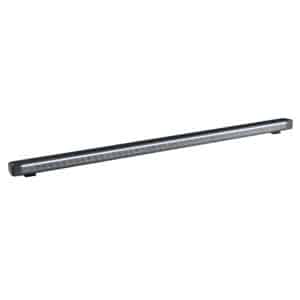
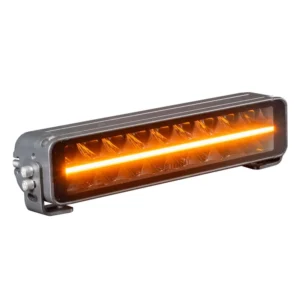
TRALERT® has a wide range of ECE-certified LED vehicle lights, including driving lights and LED bars with additional light functions. Some driving lights and LED bars have an integrated position light function in addition to the main light function.
In our stock
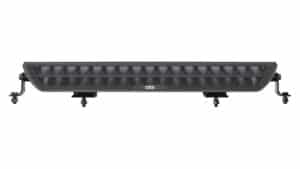
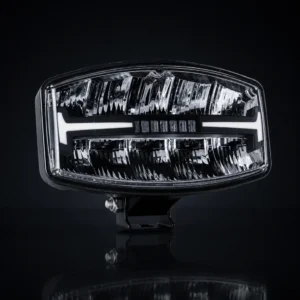
Important here is that each light function must be evaluated individually. The driving light or high beam function is different from the daytime running light function. If an LED bar or LED driving lights are also used as daytime running lights, that DRL function must be separately approved as a daytime running light function and identified by the appropriate marking or documentation.
You no longer always see ECE R87 listed for modern products, as position lights can also fall under UN R148 with new approvals. Therefore, always check the current ECE approval, function designation and product specifications. That way you can be sure which light functions are permitted on the vehicle.
Browse TRALERT®’s range of LED driving lights and LED bars, or get in touch for advice on the correct use of position lights, driving lights and additional LED vehicle lighting.

A selection of LED lighting for trucks and trailers.
A comprehensive overview of our LED vehicle lighting and accessories.
Plug-&-play lighting kits, cabling and lighting for bodybuilders.
What TRALERT® can do for you as a partner in LED vehicle lighting.
Plug-&-play kits, cabling and lighting for 24V semi-trailers.
A selection of high-quality LED driving lights and LED bars.
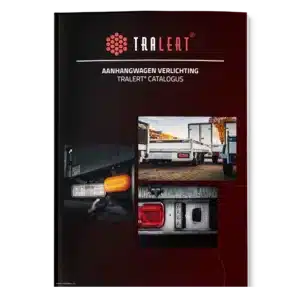
Lighting, wiring harnesses and accessories for trailers.
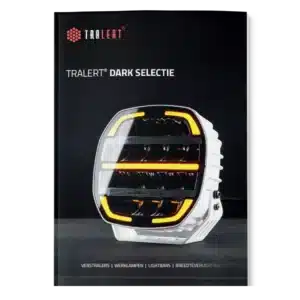
The TRALERT® DARK LED range.
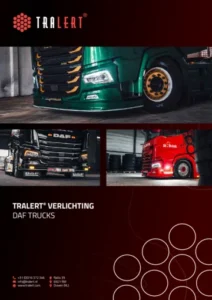
Work lights, rear lights, driving lights, beacor bars and more for DAF Trucks.
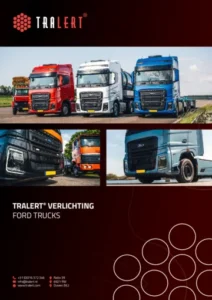
Work lights, rear lights, driving lights, beacor bars and more for Ford Trucks.
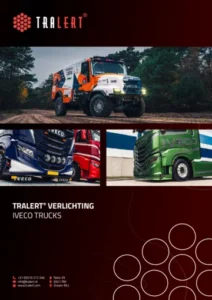
Work lights, rear lights, driving lights, beacon bars and more for Iveco.
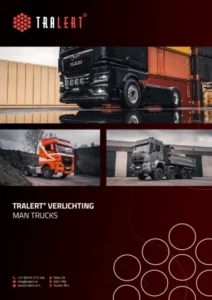
Work lights, rear lights, driving lights, beacon bars and more for MAN.
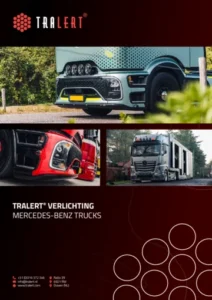
Work lights, rear lights, driving lights, beacon bars and more for Mercedes-Benz Trucks.
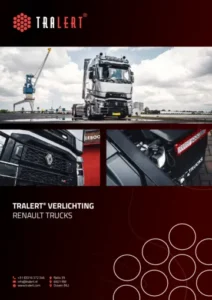
Work lights, rear lights, driving lights, beacor bars and more for Renault Trucks.
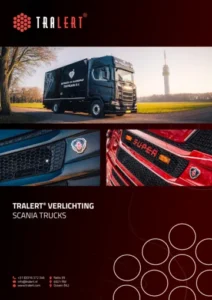
Work lights, rear lights, driving lights, beacor bars and more for Scania.
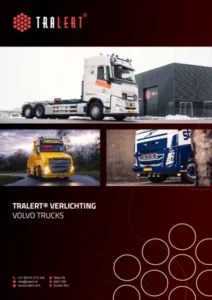
Work lights, rear lights, driving lights, beacon bars and more for Volvo Trucks.
The catalogue opens in a new tab. Can’t see it?
Open the catalogue (PDF)Two questions, in 30 seconds.
TRALERT® works with a dealer network. Dealers can view current stock levels, place orders online on account and receive a product feed for their online shop or system. We assess each enquiry internally and will let you know within 1 to 2 working days whether a partnership is possible.
You can purchase TRALERT® lighting through our partners, either locally or online. Simply provide your details, and we’ll find the partner best suited to help you.
Would you prefer to find a stockist yourself?We will assess your enquiry internally. You will hear from us within 1 to 2 working days to let you know whether a partnership is possible.
We’ll let you know within 1 to 2 working days which partner will be able to assist you further.
TRALERT® operates through a dealer network. Prices, stock levels and online ordering are therefore only available to business customers with an account.
We assess every enquiry internally and will let you know within 1 to 2 working days whether a partnership is possible.
For your own use?Find a stockist
Would you prefer a quote first?Add this product to your quotation request and send it off when you’re ready.