Home / Lighting terms / 7-PIN type N connector 12V
7-PIN type N connector 12V
- Updated:
- By: Kevin van Mierlo
Definition
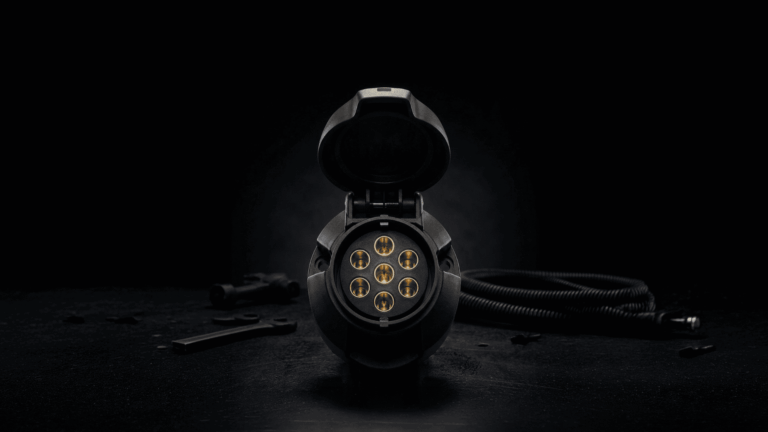
The 7-PIN N-connector is an obsolete connector standard that was used in the past for the basic lighting of trailers and other towed vehicles. This connection was part of an older system in which functions had not yet been combined into a single connector.
In current practice, this connector is no longer used in new builds or modern retrofits. The additional functions that were missing at the time were later integrated into the 13-PIN connector, which has since become the standard.
The N-connector was standardised under the ISO 1724 standard, with the designation ‘N’ standing for Normal. This connection was mainly found on light trailers and on vehicles that were not yet fitted with a 13-PIN connector.
Pin assignment
| PIN | Function | Colour |
|---|---|---|
| 1 | Left indicator | Yellow |
| 2 | Rear fog light | Blue / brown |
| 3 | Mass (for PIN 1 to 7) | White |
| 4 | Right-hand indicator | Green |
| 5 | Rear/ licence plate light right | Brown |
| 6 | Brake lights | Red |
| 7 | Rear/ licence plate light left | Black |
Colour differences in practice
According to the ISO standard, blue was the prescribed wire colour for PIN 2 (rear fog light). In practice, however, brown was also used, depending on the manufacturer or cable set. Where in doubt, the connection was checked using a multimeter or by referring to the trailer’s scheme.
In what situations was the N connector used?
The 7-PIN N-type connector was used on trailers without additional electrical functions such as a constant power supply or reversing lights. Typical applications included:
- small trailers
- boat semi-trailers
- luggage trolleys
- horse semi-trailers without reversing lights
For applications with more functions , this connector was not suitable, which eventually led to the introduction of the 13-PIN connector.
Adapter adapters between 7- and 13-PIN connections
If the towing vehicle and the trailer have different connections, an adapter provides the solution. For example:
- 13-PIN connection to the vehicle → 7-PIN trailer
- 7-PIN connection to the vehicle → 13-PIN trailer
Please note: With an adapter from 13 to 7, only basic functions are transmitted. Functions such as constant current or reversing lights will then not work.
LED lighting and CAN-bus interference
When a vehicle with a CAN-bus system controls a trailer fitted with LED lighting via a 7-PIN N connector, interference may occur. Causes:
- LEDs draw less current, which is not recognised as "load"
- The system gives error messages or switches off the lighting
Common symptoms:
- Flashing or failing lighting
- Dashboard errors
- Lighting that stays on after uncoupling
Read more in our blog:
Troubleshooting CAN-bus interference with LED lighting
Or view our CAN-bus solutions
Frequently asked question
What is the difference between a 7-Pin N and S connector?
The N connector was used for the basic lighting. The S connector (ISO 3732) used to be additionally used for functions such as battery supply and reversing lights, especially in caravans. In practice, these systems were later replaced by the 13-PIN connector, which combines all functions.
Related articles
Share this article:
ABOUT
TRALERT®
TRALERT® is the leading manufacturer and partner in high-quality LED lighting solutions for commercial vehicles. By taking care of everything from drawing board to realisation, you and your customers can hit the road safely, carefree and professionally lit.
VISIT
EXPERIENCE CENTRE
The TRALERT® Experience Centre is an interactive showroom with training and truck rooms. Experience TRALERT® LED vehicle lighting in practice and experience the lighting performance in different situations. Plan your Experience Centre visit.
PARTNER
TO BE
TRALERT® works with a dealer network. We assess each enquiry internally to determine whether collaboration is possible.
Author
Kevin van Mierlo
Featured lighting: