
ECE R23 explained
ECE R23 is the standard governing the approval of reversing lights and manoeuvring lights on trucks, semi-trailers and semi-trailers. In this video, TRALERT® explains the difference between these two light functions and why ECE R23 applies to both the towing vehicle and the semi-trailer.
ECE R23 is the international UNECE regulation for reversing lights and manoeuvring lights on vehicles and semi-trailers. This standard defines the technical requirements for light output, light distribution, visibility and approval marking, among others. In this article, we explain exactly what ECE R23 means, the current status of these regulations and what to look out for in practice when choosing reversing lights.
What is ECE-R23?
ECE-R23 is the UNECE regulation governing the type approval of reversing lights and manoeuvring lamps on vehicles and 12V semi-trailers. This regulation sets out the technical requirements for, amongst other things, light output, light distribution, visibility, marking and the approval of these lamps. The aim is to support safe reversing and manoeuvring without unnecessarily dazzling other road users.
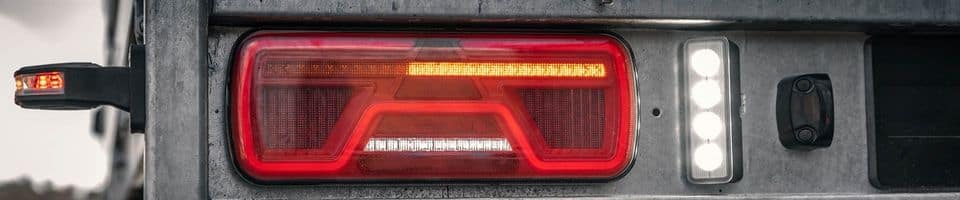
The aim of the ECE-R23 regulation
- Safe rear visibility: ECE-R23 sets requirements for the photometric performance of reversing lights and manoeuvring lights. This ensures that the driver has sufficient visibility of the area behind or to the side of the vehicle during reversing or slow manoeuvring.
- Clear signalling: A reversing light makes it visible to other road users that a vehicle is reversing or preparing to reverse. This contributes to road safety, especially at loading bays, work sites and in situations with limited visibility.
- Control of light image and glare: The control not only limits the minimum performance, but also the light distribution. Thus, the light must be functional for the driver without unnecessarily hindering or dazzling other road users.
- Uniform international requirements: ECE-R23 ensures harmonised type approvals within countries applying UNECE regulations. This allows manufacturers and vehicle builders to work with a single technical framework for approved reversing lights.
- Correct marking and approval: An approved reversing light is identified by the corresponding approval marking. For reversing lights, this uses the function designation AR.
- Practical safety in vehicle applications: In practice, ECE-R23 helps to apply only lighting that is technically suitable as reversing lights or manoeuvring lights. This is especially relevant in the truck, semi-trailer and bodywork sectors, where reliability, visibility and compliance come together.
In short: ECE-R23 is the technical regulation governing reversing lights and manoeuvring lights. For the final application on the vehicle, the mounting and installation requirements set out in UNECE R48 must also be taken into account.
What is the current status of ECE R23?
The current consolidated version is Revision 5 of UN Regulation No. 23. This regulation describes the technical requirements for reversing lights and manoeuvring lights, such as light output, light distribution and approval marking.
In the more modern structure of UNECE lighting regulations, many separate lamp regulations have been merged into UN Regulation 148, which incorporates various light signalling functions, including the reversing light.
This means that new type approvals for light-signalling equipment are now often issued within the R148 structure. However, ECE R23 remains a valid regulation for existing type approvals and for products developed or certified on the basis of this regulation. As a result, ECE R23 will continue to be a relevant reference in the vehicle lighting sector in 2026.
Reversing lights LED
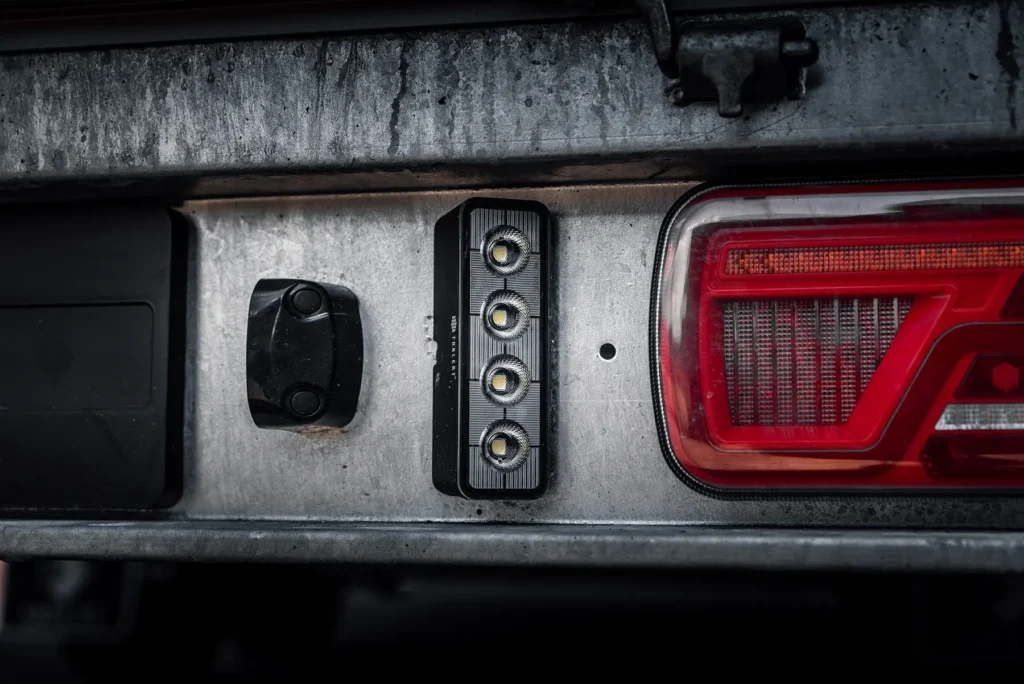
At TRALERT® we understand the importance of reliable and correctly applied reversing lights. For LED reversing lights, not only the light output is important, but also the correct approval, marking and applicability within the vehicle type. Therefore, when selecting, it is always important to check whether a light is suitable as a reversing light within the relevant UNECE regulations.
Please note: lamp approval and vehicle application are not the same thing. A light may be technically approved, but it must also be correctly fitted to the vehicle in accordance with the installation requirements of UNECE R48. This includes the presence, number and positioning of reversing lights for each vehicle category. Reversing lights are mandatory on motor vehicles and on semi-trailers in categories O2, O3 and O4; for O1 semi-trailers, they are optional. For further background on mounting and cabling, please also refer to our article on connecting semi-trailer lighting.
ECE R148 as successor to ECE R23: what about it exactly?
ECE R23 is the classic UNECE regulation for reversing lights (reversing lamps). This standard defines the technical requirements for, among other things, light output, light distribution and approval marking of reversing lights.
In the more modern structure of the UNECE lighting regulations, several individual lamp controls have been merged. In the process, the functions of light-signalling devices, including reversing lights, are included in ECE R148.
Nevertheless, ECE R23 still remains relevant in practice. Many existing type approvals still refer to R23 and technical documentation and product information also regularly mention these regulations. Therefore, ECE R23 is often still referred to in the industry when it comes to requirements for reversing lights.
Many lights on the market were once approved according to ECE R23. UNECE regulations operate on the principle that existing type approvals remain valid as long as the regulations exist. By continuing to maintain the regulation, the legal framework for these approvals also remains clear.
The UNECE has introduced a simplified structure for vehicle lighting with R148 and R149 . Yet this does not mean that all older rules disappear immediately. In practice, they often remain in place for a long time for existing approvals and documentation.
Frequently asked questions about ECE R23
What does ECE R23 mean?
ECE R23 is a UNECE regulation that defines the technical requirements for reversing lights and manoeuvring lights on vehicles and semi-trailers. Among other things, the standard defines the light output, light distribution, approval marking and testing methods for these lights.
Is a reversing light mandatory on a semi-trailer?
According to UNECE R48, a reversing light is mandatory on category O2, O3 and O4 semi-trailers . For small category O1 semi-trailers, a reversing light is optional. The exact placement and mounting requirements are in the installation regulations of R48.
How do you recognise an ECE R23 approved light?
An ECE R23 approved reversing light can be recognised by the E-mark with function marking AR on the lens or housing of the light. This marking indicates that the light meets the UNECE type approval for reversing lights.
What is the difference between ECE R23 and ECE R148?
ECE R23 is the traditional regulation for reversing lights. More modern regulations bring together many light-signalling functions, including reversing lights, in UNECE R148. However, R23 remains relevant for existing approvals and replacement parts.
What is the difference between lamp approval and vehicle assembly?
Lamp approval deals with the technical details of the light itself, such as light image, performance and marking. The vehicle fitting is about whether the light has been fitted to that specific vehicle in the right place, in the right number and according to the correct regulations. Therefore, ECE R23 and UNECE R48 should always be considered in conjunction.
Is ECE R149 the successor to ECE R23?
No, for reversing lights, this is the UNECE R148, which includes light signal functions such as reversing lights.