Your specialised partner in LED vehicle lighting

The short answer
A trailer must be fitted with brake lights, indicators, rear lights, licence plate lights, a rear fog light and red triangle reflectors. Which additional lighting is compulsory depends on the width and length of the trailer:
- Up to 1.60 m wide: two white position lamps at the front and two white reflectors (not triangular).
- From 2.10 m wide: additional orange side marker lights and contour marking.
- Over 6 m: additional orange side marker lights along the full length and reversing lights.
These requirements stem from European (UNECE R48) and national regulations.
This guide brings together the basic European requirements (UNECE R48) and the national regulations of the Netherlands, Germany, Belgium, France and Italy in a single overview. For various lengths and widths, we explain what is required by law.
TRALERT® has been a specialist in LED lighting for trailers since 2005. From modern rear lights and marker lights to complete, easy-to-fit plug-&-play sets.
| Trailer width | Trailer length | Additional mandatory lighting | Comments |
|---|---|---|---|
| Trailer width< 1.60 m | Trailer length< 6 m | Additional mandatory lightingNoadditional lighting | Notes: Only basic lighting and reflectors |
| Trailer width: 1.60 – 2.10 m | Trailer length< 6 m | Additional mandatory lighting: 2 white position lights for | Notes: Mandatory for wider trailers |
| Trailer width> 2.10 m | Trailer length< 6 m | Additional mandatory lighting: Width or contour lights | Notes: White at the front, red at the rear |
| Trailer width: allwidths | Trailer length> 6 m | Additional mandatory lighting: Side marker lights | Comments: Amber-yellow on the side |
| Width oftrailers: very long trailers | Trailer length> 9 m | Additional mandatory lighting: Additionalside marker lights | Notes: Limit the distance between lights |
| Trailer width: O3 / O4 trailers | Length oftrailers on new vehicles | Additional compulsory lighting: Side marker lights must be flashing in conjunction with the indicator | Comments: New regulations from 2025 |
Front:
Rear:
Side:
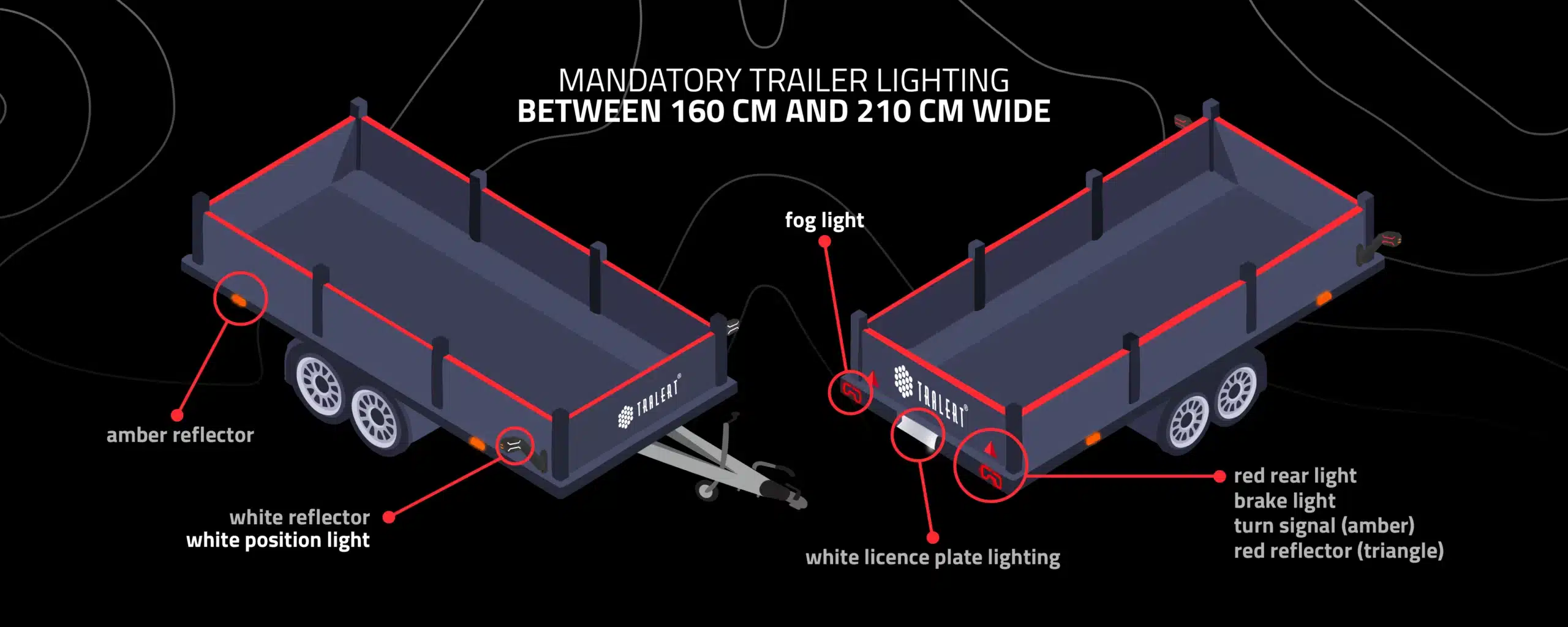
Trailers wider than 2.10 metres must also be fitted with end-marker lights in the shape of side marker lights. These lights are positioned at the outermost points of the front and rear and indicate the full width of the trailer.

Longer trailers have additional lighting requirements.
Each side must have at least one amber reflector , preferably in the centre of the trailer. The reflector should be positioned at a height of between 0.25 and 1.50 metres above the road surface. If the design of the vehicle does not allow this, the reflector may be positioned up to a maximum of 2.10 metres above the road surface.
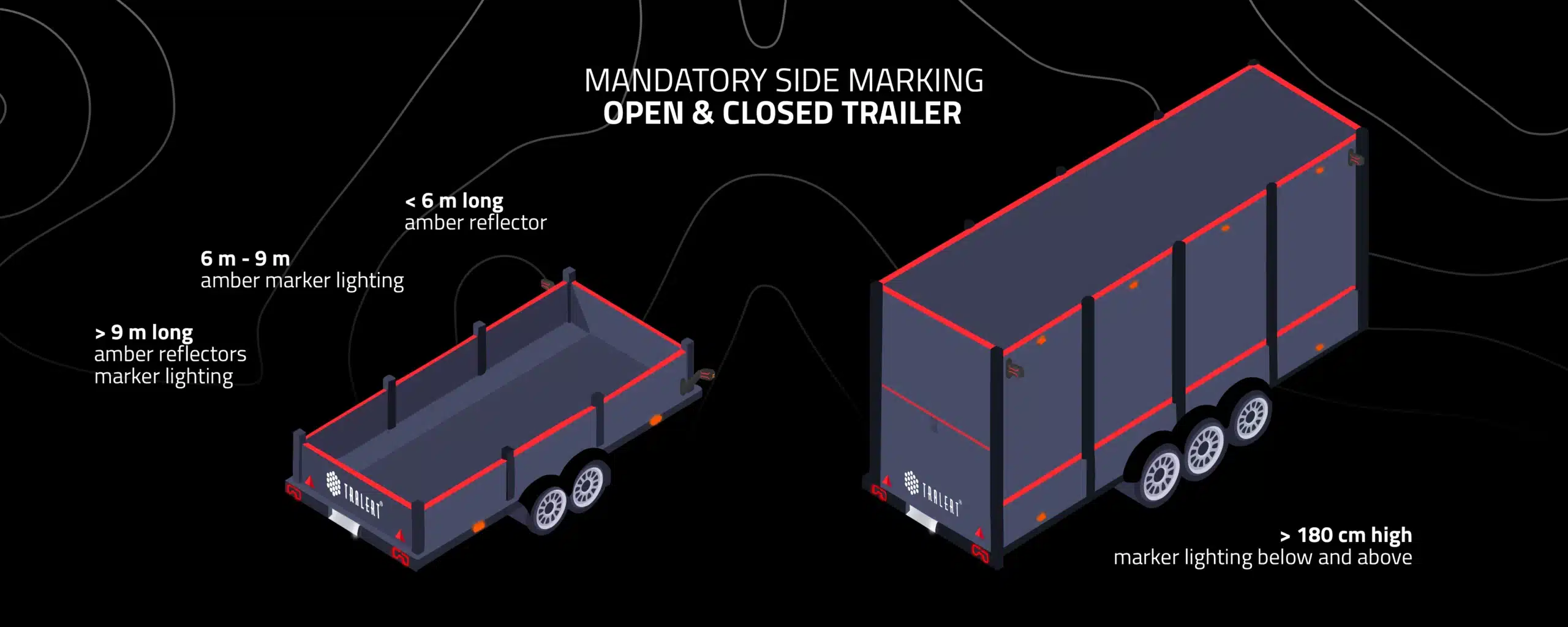
For trailers longer than 6 metres but shorter than 9 metres, additional requirements apply. The sides must be fitted with yellow side marker lights, evenly spaced along the length of the trailer. The distance between any two marker lights must not exceed 3 metres. The first side marker light must be no more than approximately 3 metres from the front of the vehicle, and the last light no further than 1 metre from the rear. In addition, each side must be fitted with at least one amber-coloured reflector, positioned in the same locations as the side marker lights. As with shorter trailers, the reflectors and marker lights must be situated at a height of between 0.25 metres and 1.50 metres above the road surface. If the design of the vehicle makes this impossible, they may be fitted at a maximum height of 2.10 metres above the road surface.
Stricter visibility requirements apply to trailers longer than 9 metres. The sides must be fitted with yellow side marker lights, evenly spaced along the length. The distance between them is generally no more than 3 metres, ensuring that other road users can clearly see the full length of the trailer. The first side marker light must be no more than 1 metre from the front, and the last light no more than 1 metre from the rear.
In addition to the side marker lights, each side requires at least one amber reflector , in the same locations as the marker lights. The height is between 0.25 and 1.50 metres above the road surface. If the construction does not allow this, the mounting may rise to a maximum of 2.10 metres.
Enclosed trailers taller than 1.80 metres must be fitted with side marker lights both at the bottom (between 0.25 and 1.50 metres) and as high as possible near the top edge. This enables other road users to recognise the vehicle’s outline from both above and below. If this is not technically feasible, the upper marker lights may be positioned at a maximum height of 2.10 metres.
Newly registered trailers in categories O3 and O4 must be fitted with side marker lights that flash in synchronisation with the indicators. This amendment to UNECE Regulation R48 (Revision 11) improves visibility when turning off or changing lanes. The flashing function may also be implemented using a separate side indicator.
Per side of the vehicle:
The requirement for three separate Category 5 indicators does not apply if the vehicle is fitted on each side with:
The literal meaning of clause 6.5.3.1 is that the requirement for three Category 5 lights does not apply if at least three amber coloured side marker lights flash in synchronisation with the indicators. The three prescribed Category 5 indicators specified in paragraph 6.5.3.1 must not be fitted and active on that side at the same time. When those Category 5 lights are in use, the amber coloured side marker lights must not flash in synchronisation.
This applies to:
New vehicle types: this applies from 6 July 2022
All newly manufactured and newly registered O3/O4 vehicles from 7 July 2024
In principle, there is no obligation to retrofit the existing side marker lights on O3 and O4 vehicles that were first registered or authorised before 7 July 2024.
Driving with faulty or missing lighting on a trailer will result in immediate penalties if stopped for a check. Fines vary by country and by offence, but are of a similar magnitude for most lighting faults.
In the Netherlands, you will usually be fined several hundred euros per offence. Multiple faulty lights add up, meaning the total amount can rise quickly during a roadside check. In the case of serious faults, the trailer may be taken off the road on the spot until the fault has been rectified. In Germany, the fines for lighting faults are generally of a similar order, with additional costs incurred for a TÜV re-inspection. In Belgium, similar fines are imposed, sometimes accompanied by immediate collection. In the United Kingdom, a vehicle may fail its MOT truck immediately, incurring additional costs for a re-test and potentially prohibiting the vehicle from being used on public roads until the fault has been rectified.
For vehicle builders and original equipment suppliers, the consequences are more severe. A trailer that is rejected on delivery due to incorrect lighting installation means not only repair costs but also downtime, loss of customer confidence and potential liability. That is why we recommend incorporating lighting requirements right from the design and construction stages, rather than waiting until the final inspection.
Fine amounts are adjusted periodically by national authorities. For current rates, please consult the CJIB(NL), the Bußgeldkatalog (DE) or the competent authority in your country.
When it comes to trailer lighting, regulations go beyond simply determining which lights are mandatory. The way in which lighting is fitted and used also plays a key role. This is precisely where ECE R48 comes into play. This regulation provides the framework for the installation of lighting and light signals on vehicles and trailers. In practice, this means that not only must the correct functions be present, but also that the positioning, visibility and mounting must be carried out logically and correctly. This therefore affects the entire lighting system of a trailer.
For professionals, this is a key consideration. An installation may function technically, but could still raise questions during an inspection or handover if the application does not comply with the applicable mounting requirements. That is why it is wise not to check compliance with regulations only after the fact, but to take them into account right from the design and construction stages. Would you like to know how these requirements translate to the workplace? Then read our article on mounting regulations for trailer lighting in accordance with ECE R48. In it, we explore the practical considerations for mounting in greater depth.
Yes, side marker lights are mandatory on modern trailers over 6 metres in length.
The regulations stipulate that side marker lights must be fitted on both sides of the trailer, in the middle third of the vehicle. The distance between side lighting and retroreflectors must not exceed 4 metres. Furthermore, the frontmost side marker light and the retroreflector must be no more than 4.00 metres from the front of the vehicle.
Finally, the most rear-facing side marker lights - as well as the corresponding retroreflector - are a maximum of 1 metre from the extreme rear of the vehicle.

An exception applies to vehicles shorter than 6 metres, also called bare chassis. In this case, divide the length of the vehicle into three equal parts: one side marker light belongs on the front third, one on the rear third. In this situation, a single side marker light is also sufficient.
The side marker lights and amber retroreflectors belong at a height of between 0.25 and 1.5 metres above the road surface. If the construction does not allow this, the side marker lights may be higher - but never higher than 2.10 metres above the road surface.
Having contour lights on a trailer is mandatory under certain circumstances. Before we delve further into what type of contour lights is required and which rules apply, it is worth answering another question first. What is contour lighting? Contour lights are a synonym for LED marker lights. This type of LED lighting on a trailer is fitted to the front, sides and rear of the trailer. When discussing the legal requirements for contour lighting on a trailer, the following rules apply.
For trailers wider than 2.10 metres, two marker lights must be fitted to both the front and rear of the trailer. As is normally the case, the front of the trailer must be white and the LED marker lights at the rear must be red.
Orange/amber LED marker lights must be fitted to the sides of the trailer if the trailer is longer than six (6) metres.
The limit is 6 metres. Up to this length, basic lighting comprising a single reversing light is sufficient. Trailers between 6 and 9 metres must be fitted with amber side marker lights and side reflectors, evenly spaced at intervals of no more than 3 metres. Above 9 metres, additional side marker lights are fitted at intermediate positions.
If your vehicle is inspected and found to have faulty or missing lighting, you will be fined for each offence. In the event of serious faults, the trailer may be taken off the road on the spot until the fault has been rectified. For vehicle builders, a rejected delivery also means downtime, repair costs and potential liability towards the end customer.
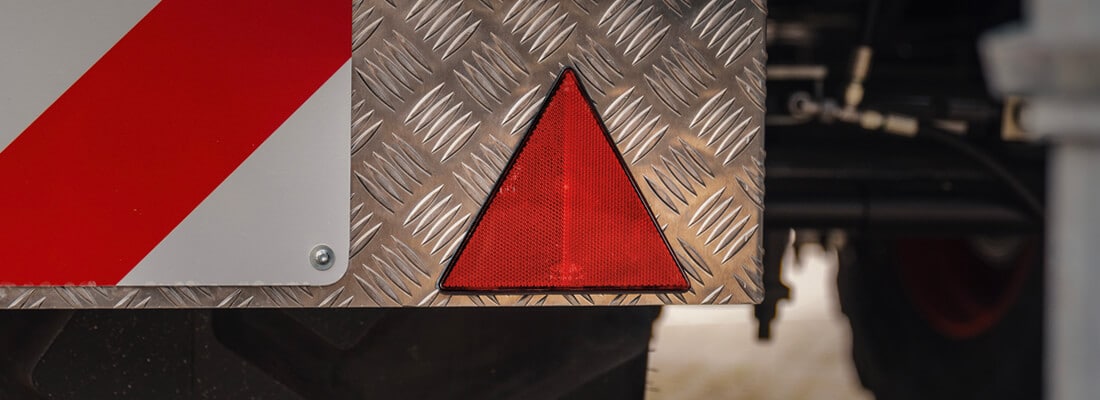
Reflectors are designed to make the trailer more visible in ways other than just lighting. They also help other road users to better gauge the width and length of the trailer. This is particularly important as the trailer may not always be clearly visible on a dark road. There are mandatory requirements for reflectors on every trailer.
If you want to make your trailer even more visible, it is also possible to fit additional reflectors to the trailer. This is not mandatory under the regulations governing trailer lighting, but it is certainly possible. However, it is strongly recommended that you adhere to the correct spacing requirements. Whilst these are generally not strictly enforced, it is still advisable to follow the regulations. As well as reflectors, there is also reflective tape. This looks good on a trailer and can also ensure even better visibility.
Reflectors come in different dimensions and shapes. The shape of reflectors is important because it contains different functions. It is also important to mount the right reflector in the right place. Reflectors mainly come in three shapes, namely round, rectangle and triangle reflectors. The round and rectangular reflectors come in different colours. Thus, the round reflector comes in red, orange/yellow and white, the rectangular reflector comes in orange/yellow and white and the obligatory triangular reflector is only made in red. Some LED lights in our range already have the reflector built in.
LED side marker lights on trailers with a maximum width of 1.6 metres are not mandatory under the regulations governing trailer lighting. However, it is important to indicate the width of the trailer in a different way for this category of trailers. We do this by means of the reflectors described above. If a trailer is wider than 1.6 metres, side marker lights are compulsory.
Although the general guidelines are followed in most European countries, there may be specific additional requirements or interpretations per country. It is therefore advisable to always consult local laws and regulations or contact the competent authorities to ensure that your vehicle meets all national legal requirements.
| Country | Official body | Relevant regulations | Main national exception | Left |
|---|---|---|---|---|
| Country: Netherlands | Official body: RDW | Relevant regulations: Vehicle Regulations – Article 5.12.51 | Key national exception: Stricter MOT checks + specific requirements for trailers over 750 kg | Leftwetten.overheid.nl |
| Country: Germany | Official body: Kraftfahrt-Bundesamt (KBA) | Relevant regulations: StVZO § 51 + UNECE R48 | Key national exception: Fortractors with an overhang of >40 cm: additional parking lights are mandatory | Leftgesetze-im-internet.de |
| Country: UnitedKingdom | Official body: DVSA / GOV.UK | Relevant legislation: Road Vehicles Lighting Regulations 1989 | Key national exceptionpost-Brexit: own type approval + slightly stricter colour interpretations | Leftgov.uk |
| Country: France | Official body: Ministère de l’Intérieur | Relevant regulations: Code de la Route – Article R313-1 et seq. | Key national exception: No major deviations from UNECE R48 | Leftservice-public.fr |
| Country: Italy | Official body: Ministero delle Infrastrutture | Relevant legislation: Codice della Strada – Article 151 | Key national exception: No major deviations from UNECE R48 | Leftmit.gov.it |
| Country: Belgium | Official body: FPS Mobility and Transport (DIV) | Relevant regulations: Belgian Road Traffic Regulations + UNECE R48 | Key national exception: For slow-moving vehicles/vehicles for agriculture: parking lights up to a maximum height of 190 cm | Leftmobilit.belgium.be |
The United Nations Economic Commission for Europe (UNECE) sets the basic standards applicable to vehicles, including trailers. This is done through the so-called ECE regulations.
These regulations set out in detail the mandatory lighting requirements for trailers, such as the positioning, colour and functionality of lights and reflectors.
Each country bases its national regulations on these UNECE standards. However, national authorities may set additional requirements or exceptions specific to that country.
Examples of such bodies include the RDW in the Netherlands, the TÜV in Germany and the DVSA in the United Kingdom. These bodies check whether vehicles (including trailers) comply with the standards and grant approval for use on public roads.
A key regulation within this framework is ECE R48. This regulation sets out how vehicle lighting must be fitted and the requirements governing, amongst other things, the positioning, visibility and use of lighting functions on trailers and semi-trailers.
If you’re looking for lighting for your trailer, we recommend this complete set from TRALERT®. The set includes rear lights, marker lights, licence plate lights and side marker lights, ensuring you can not only travel safely but also in style thanks to our carefully selected range.
Better Light Work Safer!
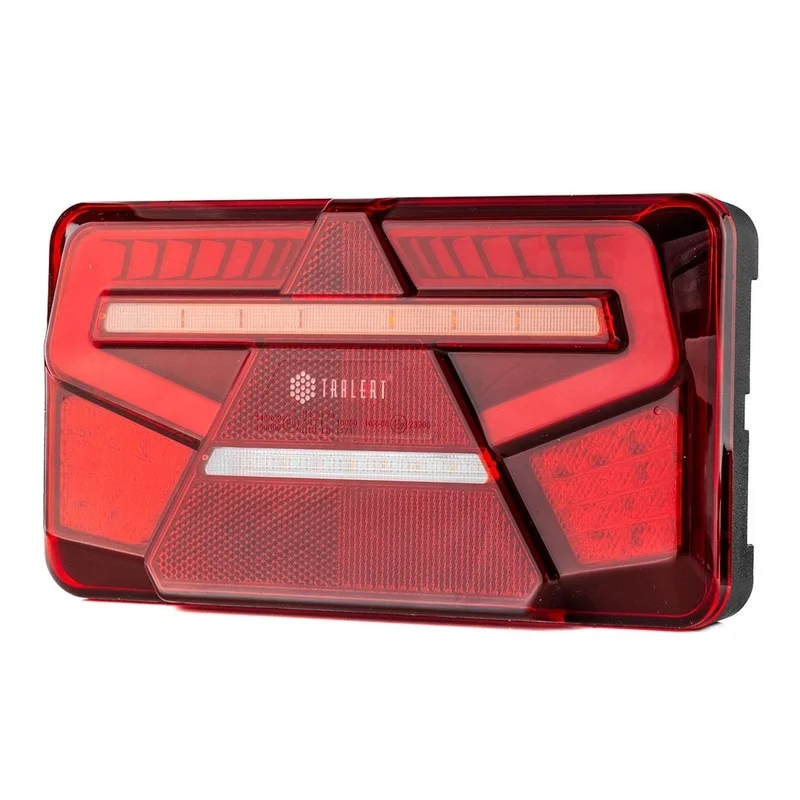
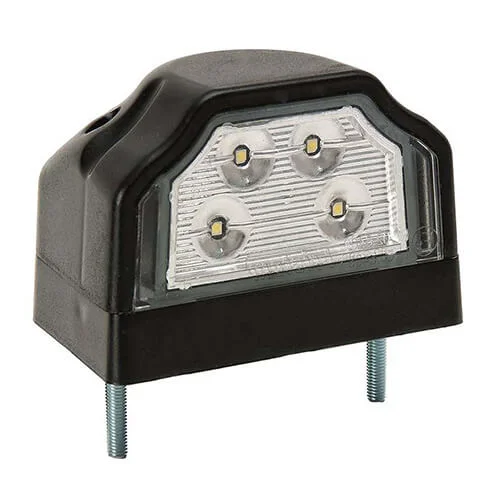
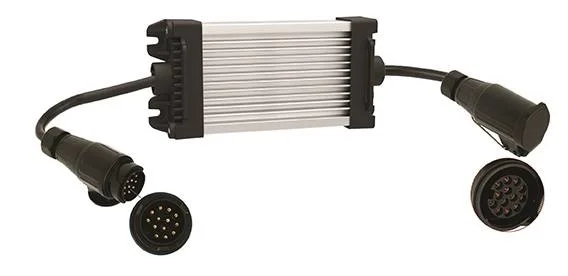
In the blog post above, you’ve read all about the various regulations governing trailer lighting. As well as having the correct lighting, it’s also vital to connect it properly. There are various types of cables and connections that apply in this context. Would you like to know more about connecting trailer lights and the corresponding wiring diagrams? Then be sure to read our other article on trailer lighting.
Disclaimer:
At TRALERT®, we do our best to keep the information in this article as accurate and up-to-date as possible, including the regulations surrounding vehicle lighting. However, legislation can change regularly, and although we make every effort to implement these changes in a timely manner, it is possible that certain updates or adjustments have not yet been incorporated into this article. We therefore always advise our readers to check the current legislation with their local government or regulatory bodies, especially when it comes to exceptions or specific national regulations. TRALERT® is not liable for any damages or fines resulting from outdated or incomplete information in this article.
If in doubt, always contact the competent authority to ensure that your vehicle meets all legal requirements.

A selection of LED lighting for trucks and trailers.
A comprehensive overview of our LED vehicle lighting and accessories.
Plug-&-play lighting kits, cabling and lighting for bodybuilders.
What TRALERT® can do for you as a partner in LED vehicle lighting.
Plug-&-play kits, cabling and lighting for 24V semi-trailers.
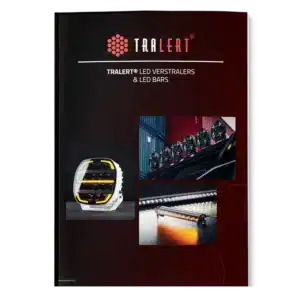
A selection of high-quality LED driving lights and LED bars.
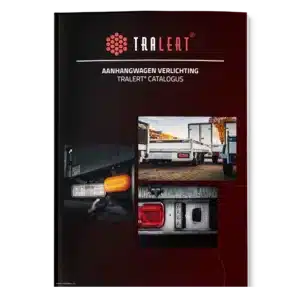
Lighting, wiring harnesses and accessories for trailers.
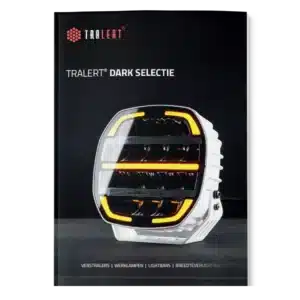
The TRALERT® DARK LED range.
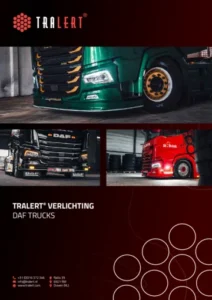
Work lights, rear lights, driving lights, beacor bars and more for DAF Trucks.
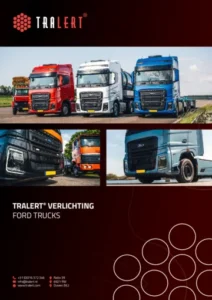
Work lights, rear lights, driving lights, beacor bars and more for Ford Trucks.
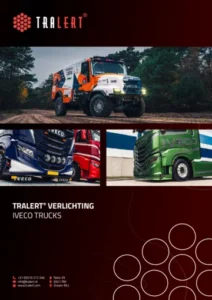
Work lights, rear lights, driving lights, beacon bars and more for Iveco.
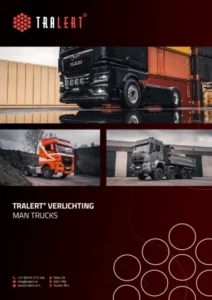
Work lights, rear lights, driving lights, beacon bars and more for MAN.
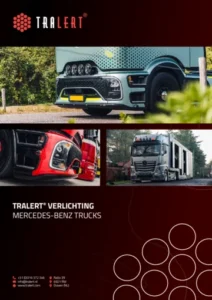
Work lights, rear lights, driving lights, beacon bars and more for Mercedes-Benz Trucks.
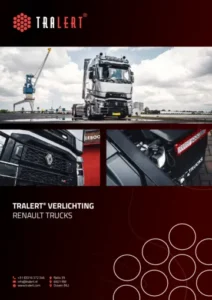
Work lights, rear lights, driving lights, beacor bars and more for Renault Trucks.
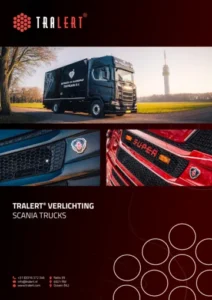
Work lights, rear lights, driving lights, beacor bars and more for Scania.
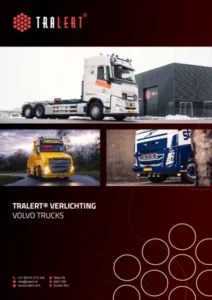
Work lights, rear lights, driving lights, beacon bars and more for Volvo Trucks.
The catalogue opens in a new tab. Can’t see it?
Open the catalogue (PDF)Two questions, in 30 seconds.
TRALERT® works with a dealer network. Dealers can view current stock levels, place orders online on account and receive a product feed for their online shop or system. We assess each enquiry internally and will let you know within 1 to 2 working days whether a partnership is possible.
You can purchase TRALERT® lighting through our partners, either locally or online. Simply provide your details, and we’ll find the partner best suited to help you.
Would you prefer to find a stockist yourself?We will assess your enquiry internally. You will hear from us within 1 to 2 working days to let you know whether a partnership is possible.
We’ll let you know within 1 to 2 working days which partner will be able to assist you further.
TRALERT® operates through a dealer network. Prices, stock levels and online ordering are therefore only available to business customers with an account.
We assess every enquiry internally and will let you know within 1 to 2 working days whether a partnership is possible.
For your own use?Find a stockist
Would you prefer a quote first?Add this product to your quotation request and send it off when you’re ready.