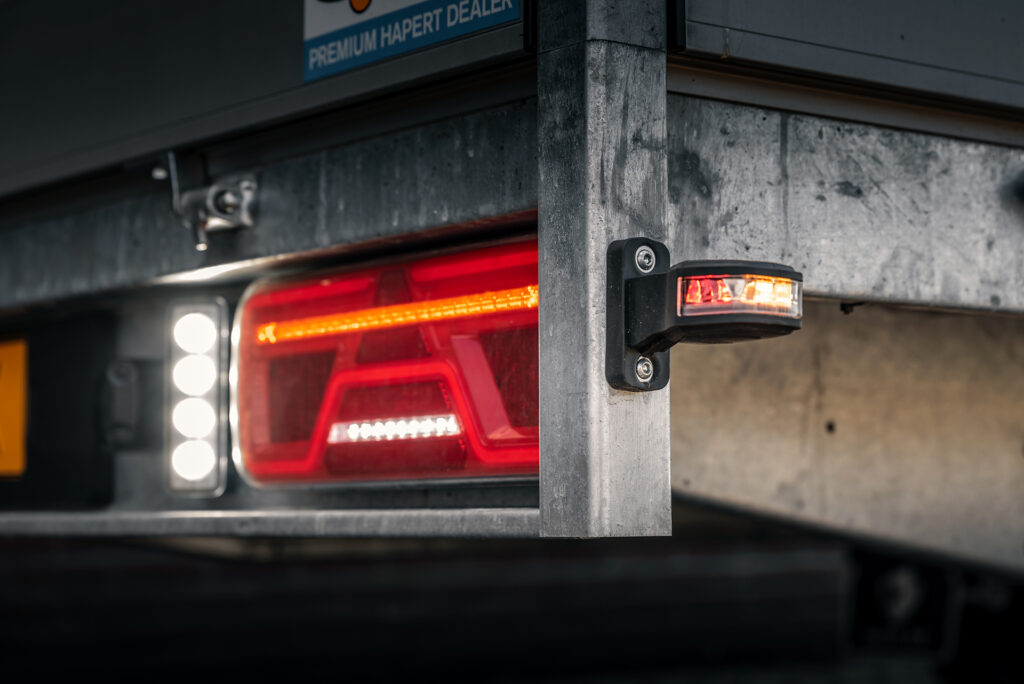
LED rear lights for trailers
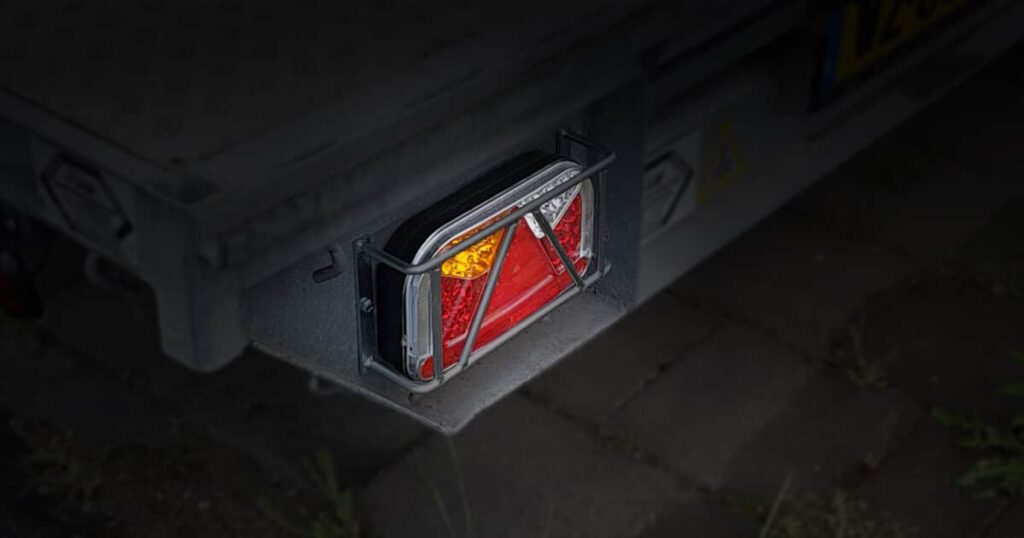
TRALERT® supplies LED rear lights for trailers in 12V and 12–24V versions. ECE-approved, dust- and waterproof to IP68 or IP69K standards, and available in a canbus proof version. Built for professional use by trailer manufacturers, bodybuilders and garages.
- B2B Wholesaler since 2005
- OEM Quality
- Plug-and-play solutions
12V and 24V rear lights for trailers
Left | LED rear lights | triangle model | 12V | 6-function | 100cm. Cable | VC-3301
In our stock
Built for the toughest conditions
TRALERT® specialises in LED vehicle lighting for the professional market and, as a B2B wholesaler, supplies specialist garages via its partners. The rear lights in this range are ECE-approved for use on public roads and are dust- and waterproof to IP68 standard. The VC-6000 serie is IP69K-rated and therefore also withstands high-pressure cleaning.
For trailers that are used intensively, there are the compact, heavy-duty rear lights 211BAR and 212BAR: 12V, IP68, high-pressure resistant and with a 10-year warranty.
We support bodywork and trailer manufacturers with on-site technical advice and custom-designed and assembled wiring harnesses. This enables you to carry out installations more quickly and with a lower risk of interference.
From rear lights to complete systems
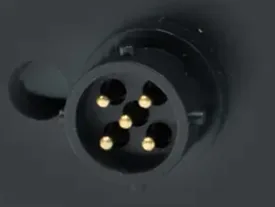
Rear lights are just one component of the lighting system on a trailer. Marker lights, the wiring harness and the connector must all be connected to them. In our guide, you can read a step-by-step explanation of how to put together a complete lighting set for your trailer. Would you like to know first which lights are mandatory on a trailer? You’ll find this information in our overview of the regulations.
A trailer rear light often combines several light functions in one. You should therefore compare not only the size, but also the functions. Consider whether you need a rear light with a triangle reflector.
4 popular models
Series |
Type |
connection |
Dimensions |
|---|---|---|---|
|
Multifunctional rear light with a unique neon design and a dynamic indicator light. 12–24V, IP69K. |
200 cm cable, 7-PIN AMP or 8-PIN bayonet connector |
253 x 136 x 48 mm |
|
|
Rear light with a neon-style appearance, integrated triangle reflector and all necessary functions. 12–24V, IP68. |
200 cm cable, 5-pin bayonet or 8-pin bayonet |
252.4 x 132.8 x 31.8 mm |
|
|
canbus proof, IP68 rating (completely dust- and waterproof) |
100 cm cable, 6-PIN bayonet or 8-pin bayonet |
240 x 140 x 58 mm |
|
|
Slim neon rear light with dynamic indicator light and integrated triangle reflector |
200 cm cable, open wire end, 7-PIN or 8-PIN SuperSeal |
360 x 135 x 35.5 mm |
FAQ
A trailer must be fitted at the rear with two rear lights, two brake lights, two indicators, a rear number plate light and two red retroreflectors. Depending on the age and specification of the trailer, a rear fog light, reverse light or marker lights may also be compulsory. You should therefore always check the functions of the existing light unit before replacing it. The exact requirements vary from country to country, so please check the regulations of the country in which you are driving.
When choosing LED trailer rear lights, pay attention not only to the model, but above all to the light functions, connection type, voltage, mounting side and dimensions. Also check whether the light is compatible with your wiring harness, for example a 5-pin, 7-PIN or 8-pin bayonet connector. In practice, this helps you avoid fitting problems, incorrect light functions and unnecessary interference after replacement.
Yes, for use on public roads, lighting must be suitable and approved for the relevant light function. An ‘E’ mark indicates that the light has been approved in accordance with European vehicle regulations. Please note that a single rear light unit can serve multiple functions, such as a rear light, brake light, indicator, rear fog light, reverse light and reflector. So, check not only whether there is a mark of approval on it, but also which functions the light is approved for.
LED lighting on a trailer often fails to work properly due to a poor mass connection, moisture in the connector, damaged cables, incorrect connections or a vehicle that does not recognise the LED lighting correctly. You should therefore first check the connector, earth connection and wiring harness. If error messages or flashing issues persist, a suitable CAN-bus solution or control box may be required. Furthermore, mandatory lights must function correctly, including during periodic vehicle inspections.
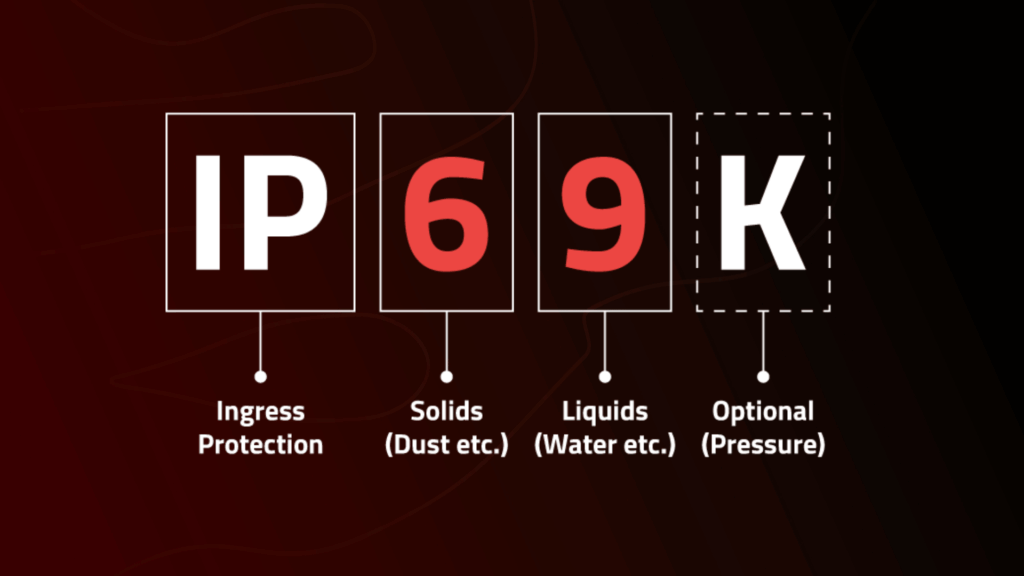
IP68 means that a rear light is dust-tight and resistant to prolonged immersion in water. IP69K means that it is also resistant to cleaning with high-pressure, high-temperature water. If the trailer is regularly cleaned with a high-pressure washer, choose a rear light with IP69K. You can read more about this under IP69K.
Modern towing vehicles use the CAN-bus system to check whether the trailer’s lights are working. LED lighting consumes very little power, which means the vehicle can report a faulty light or cause the indicator to flash more rapidly. A canbus-proof rear light is designed for this, ensuring the vehicle recognises the light. Read more in Canbus proof: what is it?.
TRALERT® supplies dealers, vehicle parts suppliers and vehicle manufacturers. If you are a garage, bodybuilding manufacturer or trailer manufacturer, you can request a quote or get in touch. Private customers should purchase through a dealer.
VIEW SOME EXAMPLES
TRALERT® not only supplies a high-quality range, but also offers expertise and experience in commercial vehicle lighting. Whether it’s bespoke solutions for a unique demo truck or complete lighting packages with cabling for bodybuilding: we work with you to find the right solution and make it a reality.
Want to know more?
Read these articles too
What does IP69K lighting mean?
Find out what IP69K means and when this protection class is relevant for vehicle lighting.
Mounting trailer lighting
Find out which installation requirements under ECE R48 apply to trailer lighting.
Trailer rear light not working
Find out what the most common causes are and how to troubleshoot the interference step by step.
Need help choosing?
Our specialists will be happy to help you choose the right lighting for your application.