Your specialised partner in LED vehicle lighting
Definition
UN Regulation No. 148 (ECE R148) is the international UN/UNECE regulation for the type approval of light-signalling devices on motor vehicles and trailers. It consolidates technical requirements that were previously spread across nine separate ECE regulations. For the truck, trailer and semi-trailer manufacturing sectors, this includes, amongst other things, rear lights, brake lights, indicators, position lights, licence plate lights and side marker lights.
ECE R148 covers lighting that sends a signal to other road users. This includes rear lights, brake lights, indicators, position lights, licence plate lights and side marker lights. In contrast, ECE R149 specifically concerns lighting intended to illuminate the road ahead of the vehicle.
ECE R148 governs the approval of the light or light function itself. The requirements for the positioning and installation of lighting on the vehicle are set out in ECE R48. On this page, you can find out which lighting falls under R148, how to recognise an R148 approval, what the difference is between R148, R48, R149 and R10, and which transitional provisions will apply in 2026.
ECE R148 is an international UN regulation for the technical type approval of light-signalling devices that make a vehicle visible or provide information to other road users. The regulation was drawn up within the UNECE and came into force on 15 November 2019.
R148 is a product regulation. It sets out technical requirements for the light itself, such as light output, light distribution, colour, operation, marking and durability. Where and how the lighting is subsequently to be fitted to the vehicle is governed by a different regulation: ECE R48.
R148 is not a static set of regulations. UNECE/WP.29 amends the regulations through amendment series and supplements. It is therefore important for manufacturers, importers and vehicle builders to consider not only ‘R148’ when seeking type approval, but also the series of amendments, the approval date and the applicable transitional provisions.
ECE R148 covers light-signalling functions that make a vehicle visible or provide other road users with information regarding, for example, braking, turning, position or reversing. The regulation brings together technical requirements from nine older ECE regulations into a single harmonised approval framework.
| Lamp function | Previously regulated under |
|---|---|
| Front and rear position lights, side marker lights and brake lights | R7 |
| Front, rear and side indicators | R6 |
| Licence plate lighting | R4 |
| Reversing lights and manoeuvring lights | R23 |
| Rear fog lamps | R38 |
| Position lights (DRL) | R87 |
| Side marker lights | R91 |
| Parking lights | R77 |
| Light signalling systems for Category L vehicles, such as motorbikes and scooters | R50 |
R148 is therefore the consolidated approval framework for these light-signalling functions. This does not mean that an existing light with an older R4, R6, R7 or other approval is automatically invalidated by the introduction of R148. Transitional provisions apply to older approvals and previous series of amendments.
The R148 01 series is also being further expanded with new technologies. One example is the reversing projector (RP): a feature that can project a visible light pattern onto the road surface behind the vehicle whilst reversing.
ECE R148 applies to light-signalling devices for motorised vehicles and trailers. For truck, trailer and semi-trailer manufacturers, this is an important practical application of the regulation. Rear lights, brake lights, indicators, rear fog lights, licence plate lights, side marker lights and end-outline marker lights are examples of functions that can be approved under R148.
For lighting in bodybuilding, the combined approval framework offers a practical advantage. A multifunctional rear light unit can be approved for multiple light functions under a single R148 type approval. The function markings on the light then indicate which functions are actually covered by that approval.
However, an R148 approval does not automatically mean that a light may be fitted in every position or on every vehicle. For aspects such as the number of lights, the mounting height, the distance from the outer edge of the vehicle, angles of visibility and electrical circuitry, reference must also be made to ECE R48 and the regulations applicable to the vehicle.
You will regularly come across ECE R148, R48, R149 and R10 together in the context of vehicle lighting. They regulate various aspects of the lighting and the vehicle.
| Regulations | What it regulates | Level |
|---|---|---|
| ECE R148 | Technical approval of light signalling systems | Product |
| ECE R149 | Technical approval of lighting designed to illuminate the road and surroundings, such as low beam, high beam and front fog lights | Product |
| ECE R48 | Placement, number, position, visibility and switching of lighting on the vehicle | Vehicle |
| ECE R10 | Electromagnetic compatibility (EMC) of electrical and electronic equipment | Product / component |
The main confusion lies between R148 and ECE R149. As a practical rule of thumb:
This rule of thumb is not absolute. For example, R148 also covers reversing lights and manoeuvring lights.
ECE R48 is separate from this. This regulation does not determine whether the light is technically approved, but rather how the lighting must be installed on the vehicle: for example, mounting height, position, angles of visibility and electrical circuitry. You can read more about this on our page about ECE R48.
ECE R10 serves a different purpose. It sets requirements for electromagnetic compatibility, ensuring that electrical and electronic equipment does not cause unacceptable electromagnetic interference and is itself sufficiently resistant to electromagnetic influences. A vehicle lamp may therefore hold both R148 and R10 approvals.
An R148-approved light can be identified by the approval mark on the light or light unit. The conventional mark consists of several parts:
The function codes are particularly useful in practice. These codes indicate which light functions are actually covered by the light’s approval.
| Designation | Function |
|---|---|
| RL | Position light (DRL) |
| A | Front position lamp / front position lamp function |
| R1, R2 | Rear position lamp; R1 constant and R2 variable |
| S1, S2 | Brake light; S1 constant and S2 variable |
| S3, S4 | High-mounted third brake lamp; S3 constant and S4 variable |
| 1, 1a, 1b | Directional indicator |
| 2a, 2b | Rear indicator |
| 5, 6 | Side-mounted indicator |
| AR | Reversing lights |
| ML | Manoeuvring light |
| F1, F2 | Rear fog light; F1 constant and F2 variable |
| SM1, SM2 | Side marker lights |
| L | Rear number plate lighting |
| 77R | Parking light |
| RP | Reversing projector |
A multifunctional rear light may feature several function codes listed alongside one another. This makes it immediately clear for which individual functions the unit has been approved under the type approval.
Earlier versions of R148 provided for the conventional approval mark to be replaced, under certain conditions, by a Unique Identifier (UI). This unique code would allow the corresponding approval information to be accessed in the secure UNECE DETA database.
This requirement has since been amended. In 2025, WP.29 decided that the UI could no longer be used as standard as an alternative to the conventional approval mark. Furthermore, the required UI functionality had not yet been implemented in DETA. In practice, therefore, the conventional E-type approval mark must be used, unless the relevant regulations and the available UNECE infrastructure expressly stipulate otherwise.
ECE R148 was developed to consolidate the technical requirements from nine separate regulations governing light-signalling devices:
The introduction of R148 does not mean that every existing light with an older approval must automatically be replaced. The validity and acceptance of an existing approval depend on the applicable transitional provisions, the date of approval and the context in which the product is used.
1 September 2026 is an important transition date for the amendment series within R148. From that date, contracting parties applying R148 will no longer be obliged to accept a type approval in accordance with a previous R148 amendment series if that approval was first granted after 1 September 2026.
R148 type approvals in accordance with previous series of amendments, first granted before 1 September 2026, will continue to be accepted under the transitional provisions. There are also exceptions for, amongst other things, replacement parts for vehicles already in use.
This is distinct from the question of whether a light with, for example, an older R6 or R7 approval may still be used. In such a specific application, one must consider the specific type approval, transitional provisions and vehicle application.
Yes. ECE R148 also applies to light-signalling devices for trailers and semi-trailers. Rear lights, brake lights, indicators, rear fog lights, licence plate lights and side marker lights can be approved under R148. The final mounting to the trailer or semi-trailer must also comply with the applicable installation requirements.
ECE R148 governs the technical type approval of the light or lighting unit. ECE R48 governs the installation of the lighting on the vehicle, such as position, mounting height, angles of visibility, numbers and wiring. In short: R148 concerns the light, whilst R48 concerns its mounting to the vehicle.
R148 brings together the technical requirements from R4, R6, R7, R23, R38, R50, R77, R87 and R91 into a single regulation. This does not mean that every approval previously granted under one of these regulations is automatically invalid. Transitional provisions apply to existing approvals, and the exact situation must be assessed on a product-by-product and application-by-application basis.
Both apply, but to different aspects. R148 determines whether the rear light itself meets the technical approval requirements. R48 then determines whether that rear light is fitted to the vehicle in the correct position and according to the correct configuration. See also our article on the difference between ECE R48 and ECE R148.
The designation ‘148R’ in the approval mark refers to UN Regulation No. 148. The two digits accompanying the regulation number indicate the series of amendments that were in force at the time the approval was granted. In addition, the light features, amongst other things, the approval number and the function codes for the approved light functions.
The introduction of R148 does not automatically invalidate a previously granted R6 or R7 type-approval. Whether an older approval can still be applied in a specific situation depends on the applicable transitional provisions, the original type approval and the vehicle application. You should therefore always check the full approval mark and the associated approval documentation for existing products.
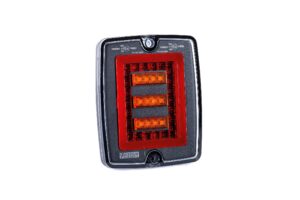
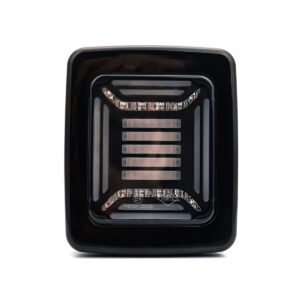
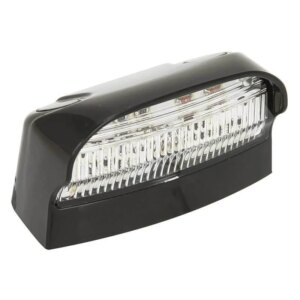
The selection below shows which lighting falls under ECE R148 in practice. Examples include rear lights and other light-signalling devices for truck, trailer and semi-trailers. This allows you to see immediately how type approval translates into reliable, professionally applicable products.
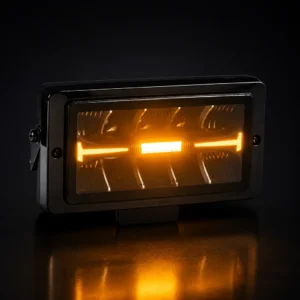
In our stock
TRALERT® supplies R148-approved lighting for truck, trailer, semi-trailers and commercial vehicles. This includes LED rear lights, indicators, licence plate lights, rear fog lights and complete lighting solutions for professional vehicle manufacturing.
When developing a lighting solution, we do not just look at a single approval mark on a single light. The vehicle application, mounting, other relevant ECE approvals, cabling and desired light functions all play a part.
For complete solutions, our range includes 24-volt trailer plug-&-play kits and 12-volt plug-&-play lighting kits for trailers.
Do you have a specific enquiry about an approval, function code or application? Our specialists will work with you to find the right lighting solution for your vehicle or project.
You may also be interested in: ECE R48 and R148 compared
For the technical and legal explanations on this page, we use the original UNECE and EU publications wherever possible. Please note that only the official UN/ECE texts are legally binding and that R148 is subject to ongoing amendments.

A selection of LED lighting for trucks and trailers.
A comprehensive overview of our LED vehicle lighting and accessories.
Plug-&-play lighting kits, cabling and lighting for bodybuilders.
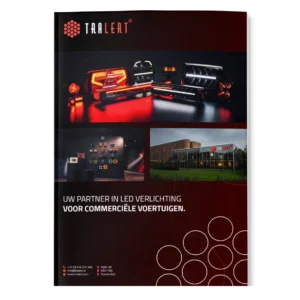
What TRALERT® can do for you as a partner in LED vehicle lighting.
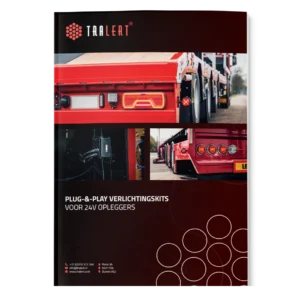
Plug-&-play kits, cabling and lighting for 24V semi-trailers.
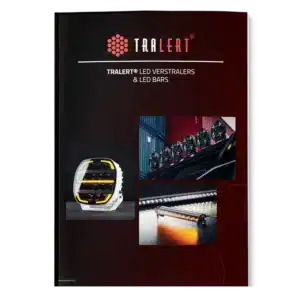
A selection of high-quality LED driving lights and LED bars.
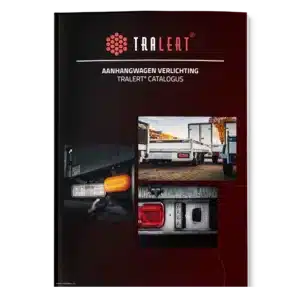
Lighting, wiring harnesses and accessories for trailers.
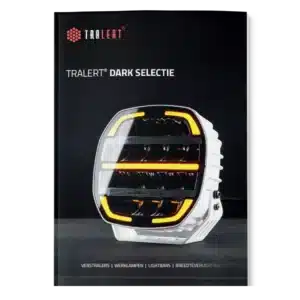
The TRALERT® DARK LED range.
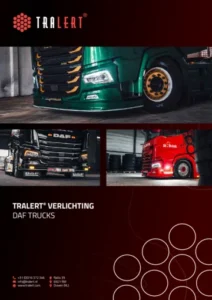
Work lights, rear lights, driving lights, beacor bars and more for DAF Trucks.
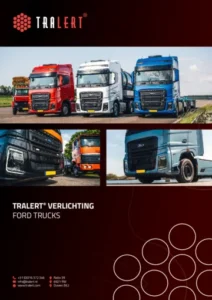
Work lights, rear lights, driving lights, beacor bars and more for Ford Trucks.
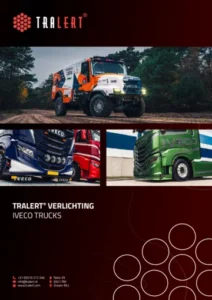
Work lights, rear lights, driving lights, beacon bars and more for Iveco.
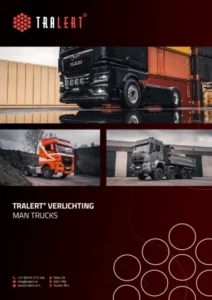
Work lights, rear lights, driving lights, beacon bars and more for MAN.
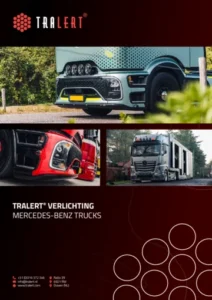
Work lights, rear lights, driving lights, beacon bars and more for Mercedes-Benz Trucks.
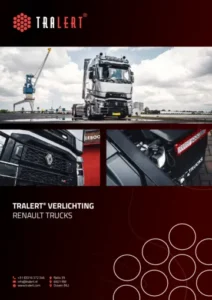
Work lights, rear lights, driving lights, beacor bars and more for Renault Trucks.
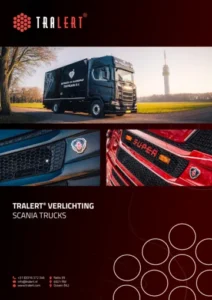
Work lights, rear lights, driving lights, beacor bars and more for Scania.
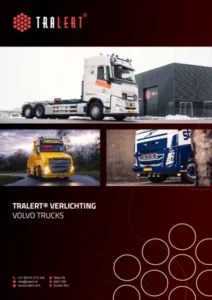
Work lights, rear lights, driving lights, beacon bars and more for Volvo Trucks.
The catalogue opens in a new tab. Can’t see it?
Open the catalogue (PDF)Two questions, in 30 seconds.
TRALERT® works with a dealer network. Dealers can view current stock levels, place orders online on account and receive a product feed for their online shop or system. We assess each enquiry internally and will let you know within 1 to 2 working days whether a partnership is possible.
You can purchase TRALERT® lighting through our partners, either locally or online. Simply provide your details, and we’ll find the partner best suited to help you.
Would you prefer to find a stockist yourself?We will assess your enquiry internally. You will hear from us within 1 to 2 working days to let you know whether a partnership is possible.
We’ll let you know within 1 to 2 working days which partner will be able to assist you further.
TRALERT® operates through a dealer network. Prices, stock levels and online ordering are therefore only available to business customers with an account.
We assess every enquiry internally and will let you know within 1 to 2 working days whether a partnership is possible.
For your own use?Find a stockist
Would you prefer a quote first?Add this product to your quotation request and send it off when you’re ready.