Your specialised partner in LED vehicle lighting
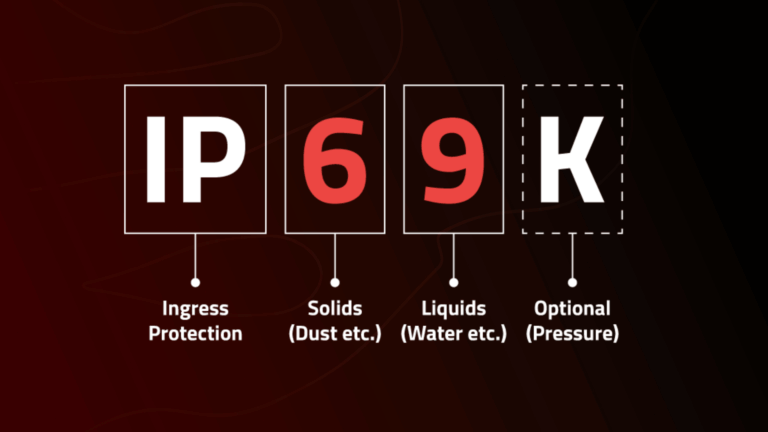
Definition
IP69K is a protection class indicating that equipment is completely dust-tight and resistant to hot water under high pressure from multiple directions. You’ll find this rating particularly in environments where cleaning is not the exception but the norm. Examples include vehicles, food processing, agricultural machinery and industrial applications.
| IP rating | Meaning |
|---|---|
| First digit: 6 | Full protection against dust particles |
| Second digit: 9 | Protection against water jets at very high pressure (80 to 100 bar) |
| Additional character: K | Specifies the specific truck conditions used to demonstrate that a product can withstand cleaning with hot water under high pressure |

In ISO 20653, the designation IP6K9K is often used officially, so you may come across it in this form. The letter K stands for a specific, more rigorous truck method originally developed for road vehicles. In the official ISO 20653 standard, the ‘K’ is added after each number when that specific truck method has been used. In product documentation, you will usually see IP69K to keep things clear.
The IP69K truck simulates intensive high-pressure cleaning, such as that encountered on trucks, trailers, agricultural vehicles and industrial machinery. It is therefore not a light spray truck, but a rigorous practical truck. The method is specified in ISO 20653 and uses truck conditions not found in other IP classes.
During this truck, the product is placed on a rotating platform and sprayed from four sides. This ensures that each side is subjected to the same level of stress. A product only complies with IP69K if it continues to function correctly afterwards and no harmful amount of water has penetrated it.
This is precisely why IP69K is in high demand in sectors where thorough cleaning is essential. You see this, for example, in food processing, livestock transport, construction machinery and other applications where dirt, moisture and cleaning come into play.
IP stands for Ingress Protection. This code indicates the extent to which a housing protects against the ingress of solid objects, dust and water. The first digit indicates protection against dust and contact. The second digit relates to water.
Important to note: IP69K is not ‘higher’ than IP67 or IP68 in terms of dust resistance. In all these classifications, the first digit – 6 – already ensures complete dust resistance. The main difference lies in the way water resistance is tested.
Incidentally, the IP value says nothing about mechanical impact resistance. There is a separate IK classification for this. Particularly for lighting that is regularly cleaned with hot water or under high pressure, it is therefore advisable to consider not only the light output but also the appropriate degree of protection.
In practice, IP69 and IP69K are often used interchangeably, but technically there is a distinct difference. IP69K originally stems from the German DIN 40050-9 standard and was later incorporated into ISO 20653 for road vehicles. IP69 has been added to IEC 60529, the broader international standard for IP ratings.
The truck conditions are very similar: hot water at 80 °C under a pressure of 80 to 100 bar. However, the scope of application differs:
In vehicle lighting, IP69K is the most common rating, as this designation is better suited to the practical realities of the transport sector. If the product specification states only IP69, the level of protection may be comparable. Nevertheless, it is always wise to check exactly which standard the truck is based on.
IP68 and IP69K are often mentioned in the same breath, but they truck different things. IP68 focuses on prolonged immersion, under conditions specified by the manufacturer. IP69K, on the other hand, concerns short-term, intense exposure to hot water under high pressure.
This also means that one classification does not automatically replace another. A luminaire with an IP69K rating is therefore not necessarily suitable for immersion. The reverse is also true: a light with an IP68 rating is not automatically resistant to high-pressure cleaning. That is why professional vehicle lighting often features a dual rating, such as IP68/IP69K.
Would you like to explore the differences between these protection classes in more detail? Then read the complete guide to IP values.
Practical benefit: high-pressure hot water puts a very different strain on a housing and seals than still water or immersion. Consequently, good performance at IP68 says nothing about the outcome of a 9K truck. And the reverse is also true.
IP69K is widely used in situations where vehicles and machinery need to be thoroughly cleaned on a regular basis. IP69K is particularly relevant for vehicles and machinery that are regularly cleaned with a pressure washer or exposed to high-pressure water. Typical applications include HGVs, trailers, agricultural machinery and construction equipment.
Vehicle lighting often involves work lights, driving lights and rear lights fitted in vulnerable or high-stress positions. Please note that an IP rating only indicates protection against dust and water. Appropriate ECE approval remains essential for the legal light function.
IP69K is not a marketing term, but a rigorous practical truck for products that must withstand cleaning with hot water under high pressure.
IP69K is a protection class for equipment that is completely dust-tight and resistant to cleaning with hot water under high pressure. The truck uses water at 80 °C at 80 to 100 bar and is intended for applications where intensive cleaning is common.
No, not automatically. IP69K testing involves high-pressure cleaning with hot water. For submersion, refer to IP68. If you wish to combine both levels of certainty, choose a luminaire with a dual classification such as IP68/IP69K.
This is almost always the case in practice, but the formal notation in ISO 20653 is IP6K9K. IP69K is the common notation you’ll find in many product specifications. You should therefore always check exactly which standard the manufacturer is using.
IP69K is not a statutory ECE approval for a light function. It is a product specification for protection against dust and water under severe cleaning conditions. In sectors where vehicles are cleaned intensively, this classification is often regarded as a practical requirement.

A selection of LED lighting for trucks and trailers.
A comprehensive overview of our LED vehicle lighting and accessories.
Plug-&-play lighting kits, cabling and lighting for bodybuilders.
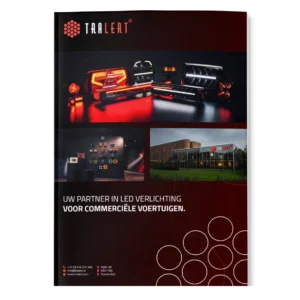
What TRALERT® can do for you as a partner in LED vehicle lighting.
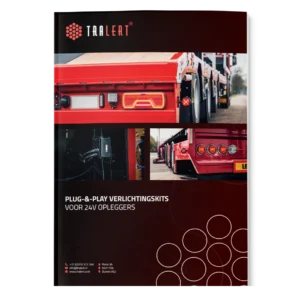
Plug-&-play kits, cabling and lighting for 24V semi-trailers.
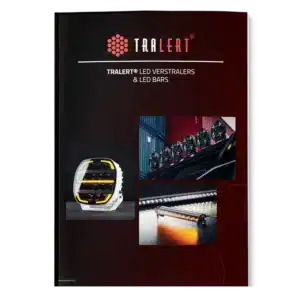
A selection of high-quality LED driving lights and LED bars.
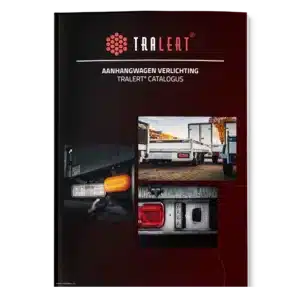
Lighting, wiring harnesses and accessories for trailers.
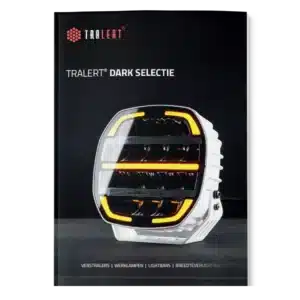
The TRALERT® DARK LED range.
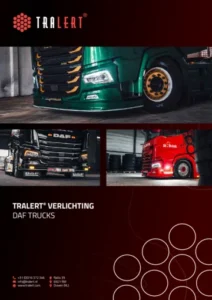
Work lights, rear lights, driving lights, beacor bars and more for DAF Trucks.
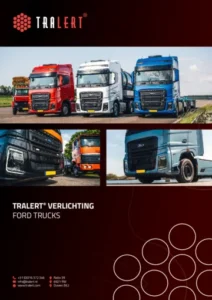
Work lights, rear lights, driving lights, beacor bars and more for Ford Trucks.
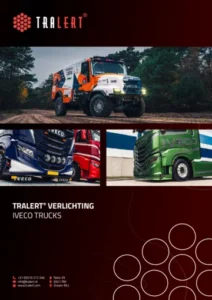
Work lights, rear lights, driving lights, beacon bars and more for Iveco.
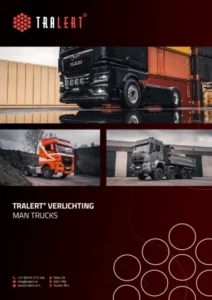
Work lights, rear lights, driving lights, beacon bars and more for MAN.
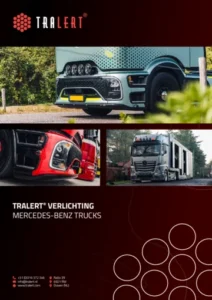
Work lights, rear lights, driving lights, beacon bars and more for Mercedes-Benz Trucks.
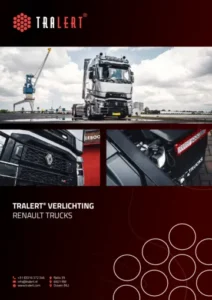
Work lights, rear lights, driving lights, beacor bars and more for Renault Trucks.
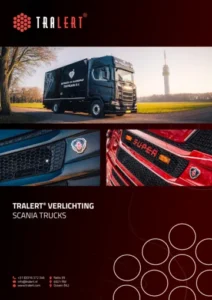
Work lights, rear lights, driving lights, beacor bars and more for Scania.
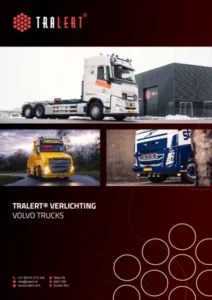
Work lights, rear lights, driving lights, beacon bars and more for Volvo Trucks.
The catalogue opens in a new tab. Can’t see it?
Open the catalogue (PDF)Two questions, in 30 seconds.
TRALERT® works with a dealer network. Dealers can view current stock levels, place orders online on account and receive a product feed for their online shop or system. We assess each enquiry internally and will let you know within 1 to 2 working days whether a partnership is possible.
You can purchase TRALERT® lighting through our partners, either locally or online. Simply provide your details, and we’ll find the partner best suited to help you.
Would you prefer to find a stockist yourself?We will assess your enquiry internally. You will hear from us within 1 to 2 working days to let you know whether a partnership is possible.
We’ll let you know within 1 to 2 working days which partner will be able to assist you further.