Specialised partner in LED vehicle lighting
Definition
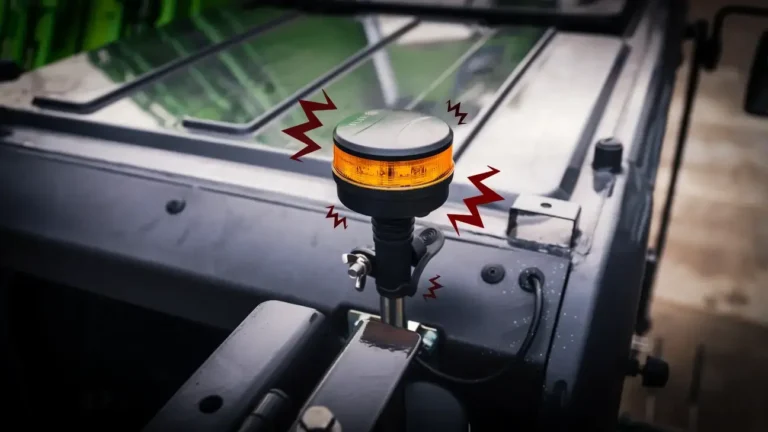
Shock resistance is the ability of a light to withstand short-lived, powerful shocks without becoming damaged or failing. Think of the impact of a pothole, a trailer being coupled to a loading bay with a jolt, or construction machinery travelling over rough terrain. During such impacts, a great deal of force acts on the light – its housing, the lens, the circuit board and the electrical connections – in a fraction of a second.
A shock is a single, intense event, whilst a vibration is continuous and repetitive. A light may withstand a single impact well, yet still fail after thousands of hours of driving due to persistent vibrations. The reverse can also occur. For vehicle lighting, both factors are important. You can read more about continuous stress under ‘vibration resistance’.
Lighting on a commercial vehicle has a tougher time than lighting in a passenger car. Lights are often fitted to the outside of the vehicle – on the surface mounting, the chassis or on a boom – and are subjected to shocks every day. A light that isn’t designed for this will, sooner or later, develop cracks in the housing or loose connections, causing it to flicker or fail. This usually occurs with rear lights, work lights and LED bars, as these are often fitted in places where dirt and moisture play a major role.
This is particularly relevant in the following areas:
TRALERT® has been a specialist in ECE-approved LED lighting for tractors, agricultural machinery and agricultural transport since 2005. Resistant to dust, vibrations and intensive use in the field and on the road.
See our lighting for agriculture →

An LED light has no filament that can break and is therefore generally less fragile. Whether it is actually shock-resistant depends on its construction: the housing, the mounting of the LEDs and the electronics, the sealing and the installation.
TRALERT® develops lighting for professional vehicles that operate daily under harsh conditions. Shock resistance is a key design principle in this regard, alongside waterproofing and dustproofing, amongst other things. You can read about how we approach this on our TRALERT® truck procedures page. If you would like to know which lighting meets these high standards, please visit the heavy-duty lighting page.

A selection of LED lighting for trucks and trailers.
A comprehensive overview of our LED vehicle lighting and accessories.
Plug-&-play lighting kits, cabling and lighting for bodybuilders.
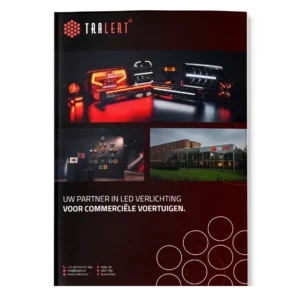
What TRALERT® can do for you as a partner in LED vehicle lighting.
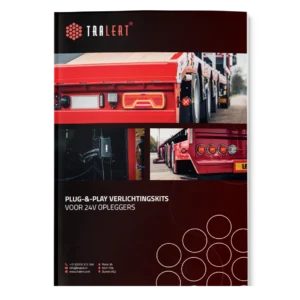
Plug-&-play kits, cabling and lighting for 24V semi-trailers.
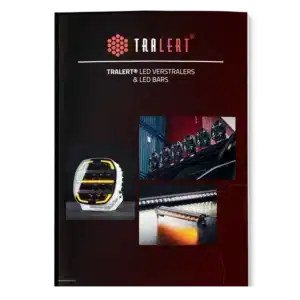
A selection of high-quality LED driving lights and LED bars.
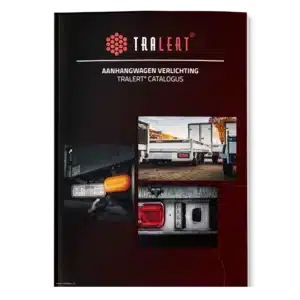
Lighting, wiring harnesses and accessories for trailers.
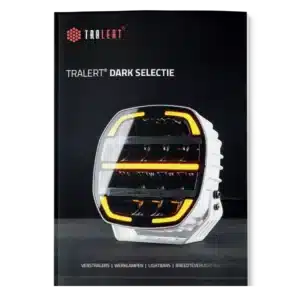
The TRALERT® DARK LED range.
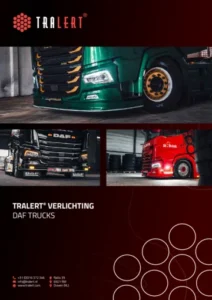
Work lights, rear lights, driving lights, beacor bars and more for DAF Trucks.
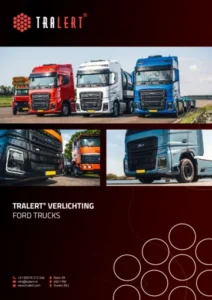
Work lights, rear lights, driving lights, beacor bars and more for Ford Trucks.
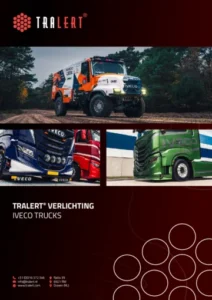
Work lights, rear lights, driving lights, beacon bars and more for Iveco.
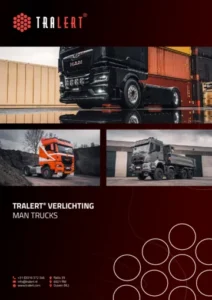
Work lights, rear lights, driving lights, beacon bars and more for MAN.
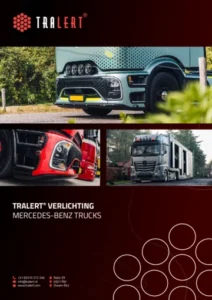
Work lights, rear lights, driving lights, beacon bars and more for Mercedes-Benz Trucks.
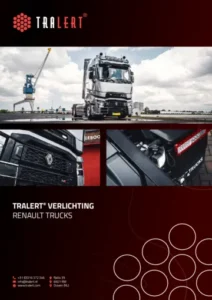
Work lights, rear lights, driving lights, beacor bars and more for Renault Trucks.
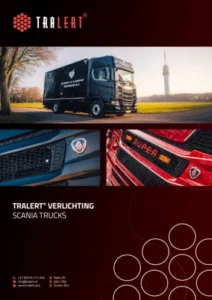
Work lights, rear lights, driving lights, beacor bars and more for Scania.
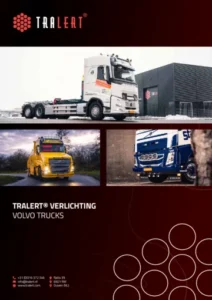
Work lights, rear lights, driving lights, beacon bars and more for Volvo Trucks.
The catalogue opens in a new tab. Can’t see it?
Open the catalogue (PDF)Two questions, in 30 seconds.
TRALERT® works with a dealer network. Dealers can view current stock levels, place orders online on account and receive a product feed for their online shop or system. We assess each enquiry internally and will let you know within 1 to 2 working days whether a partnership is possible.
You can purchase TRALERT® lighting through our partners, either locally or online. Simply provide your details, and we’ll find the partner best suited to help you.
Would you prefer to find a stockist yourself?We will assess your enquiry internally. You will hear from us within 1 to 2 working days to let you know whether a partnership is possible.
We’ll let you know within 1 to 2 working days which partner will be able to assist you further.