Specialised partner in LED vehicle lighting
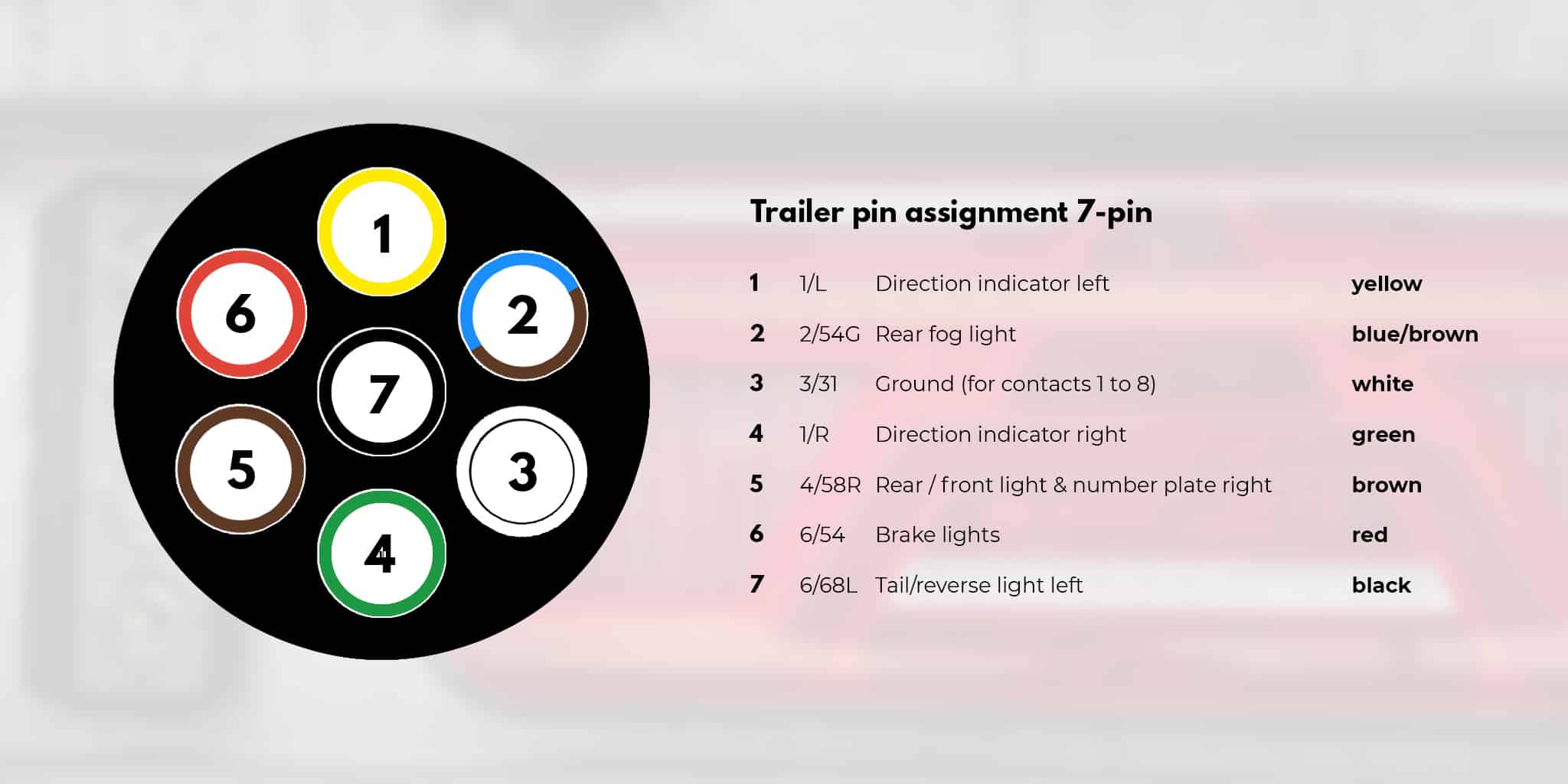
Definition
The 7-pin trailer plug is commonly used to connect a trailer's lighting functions to the towing vehicle. It provides the electrical connections for essential functions such as direction indicators, brake lights, tail lights and the rear fog light.
This connector takes care of essential functions such as:
This type of connector is mainly used on simple or older trailers, including luggage trailers, cycle carriers and boat trailers. In situations where additional electrical functions are required, the 7-PIN connection is often no longer sufficient.
Although the ISO 1724 standard specifies blue for the rear fog light (PIN 2), in practice brown is also common.
This scheme is used for the connection between the vehicle and the trailer for standard trailer lighting. The connector acts as the link between the towing vehicle, the cabling and the lighting. A fault in the connection therefore has an immediate effect on the entire system. See the complete guide to trailer lighting for further explanation of how functions work, cabling and types of applications.
When a constant power supply or reversing lights are required, the 13-PIN connector in accordance with ISO 11446 is the right choice.
If the towing vehicle and the trailer have different plug types, an adapter may be the solution. Examples of these include:
Please note: when using an adapter from 13 to 7, additional functions such as constant power and reversing lights remain inoperative. Only the basic lighting is supported.
When a trailer fitted with LED lighting is connected via a 7-PIN connector, interference may occur. This is common in modern vehicles equipped with a CAN-bus system. Possible symptoms:
These interferences are caused by the vehicle not recognising the low current consumption of LED lighting as the correct load.
Want to know more? Read the article:
Troubleshooting CAN-bus interference in LED lighting
A 7-PIN connector supports basic lighting only. A 13-PIN connector additionally enables functions such as reversing lights, constant current and caravan facilities. For modern vehicles and applications, 13-PIN is in many cases the better choice.
In our article on connecting trailer lighting, you’ll find useful tips on how to do it properly. With trailer lighting, interference can arise due to an incorrect pin sequence, a poor mass connection or corrosion in the connector or junction box. Differences between vehicles, adaptors and wiring also regularly cause faulty signals. In this expert article by one of our technical specialists, we explain more about the causes of trailer lighting failures and what you can do to resolve them.
Would you rather not assemble the wiring yourself? Then take a look at our 7-PIN wiring harnesses for trailers.

A selection of LED lighting for trucks and trailers.
A comprehensive overview of our LED vehicle lighting and accessories.
Plug-&-play lighting kits, cabling and lighting for bodybuilders.
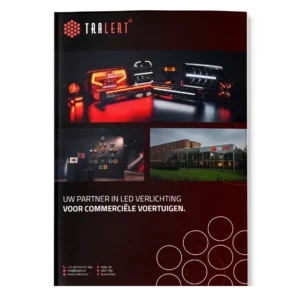
What TRALERT® can do for you as a partner in LED vehicle lighting.
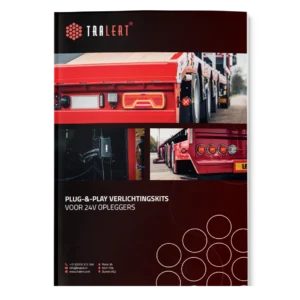
Plug-&-play kits, cabling and lighting for 24V semi-trailers.
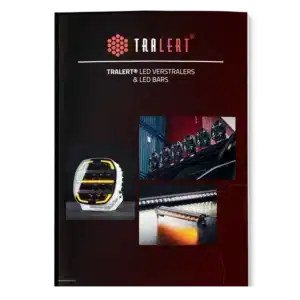
A selection of high-quality LED driving lights and LED bars.
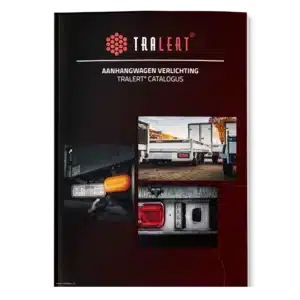
Lighting, wiring harnesses and accessories for trailers.
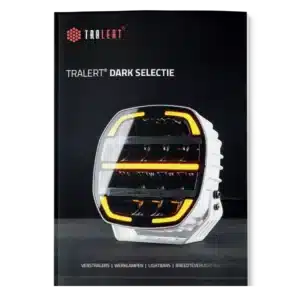
The TRALERT® DARK LED range.
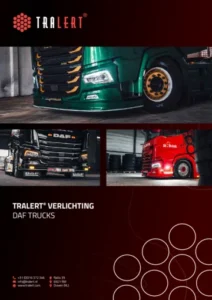
Work lights, rear lights, driving lights, beacor bars and more for DAF Trucks.
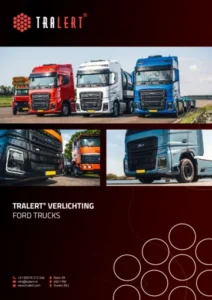
Work lights, rear lights, driving lights, beacor bars and more for Ford Trucks.
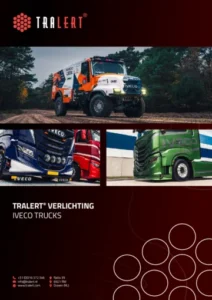
Work lights, rear lights, driving lights, beacon bars and more for Iveco.
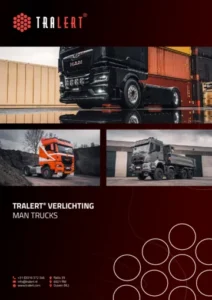
Work lights, rear lights, driving lights, beacon bars and more for MAN.
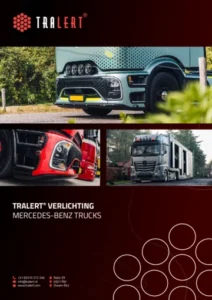
Work lights, rear lights, driving lights, beacon bars and more for Mercedes-Benz Trucks.
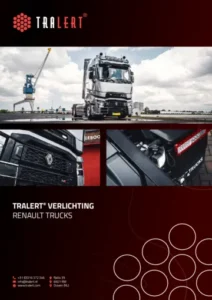
Work lights, rear lights, driving lights, beacor bars and more for Renault Trucks.
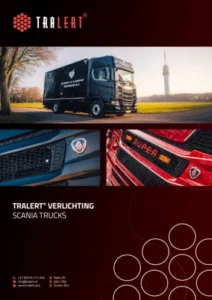
Work lights, rear lights, driving lights, beacor bars and more for Scania.
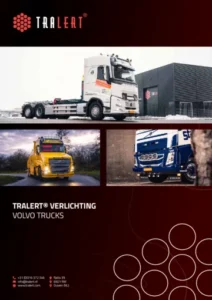
Work lights, rear lights, driving lights, beacon bars and more for Volvo Trucks.
The catalogue opens in a new tab. Can’t see it?
Open the catalogue (PDF)Two questions, in 30 seconds.
TRALERT® works with a dealer network. Dealers can view current stock levels, place orders online on account and receive a product feed for their online shop or system. We assess each enquiry internally and will let you know within 1 to 2 working days whether a partnership is possible.
You can purchase TRALERT® lighting through our partners, either locally or online. Simply provide your details, and we’ll find the partner best suited to help you.
Would you prefer to find a stockist yourself?We will assess your enquiry internally. You will hear from us within 1 to 2 working days to let you know whether a partnership is possible.
We’ll let you know within 1 to 2 working days which partner will be able to assist you further.