Your specialised partner in LED vehicle lighting
Definition
UNECE Regulation No. 10, commonly referred to as ECE R10, sets requirements for the electromagnetic compatibility (EMC) of vehicles and electrical or electronic components. The standard sets out two requirements: a component must not itself emit any interfering radiation and must be immune to external electromagnetic radiation. You can recognise approved lighting by the E-brand on the luminaire. The current version is Revision 6; Revision 7 has now been adopted.
The abbreviation ECE refers to the United Nations Economic Commission for Europe (UNECE), which draws up these regulations and sets out the associated truck requirements. Read more about EMC interference suppression here.
ECE-R10 applies not only to complete vehicles, but also to individual electrical components. The scope of application includes:
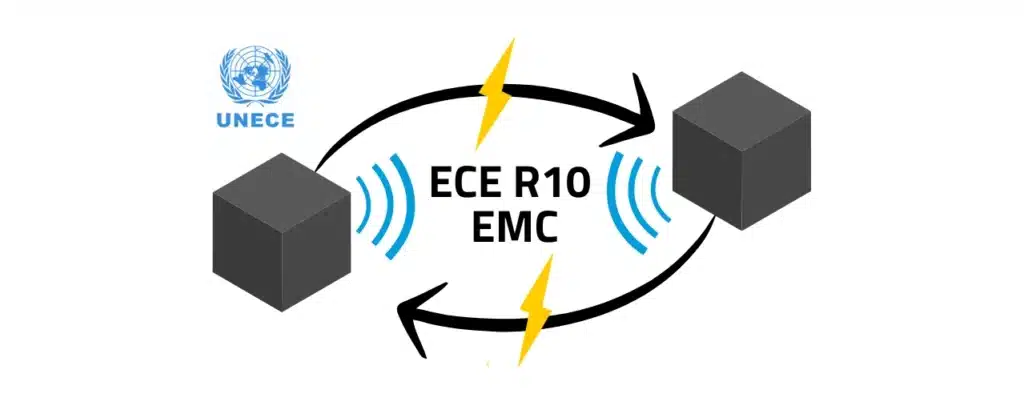
The certification assesses a component on two fronts:
On professional warning lights, you will almost always see ECE-R10 alongside ECE R65. This is no coincidence: the two regulations cover different aspects of the same light. ECE R65 sets out the requirements for the warning signal itself, such as light output, colour and flash pattern of a flashing light, beacon bar, warning light or LED bar with a warning light function. ECE-R10 certifies the underlying electronics. Flashing LED lighting, in particular, continuously switches high currents and is therefore a potential source of electromagnetic interference on the vehicle’s electrical system. A flashing light is therefore only fully approved if it bears both markings: R65 (Class 1 or 2) for what the light does, and R10 for what it must not do to the rest of the vehicle. Read more about ECE Regulation R65 here or view our range of R65 lighting.
ECE-R10 is also directly relevant to CAN-bus electronics. The regulation ensures that lighting and on-board electronics do not interfere with each other electromagnetically, which is essential, particularly in modern vehicles with sensitive data bus systems. Please note: if the vehicle displays an error message after LED lighting has been mounted, this is usually not due to electromagnetic interference but to load detection. The vehicle’s electronics interpret the low power consumption of the LED light as a fault. You can read about how this works and what to do about it in our article on resolving CAN-bus interference.
An ECE-R10 certified product can be recognised by the E-mark on the luminaire, housing or nameplate. This marking consists of a circle containing the letter E, followed by a number indicating which country granted the approval and a number referring to Regulation No. 10.
A typical ECE-R10 seal, for example, looks like this: E4 10R-06 1234. The different parts mean:
The ECE-R10 marking can be found in several places. Professional manufacturers deliberately make the mark visible so that purchasers, installers and inspection authorities can easily check whether a product complies with EMC standards:
Is the E-mark missing, or can the number not be traced back to an official approval certificate? If so, there is a good chance that the product is not ECE-R10 certified. For use in commercial vehicles, trailers and heavy-duty vehicle construction, this poses a risk: non-certified lighting can lead to failure of the MOT truck, fines during inspections and interference with the vehicle’s electrical system.
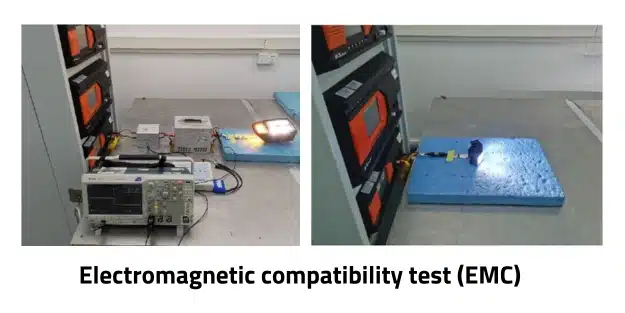
ECE R10 certification involves testing electronic vehicle components, such as vehicle lighting and other electrical systems, for their electromagnetic compatibility (EMC). This means checking that these components do not cause or are themselves affected by electromagnetic interference. These tests are essential to ensure vehicle safety and reliability.
What does the test involve?
The procedure consists of measuring two types of emissions:
These measurements are carried out over a wide frequency range, typically from 20 MHz to 2000 MHz. The measured emission values are then compared with predetermined limits that depend on the frequency band.
Truck conditions
Testing takes place under controlled environmental conditions, such as stable temperature and humidity. Both horizontal and vertical polarisation are measured to get a full picture of the product's electromagnetic features.
The results are analysed using advanced measuring equipment, such as peak detectors. If the measured emissions are below the established limits, the product is approved according to the ECE R10 standard.
As described above, ECE-R10 covers virtually all vehicle categories found on the road every day. It is precisely within the heavy-duty vehicle sector that this standard is crucial, as complex electrical systems are combined there: lighting, CAN-bus, EBS and auxiliary systems all share a single on-board electrical system.
Conducted disturbances are transmitted through the cables in the vehicle and can cause interference in other electronic systems, such as the on-board computer or communication systems between vehicle components. Radiated disturbances, on the other hand, are transmitted through the air via electromagnetic waves and can interfere with wireless communication or other electronic devices, both inside and outside the vehicle.
For trailer lighting, ECE-R10 is particularly relevant because modern trailers are increasingly being fitted with LED lighting and other electronic components. In such applications, it is important that the lighting not only functions properly but also does not cause interference with other vehicle systems. If you would like to know more about the broader relationship between lighting, systems and applications, please also read the comprehensive guide to trailer lighting. If you would like to better understand how this standard relates to the legal requirements in practice, please also take a look at our page on legislation governing trailer lighting.
Below you can download the latest consolidated version of ECE-R10. This is the official UNECE publication with the text of the regulation in force, including amendments and supplements adopted up to that time.
Download: UN Regulation No. 10 - Revision 6Revision 7 of Regulation No. 10 has been adopted by the UNECE. This revision responds to rapid technological developments in vehicles and contains several important changes that manufacturers, truck laboratories and vehicle builders must take into account:
Existing Revision 6 type approvals are subject to a transition period: they remain valid until adapter or until a significant change is made to the vehicle or component. For new type approvals, Revision 7 will take precedence once each treaty country implements the scheme nationally.
As soon as the official consolidated text of Revision 7 becomes publicly available via the UNECE document catalogue, you will be able to download it here.
Are you looking for ECE-R10-certified LED lighting? TRALERT® supplies a wide range of R10-approved lighting for commercial vehicles, including flashing beacons, warning lights, driving lights and LED bars. Please get in touch for technical advice or view the full range on our dealer portal.
Would you like to better understand how ECE-R10 relates to the wider regulatory framework? Then read our guide on lighting regulations for trucks and semi-trailers, or explore the broader context of ECE standards and legislation.

A selection of LED lighting for trucks and trailers.
A comprehensive overview of our LED vehicle lighting and accessories.
Plug-&-play lighting kits, cabling and lighting for bodybuilders.
What TRALERT® can do for you as a partner in LED vehicle lighting.
Plug-&-play kits, cabling and lighting for 24V semi-trailers.
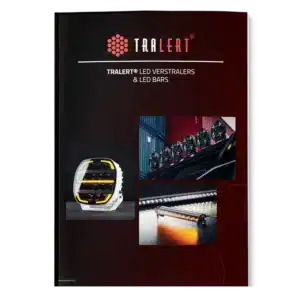
A selection of high-quality LED driving lights and LED bars.
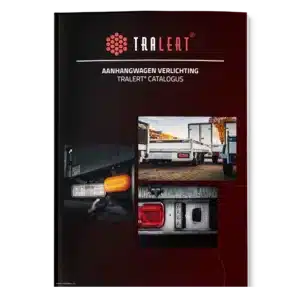
Lighting, wiring harnesses and accessories for trailers.
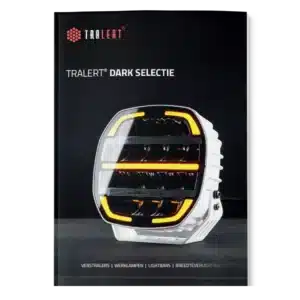
The TRALERT® DARK LED range.
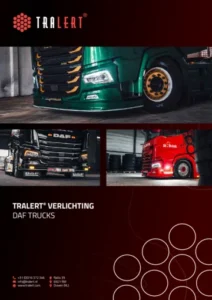
Work lights, rear lights, driving lights, beacor bars and more for DAF Trucks.
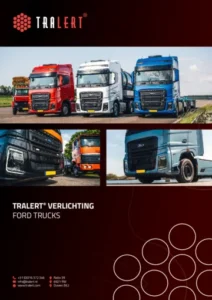
Work lights, rear lights, driving lights, beacor bars and more for Ford Trucks.
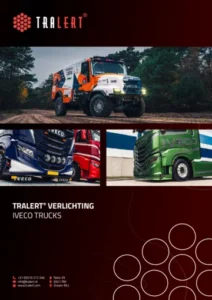
Work lights, rear lights, driving lights, beacon bars and more for Iveco.
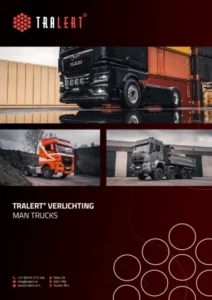
Work lights, rear lights, driving lights, beacon bars and more for MAN.
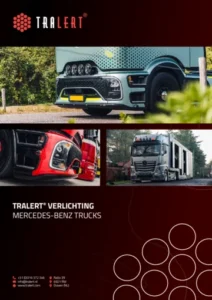
Work lights, rear lights, driving lights, beacon bars and more for Mercedes-Benz Trucks.
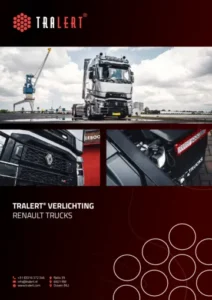
Work lights, rear lights, driving lights, beacor bars and more for Renault Trucks.
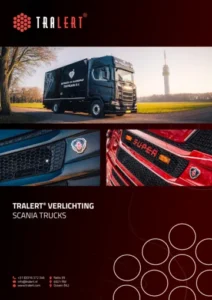
Work lights, rear lights, driving lights, beacor bars and more for Scania.
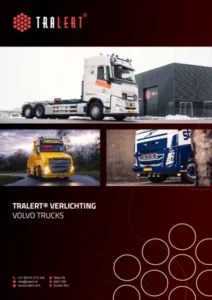
Work lights, rear lights, driving lights, beacon bars and more for Volvo Trucks.
The catalogue opens in a new tab. Can’t see it?
Open the catalogue (PDF)Two questions, in 30 seconds.
TRALERT® works with a dealer network. Dealers can view current stock levels, place orders online on account and receive a product feed for their online shop or system. We assess each enquiry internally and will let you know within 1 to 2 working days whether a partnership is possible.
You can purchase TRALERT® lighting through our partners, either locally or online. Simply provide your details, and we’ll find the partner best suited to help you.
Would you prefer to find a stockist yourself?We will assess your enquiry internally. You will hear from us within 1 to 2 working days to let you know whether a partnership is possible.
We’ll let you know within 1 to 2 working days which partner will be able to assist you further.