Specialised partner in LED vehicle lighting


The short answer
An amber beacon is a warning signal used to alert other road users to a vehicle or operation that may present a temporary hazard. In the UK, flashing amber beacons are used on specific vehicles and in specific situations, including certain slow-moving, maintenance and recovery vehicles. Where applicable, the beacon must meet the relevant approval requirements, such as ECE R65.
Orange flashing beacons(amber warning lights) are intended as warning signals for situations in which a vehicle poses a potential danger to other road users. Think low speed, standing still on the carriageway, work, exceptional transport or salvage. They do not give priority (unlike blue/red).
In most UNECE countries, the main rules are the same. However, there are some exceptions to which we will elaborate further on this page.
In this article, you will read:
In practice, mounting and operation are often lumped together. Legally, however, they are two separate matters, each with its own regulatory framework. Those who keep that distinction sharp avoid fines and wrong purchasing choices.
Mounting an orange beacon. Mounting on a vehicle is permitted provided the light is ECE R65-certified and the installation complies with ECE R48 mounting rules (mounting height, 360° visibility, switching conditions). An incorrectly mounted light can lead to rejection during inspections and to legal liability in the event of accidents.
Carrying an orange beacon. This is where it gets stricter. Actually turning on the public road is only permitted in specific situations. Think work on or alongside the road, low speed, exceptional transport, salvage or escort. For other times such as commuting or a trip to the hardware store, switching on is not allowed, even if the light is certified and correctly fitted.
Important to remember: orange is not a priority colour. Blue is reserved for emergency services such as police, fire brigade and ambulance, and gives the right to claim priority with siren and beacons. Orange(amber) only warns. It signals that your vehicle itself shapes a temporary risk to other road users due to work, low speed or special transport. Other road users maintain their normal priority rules.
Want to know more about when blue signal lights are permitted and who is allowed to carry them? Read our blog on blue beacons and the rules on public roads.
| Country | Can orange beacons be used? | Permitted situations/vehicles | Restrictions / Private use | Important regulations / reference |
|---|---|---|---|---|
| CountryNetherlands | Are you allowed to fit orange beacons?Yes, subject to strict conditions | Permitted situations/vehicles: Roadworks(road construction, maintenance), slow-moving traffic (> certain width/length), exceptional loads, recovery/breakdown assistance, agriculture/forestry involving wide machinery, escorts. | Restrictions / Private use: Private individuals: no on standard passenger cars (only on a non-permanent basis in the event of a breakdown in specific cases). Professional/work vehicles only. | Key regulations / references: Regulationon Optical and Audible Signals 2009 (art.5 et seq.); Vehicle Regulation art.5.2.64 et seq. → Check with the RDW or the police for specific vehicle types. |
| CountryGermany | Are you allowed to fit orange beacons?Yes, but it is strictly regulated | Permitted situations/vehicles: Roadworks, exceptional transport (large-volume and heavy goods transport), slow-moving vehicles (e.g. vehicles from the agriculture sector with a speed limit of over 40 km/h), recovery operations, winter maintenance. BASt/TÜV approval is often required for mounting. | Restrictions / Private use: Private individuals: no, unless an exception applies (e.g. classic car or specific work). Strict enforcement under Section 52 of the StVZO. | Key regulations / reference: StVZO §52 (Straßenverkehrs-Zulassungs-Ordnung) – additional requirements for height/visibility during exceptional transport. Consult local traffic authorities or TÜV. |
| CountryBelgium | Are you allowed to fit orange warning lights?Yes, subject to certain conditions | Permitted situations/vehicles: Roadworks(roads, utility companies), exceptional transport, slow-moving traffic, recovery operations. Often mandatory for certain types of work. | Restrictions / Private use: Private individuals: not permitted on standard vehicles. For professional purposes only. The light must be switched off as soon as the vehicle is no longer in the specific situation | Key regulations / references: Royal Decreeof 3 June 2024 (Highway Code, coming into force in 2027 but already relevant); Royal Decree of 1 December 1975 (outdated, but contains transitional provisions). FOD Mobility for further details. |
| CountryFrance | Are you allowed to fit orange warning lights?Yes, it is often compulsory | Permitted situations/vehicles: Slow-moving vehicles (<25–40 km/h), roadworks, exceptional transport, recovery operations, and agriculture involving wide machinery. A minimum of 1–2 rotating beacons, depending on visibility. | Restrictions / Private use: Private individuals: no – for authorised vehicles only. Use without authorisation is a criminal offence. | Key regulations / reference: Code de la route art. R313-28 et seq.; Decree of 4 July 1972 (number of rotating beacons); Decree of 6 February 1992. Visit Service-public.fr for a list of authorised vehicles. |
| CountryUnited Kingdom | Is it permitted to fit orange beacons?Yes, highly recommended / mandatory in many cases | Permitted situations/vehicles: Roadworks, slow-moving vehicles, recovery operations, agricultural machinery, and abnormal loads. Flashing amber beacons are mandatory in certain Chapter 8 situations. | Restrictions / Private usePrivate individuals: restricted – only for work purposes or with specific authorisation. | Key regulations / reference: United Kingdom: Road Vehicles Lighting Regulations 1989 (legal framework for amber beacons) combined with the Traffic Signs Manual, Chapter 8 (best practice for roadworks). |
| CountryItaly | Are you allowed to fit orange warning lights?Yes, subject to certain conditions | Permitted situations/vehicles: Roadworks, exceptional loads, slow-moving vehicles (agriculture, construction), breakdown assistance. | Restrictions / Private use: Private individuals: no – authorised users (for professional purposes) only. | Key regulations / reference: Codice della Strada art, Article 153 (visual signal); Legislative Decree 285/1992. Ministry of Infrastructure and Transport for further details. |
Spain: Since 1 January 2026, all vehicles with Spanish registration plates must use an approved connected V-16 emergency signal light (replacement warning triangle) in the event of a breakdown or standstill. Only V-16 models with IoT connection to the DGT 3.0 platform are allowed; non-connected versions and warning triangles are no longer valid after this date. This applies to passenger cars, light commercial vehicles, trucks and buses (Royal Decree 159/2021 + amendment Royal Decree 1030/2022). Foreign EU vehicles may continue to use triangles. This makes Spain unique in the EU.
Below is a selection of popular ECE R65-certified flashing beacons from the TRALERT® product range. Each model meets the requirements for use on public roads and is available in various mounting shapes. Whether you opt for permanent flush mounting on a truck or flexible deployment on changing vehicles, these models cover the most common applications. You can find the complete overview on the LED beacons page.
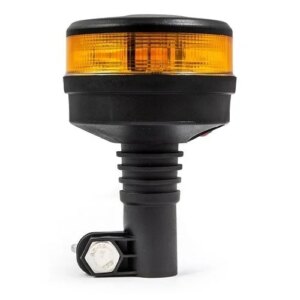
In our stock
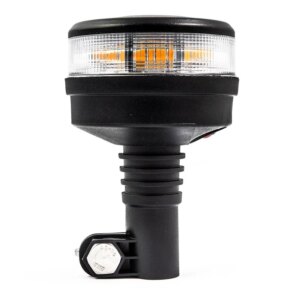
In our stock
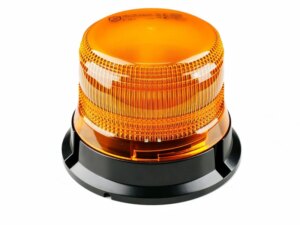
TRALERT® LED flashing beacons (ECE R65-certified) are designed for maximum flexibility in professional applications. Whether for permanent installation on trucks, trailers or agricultural machinery, or for temporary signalling on construction vehicles: you can choose the mounting option that best suits the application, vehicle type and operational requirements. Below are the four main options, with their specific advantages:
For applications where multiple light units are combined in a single bar, read more in our blog about beacon bars on public roads.
TRALERT® supplies ECE R65- and R10-certified flashing beacons, warning lights and beacon bars that comply with the regulations for all UNECE member states. Our specialists will be happy to assist you with a bespoke specification for your market.
Disclaimer: At TRALERT® we make every effort to keep the information in this article as accurate and up-to-date as possible. Legislation may vary by country, region or state and may change. Exemptions are possible in some cases. We recommend that you always check the current legislation with the competent authority in the respective country. TRALERT® is not liable for damages or fines resulting from outdated information.

A selection of LED lighting for trucks and trailers.
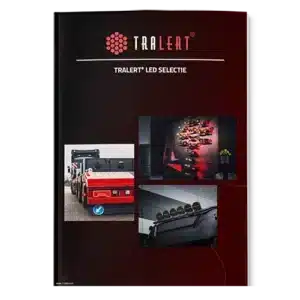
A comprehensive overview of our LED vehicle lighting and accessories.
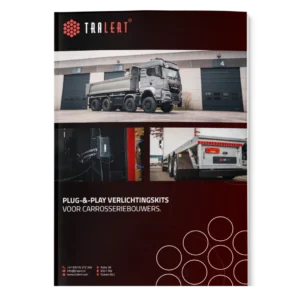
Plug-&-play lighting kits, cabling and lighting for bodybuilders.
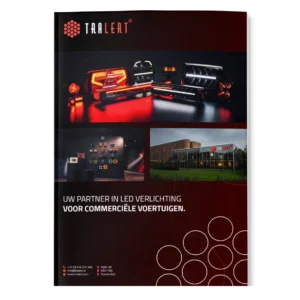
What TRALERT® can do for you as a partner in LED vehicle lighting.
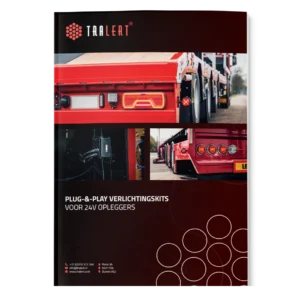
Plug-&-play kits, cabling and lighting for 24V semi-trailers.
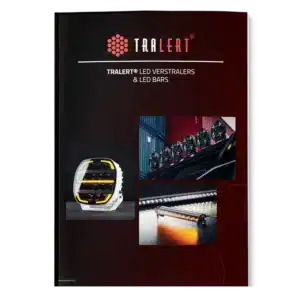
A selection of high-quality LED driving lights and LED bars.
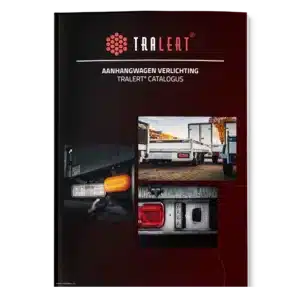
Lighting, wiring harnesses and accessories for trailers.
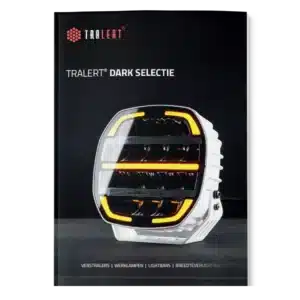
The TRALERT® DARK LED range.
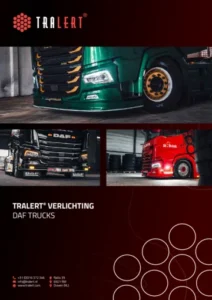
Work lights, rear lights, driving lights, beacor bars and more for DAF Trucks.
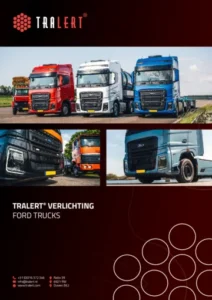
Work lights, rear lights, driving lights, beacor bars and more for Ford Trucks.
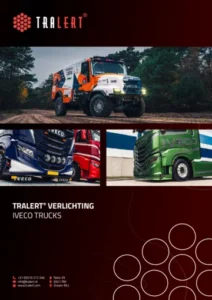
Work lights, rear lights, driving lights, beacon bars and more for Iveco.
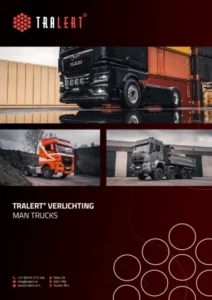
Work lights, rear lights, driving lights, beacon bars and more for MAN.
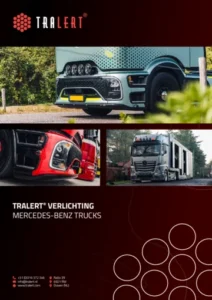
Work lights, rear lights, driving lights, beacon bars and more for Mercedes-Benz Trucks.
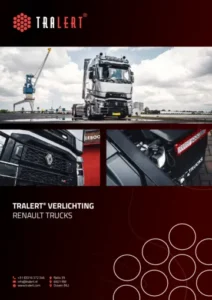
Work lights, rear lights, driving lights, beacor bars and more for Renault Trucks.
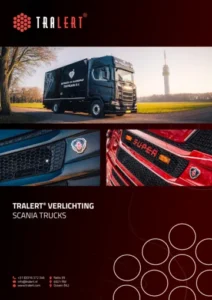
Work lights, rear lights, driving lights, beacor bars and more for Scania.
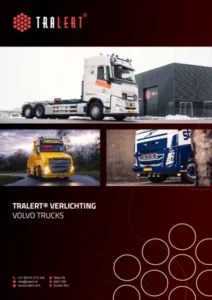
Work lights, rear lights, driving lights, beacon bars and more for Volvo Trucks.
The catalogue opens in a new tab. Can’t see it?
Open the catalogue (PDF)Two questions, in 30 seconds.
TRALERT® works with a dealer network. Dealers can view current stock levels, place orders online on account and receive a product feed for their online shop or system. We assess each enquiry internally and will let you know within 1 to 2 working days whether a partnership is possible.
You can purchase TRALERT® lighting through our partners, either locally or online. Simply provide your details, and we’ll find the partner best suited to help you.
Would you prefer to find a stockist yourself?We will assess your enquiry internally. You will hear from us within 1 to 2 working days to let you know whether a partnership is possible.
We’ll let you know within 1 to 2 working days which partner will be able to assist you further.
TRALERT® operates through a dealer network. Prices, stock levels and online ordering are therefore only available to business customers with an account.
We assess every enquiry internally and will let you know within 1 to 2 working days whether a partnership is possible.
For your own use?Find a stockist
Would you prefer a quote first?Add this product to your quotation request and send it off when you’re ready.