Specialised partner in LED vehicle lighting


The short answer
Do you experience radio interference as soon as you switch on the LED lighting on your truck, trailer or other commercial vehicle? If so, there is a good chance you are experiencing electromagnetic interference (EMC). The interference may be caused by inadequately shielded lighting, but also by the wiring, earth connection or the position of the antenna and cables. Often, the cause can be traced back to a light or a specific component of the installation.
Key points at a glance:

LED lighting operates on the basis of electronic circuits. These circuits control the LED chips efficiently, but may cause unwanted electromagnetic emissions in the process. If the lighting is not adequately shielded, the following systems, amongst others, may be affected:
In modern vehicles and machinery, many electronic systems operate in close proximity to one another. As a result, EMC interference can not only be a nuisance, but can also reduce the operational reliability of communication or navigation equipment.
There are two pathways through which interference can propagate. Understanding the difference helps in determining the correct solution.
Installation also plays a key role. A poor mass connection, poor cable routing, cable loops or an antenna situated close to power cables can exacerbate the interference.
If you switch on several lights at the same time, the overall level of interference may increase. Furthermore, the luminaires often share the same power supply and mass. As a result, interference is sometimes only noticeable when an entire light bar or set is switched on.
Would you like to know which light or component is causing the interference? Then work systematically from the possible source of the interference back towards the installation. By following the steps below, you can avoid replacing components unnecessarily straight away.
Most interference problems can be traced back to a limited number of possible causes. The table below links common symptoms to a probable cause and a practical initial check.
| Symptom | Probable cause | Initial check |
|---|---|---|
| Symptom: Noiseor crackling on FM as soon as a light switches on | Probable cause: Emissions from the LED driver or interference transmitted through the electrical system | Initial check: Truck the lights individually |
| Symptom: DAB receptioncuts out | Probable cause: Insufficiently shielded driver or poor installation | Initial check: Truck a different light on the same connection point |
| Symptom: GPSor GNSS reception deteriorates | Probable cause: Source of interference close to the antenna or antenna cable | Initial check: Temporarily increase the distance between the power supply and antenna cables |
| Symptom: Interference increases as more lights are switched on | Probable cause: Higher overall interference level or an issue with the shared power supply or mass | Initial check: Check the power supply and mass connections |
| Symptom: The fault only occurs when the engine is running | Probable cause: Possibly another or additional source of interference | Initial check: Compare the situation with the engine on and off |
| Symptom: Fault occurs after replacing halogen with LED | Probable cause: The switching LED driver generates electromagnetic emissions | Initial check: Check the EMC status and documentation for the light |
Tackle the problem in ascending order, from simple checks to replacing the source of the interference. This way, you’ll avoid replacing parts when the actual cause lies within the installation.
A ferrite core or EMC filter may help, but it is not a universal solution and should not be used as a substitute for a properly fitted light and installation. If this does not resolve the issue, there may be another electrical or electronic problem.
If you’re not experiencing static or loss of reception, but are seeing an error message, hyperflashing or flashing lights, please refer to our article on CAN bus interference caused by LED lighting.
ECE R10 and CISPR 25 help to minimise the risk of electromagnetic interference, but are no substitute for an assessment of the entire installation.
UNECE R10 sets out EMC requirements for vehicles and for electrical or electronic vehicle components. A light with a valid R10 approval has been assessed against the relevant EMC requirements in accordance with the applicable truck methods.
CISPR 25 sets out truck methods and emission limits for electromagnetic disturbances that may affect on-board radio and other receivers. The standard defines various emission classes, with Class 5 imposing the strictest limits.
Please note: a CE marking is not the same as a vehicle-specific approval in accordance with UNECE R10. The CE marking may indicate that a product complies with applicable European product legislation, but does not in itself constitute proof that vehicle lighting has been approved in accordance with R10.
Even a valid R10 approval does not guarantee that every vehicle configuration will remain completely interference-free. Cable routing, mass, antenna position and the combination of components also play a role. You can read more background information in the explanation of EMC interference suppression and the comprehensive article on CISPR 25.
Which CISPR 25 class do you need? The standard does not specify which class is required for a particular application. This depends on the vehicle manufacturer’s requirements, the receivers present and the entire installation. A stricter emission class may therefore be required for sensitive communication, radio or navigation systems.
Not every interference that occurs after fitting LED lighting is an EMC problem. The nature of the symptom often indicates where you should look for the cause.
Dashboard warnings, hyperflashing and flashing lights are often attributed to CAN bus issues. Technically speaking, the cause usually lies not in the CAN bus communication itself, but in the electronic lamp monitoring and the different power consumption of LED lighting.
Do you recognise these symptoms? Then read on to find out how to identify and resolve a CAN bus fault caused by LED lighting. Would you first like to know what manufacturers mean by this commonly used term? Then take a look at our explanation of canbus proof LED lighting.
TRALERT®’s vehicle lighting is selected and assessed against the relevant EMC requirements where applicable. For applications with heightened EMC requirements, selected products within the range are available with a verifiable CISPR 25 classification. These products are suitable for applications involving sensitive communication, radio or navigation systems.
One example is the WF-8082 LED work light:

In the TRALERT® product shop, you can easily filter by EMC certification, allowing you to quickly select the right lighting based on the required standards.
LED lighting is controlled by a switching driver. This circuit can generate high-frequency electromagnetic energy which is picked up by the receiver’s antenna or wiring. If there is insufficient interference suppression or the installation is sub-optimal, this can manifest as noise, crackling or loss of reception.
Yes. Depending on the emissions and their harmonics, DAB reception may be lost or GPS and GNSS reception may be weakened. The likelihood of interference may increase if the source of interference, the power cable or the driver is located close to the antenna or antenna cable.
Switch the lighting off and on again, then truck each light individually. Next, check the mass, connectors and cable routing. If possible, temporarily connect a different light to the same connection point to determine whether the light or the installation is causing the interference.
No. A ferrite core can attenuate certain shapes of conducted interference, but it is not a universal solution. If the cause lies with the light, a poor mass connection or unfavourable cable routing, these issues must be addressed first.
ECE R10 sets out EMC requirements for vehicles and electrical or electronic vehicle components. An R10 approval can be identified by an E-mark bearing the designation 10R. CISPR 25 describes truck methods and emission limits for interference that may affect on-board receivers. Class 5 applies the strictest limits in this regard.
Are you looking to select lighting for a vehicle with sensitive on-board electronics? Then don’t just look at the light output and protection class; also check the available EMC approvals and truck data. If you’re unsure about the right solution for your vehicle or application, the specialists at TRALERT® will be happy to advise you.

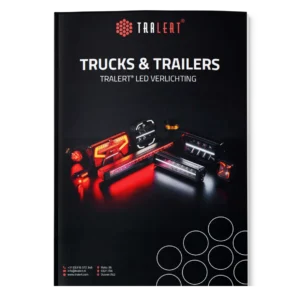
A selection of LED lighting for trucks and trailers.
A comprehensive overview of our LED vehicle lighting and accessories.
Plug-&-play lighting kits, cabling and lighting for bodybuilders.
What TRALERT® can do for you as a partner in LED vehicle lighting.
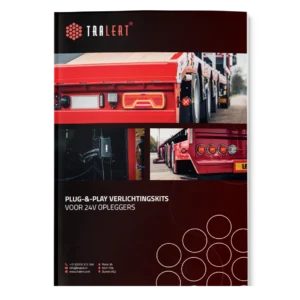
Plug-&-play kits, cabling and lighting for 24V semi-trailers.
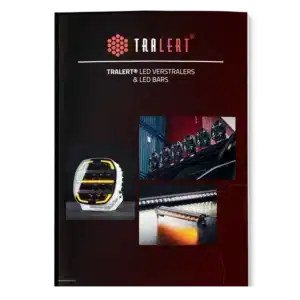
A selection of high-quality LED driving lights and LED bars.
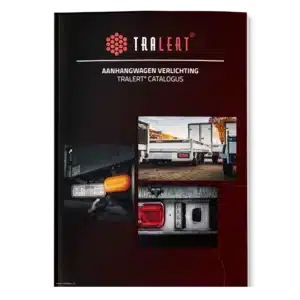
Lighting, wiring harnesses and accessories for trailers.
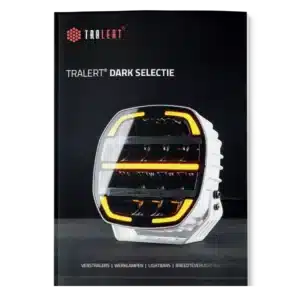
The TRALERT® DARK LED range.
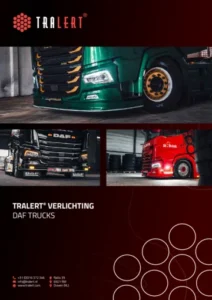
Work lights, rear lights, driving lights, beacor bars and more for DAF Trucks.
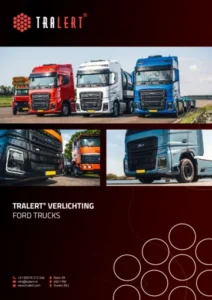
Work lights, rear lights, driving lights, beacor bars and more for Ford Trucks.
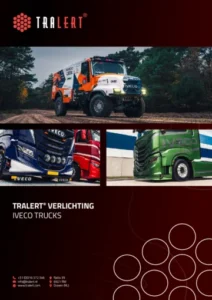
Work lights, rear lights, driving lights, beacon bars and more for Iveco.
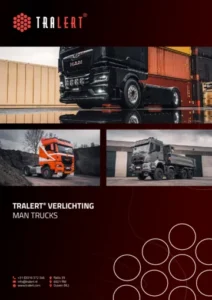
Work lights, rear lights, driving lights, beacon bars and more for MAN.
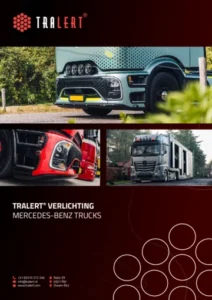
Work lights, rear lights, driving lights, beacon bars and more for Mercedes-Benz Trucks.
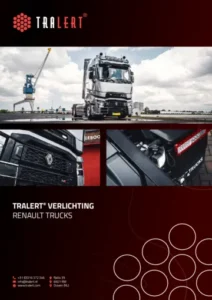
Work lights, rear lights, driving lights, beacor bars and more for Renault Trucks.
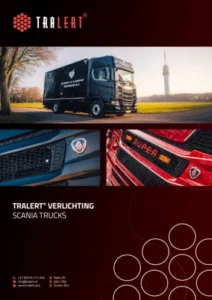
Work lights, rear lights, driving lights, beacor bars and more for Scania.
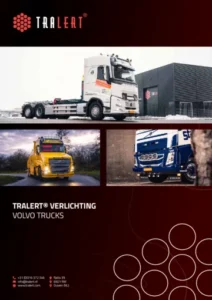
Work lights, rear lights, driving lights, beacon bars and more for Volvo Trucks.
The catalogue opens in a new tab. Can’t see it?
Open the catalogue (PDF)Two questions, in 30 seconds.
TRALERT® works with a dealer network. Dealers can view current stock levels, place orders online on account and receive a product feed for their online shop or system. We assess each enquiry internally and will let you know within 1 to 2 working days whether a partnership is possible.
You can purchase TRALERT® lighting through our partners, either locally or online. Simply provide your details, and we’ll find the partner best suited to help you.
Would you prefer to find a stockist yourself?We will assess your enquiry internally. You will hear from us within 1 to 2 working days to let you know whether a partnership is possible.
We’ll let you know within 1 to 2 working days which partner will be able to assist you further.