Your specialised partner in LED vehicle lighting

The short answer
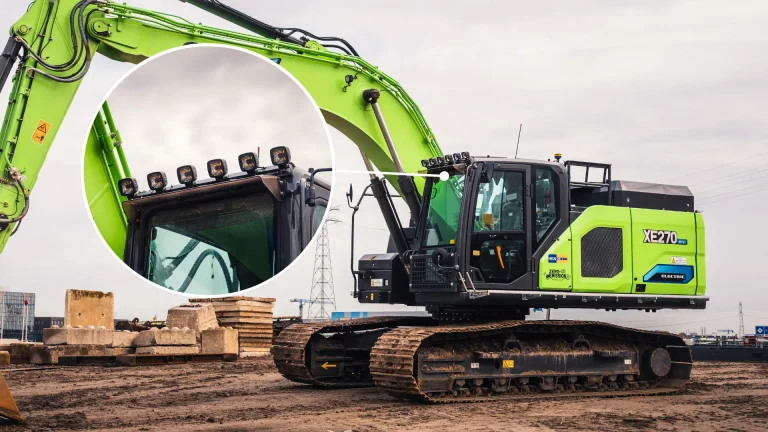
There are plenty of options available for work lights on excavators. Optimal light can significantly improve working conditions during the hours of darkness. You can see more clearly and it is easier on the eyes.
In this article, we explain:
All the options available for equipping an excavator with the perfect lighting for your type of work. Think of more light at the front in the shape of a powerful LED bar to widen the field of view. Or extra work lights at the rear for better visibility when manoeuvring.
The main lighting options for an excavator are:
The most suitable combination depends on the size of the machine, the type of work and the environment. Below, you can read about the options available for each working area. We also cover technical considerations such as light image, on-board voltage, IP protection, vibrations and EMC.
This table shows the types of excavator lighting available, their functions and where they are typically fitted.
| Type of lighting | Primary function | Typical position |
|---|---|---|
| Lightingtype: Flood work light | Primary function: Lightening a wide working area | Typical mounting locations: Cab, sides and rear |
| Lightingtype: Spot work light | Primary function: To illuminate a specific area or a more distant zone | Typical mounting position: Front, boom or arm |
| Lightingtype: LED bar | Primary function: To provide extra width and/or range | Typical mounting position: Cab roof or machine frame |
| Lighting type: Reversing lights | Primary function: Visibility when reversing | Typical position: Rear |
| Lightingtype: Rotating beacon or LED warning light | Primary function: Making the machine visible | Typical position: Visible from above and all round |
| Lighting type: Cab lighting | Primary function: Improving operability and working comfort | Typical position: Inside the cab |
| Lighting type: Step lights | Primary function: Safe entry and exit | Typical position: Steps and handrails |
| Lighting type: Headlampor driving light | Primary function: Visibility whilst moving | Typical position: Front |
During the hours of darkness, additional lighting can bring significant benefits by making the working area larger and more comfortable. This ensures better working conditions for the driver.
From the cab, the direction of travel and the immediate working area in front of the machine are illuminated. Several strategically placed LED work lights provide a more even illumination than a single powerful light. This minimises harsh shadows and glare and improves visibility of the excavation area, obstacles and people around the machine. However, it may also be worth considering a wide LED bar if you specifically want more light across the width.
The moving boom makes lighting this area more challenging. A light that illuminates the working area well in one position may be obscured or shine towards the cab in another. Light can also be reflected off the boom, bucket or paintwork of the machine.
There is therefore no fixed rule stating that a spotlight must always be fitted to the boom. The correct light image depends on the distance to the work area, the mounting position and the type of work. There is therefore no fixed rule stating that a spotlight must always be fitted to the boom. The correct light image depends on the distance to the work area, the mounting position and the type of work. Switch on the lighting after installation and check, at various boom and bucket positions, that the beam follows the work zone properly, is not obscured and does not cause any annoying reflections in the cab.
Additional work lights on the sides improve visibility alongside the tracks or wheels and around the counterweight. This is particularly useful on busy construction sites, when working close to obstacles and when people are working around the machine. Position the lights so that the light source is not directly visible from the cab.
Various functions are at work at the rear. Rear work lights illuminate the working area behind the machine. Reversing lights provide specific visibility whilst reversing. In addition, warning signals can be used to alert people in the vicinity.
These functions are not automatically interchangeable. Select a suitable light for each function and, when using the vehicle on public roads, check that the lighting for the relevant function is approved.
An LED bar may be suitable if you wish to illuminate a wide working area or require extra reach. However, multiple individual work lights sometimes provide better light distribution, particularly around the cab and along the sides of the machine.
When fitting an LED bar, please note:
An LED bar used as a work light is not automatically permitted as a driving light on public roads. You can find more information about models, light images and applications in the LED bar selection guide.
Flashing beacons and LED warning lights make the excavator more visible to staff, other machines and road users. When selecting and mounting these, factors such as all-round visibility of the machine, product approval, the working situation and the difference between a worksite and the public highway all play a role.
For special warning lights, ECE R65 is an important type approval. Whether and when flashing beacons or LED warning lights may or must be used also depends on national regulations and the working situation. An ECE R65 approval therefore does not automatically mean that the light may always be used.
Cab lighting helps drivers to read controls and documents. Step lighting makes steps and handrails visible and helps with getting in and out safely. Targeted lighting can also be useful during maintenance and checks in or around the cab.
Avoid unnecessarily bright lighting in the cab. Interior light that is too bright can reflect off the windows and reduce visibility out of the cab. Dimmable lighting or fittings that are directed downwards help to minimise this nuisance.
Work lights and driving lights serve different purposes. A work light or LED bar is not automatically approved for use as low beam, high beam or supplementary high-beam function. If the excavator is being moved on public roads, check that the headlights used are approved for their specific driving light function.
Use work lights only to illuminate the work area and avoid dazzling other road users or staff.
When it comes to additional work lights, a number of factors are important. More lumen do not automatically mean better visibility. The light distribution, beam width, mounting angle and distance to the work area are just as important. A powerful light that is incorrectly positioned can actually cause glare, cast harsh shadows or be reflected off the machine. You can choose from:
The mounting position and application remain key factors. Read more about this consideration in the article on the correct light image for work lights.
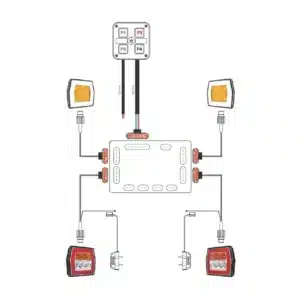
TRALERT® has developed a ready-to-use, plug lighting set specifically for mini-excavators. Ideal if you’re looking for greater convenience and excellent lighting that, of course, meets all certifications. The kit contains compact front and rear lights with integrated indicators, licence plate light, a central connection box and a pre-programmed control unit.
It is not just the type of light that determines whether the lighting functions properly. The on-board voltage, connection, IP rating, vibration resistance and electromagnetic compatibility are also important.
Not every excavator operates on 24V. Many larger machines use a 24V system, whilst compact excavators can also operate on 12V. You should therefore always check:
A multi-voltage work light may be suitable for both 12V and 24V systems, but always check the specified voltage range for the product in question.
The IP rating indicates the degree to which a housing provides protection against dust and water. However, the different codes correspond to different tests:
An IP67 or IP68 rating does not automatically guarantee protection against high-pressure washing. If you regularly clean your excavator with a high-pressure washer, you should preferably choose lighting that has been demonstrably tested for this purpose. Do not direct the jet at seals, cable entries and connectors for an unnecessarily long time or from a very short distance.
You can find further details in the comprehensive guide to IP values and on the information page about IP69K.
Excavators are classified as heavy-duty vehicles and place high demands on lights, mounting brackets, cables and connectors. The lighting is subjected to prolonged vibrations, shocks during excavation and demolition work, stone chips, mud, corrosion and potential contact with rubble or moving parts.
Materials such as cast aluminium, polycarbonate and stainless steel can contribute to a robust design, but are no guarantee of quality in themselves. The design, material thickness, sealing, mounting and substantiated truck results are also decisive factors.
You should therefore check the lighting for:
LED lighting can produce electromagnetic emissions. If not adequately shielded, these emissions may interfere with radio and communication systems. For excavators fitted with GNSS or GPS machine control systems, it is advisable to also take into account sensitive satellite reception and correction signals.
Whether interference actually occurs depends not only on the light, but also on the cabling, mounting and the machine’s overall configuration. A CE marking is not an independent quality mark and, on its own, says little about the extent to which a light may interfere with radio or GNSS signals. An ECE R10 approval demonstrates that the product has been assessed in accordance with established EMC requirements, but does not guarantee that completely interference-free operation is possible in every machine configuration.
Does the excavator use sensitive electronics, communication equipment or GNSS machine control systems? If so, ask for demonstrable EMC performance. In the case of a claim based on CISPR 25, factors such as the truck method used, the frequency ranges tested and the emission class achieved are important. Read more about EMC interference suppression and CISPR 25 in vehicle lighting.
Do you experience static, crackling or a loss of reception as soon as you switch on the lighting? Find out how to investigate and resolve radio interference caused by LED lighting.
Not every excavator monitors the load on its lighting system. Furthermore, additional work lights are often connected via a separate, fused circuit and a relay or controller . On some modern machines, replacing monitored halogen lighting with LEDs can cause an error message, flashing indicators or a failure.
You should therefore check whether the relevant circuit uses lamp monitoring and whether a suitable interface, control box or other modification is required. Individual resistances are not automatically the best solution. You can find further explanation in the article on CAN bus issues with LED lighting.
Before selecting and fitting the lighting, please check the following points:
A complete lighting plan may consist of work lights at the front, sides, boom and rear, supplemented by reversing lights, signalling lights, cab lighting and approved driving lights. The combination required depends on the machine, the work being carried out and the working environment.
No. Many larger excavators operate on 24 V, but compact excavators may also have a 12V system. Always check the nominal on-board voltage and the permitted voltage range of the light. Multi-voltage LED work lights may be suitable for both systems.
This depends on the distance to the work area, the mounting position and the type of work. A flood work light is suitable for a wider area at a shorter distance. A focused beam can be useful for a more distant or specific work area. Always check that the light does not cause glare or reflections when the boom is in different positions.
If you regularly clean the machine with a high-pressure washer, you should preferably choose lighting that has been demonstrably tested against high-pressure and steam jet cleaning, such as IP6K9K in accordance with ISO 20653. IP67 and IP68 relate to other forms of water exposure and do not automatically guarantee this level of protection.
Inadequately shielded LED lighting can cause electromagnetic emissions that interfere with radio, communication or GNSS signals. Whether this occurs depends on the light and the entire installation. For sensitive machine control systems, choose lighting with proven EMC performance and carefully check ECE R10 and any CISPR 25 claims.
This is often possible, but not always without additional checks. Pay attention to the on-board voltage, connections, mounting and light distribution. In a monitored lighting circuit, the lower load of LEDs can also cause an error message, flashing or failure. In such cases, a suitable interface or control box may be required.
Not sure which combination of work lights, signalling lights and driving lights suits your machine and your operations? TRALERT® is happy to advise you on matters such as the light image, on-board voltage, EMC, connections and mounting.
Browse our range of professional LED work lights, discover the Apex Series or read more about our lighting for specialised vehicles and machinery. For a complete solution, please request a no-obligation consultation.


A selection of LED lighting for trucks and trailers.

A comprehensive overview of our LED vehicle lighting and accessories.
Plug-&-play lighting kits, cabling and lighting for bodybuilders.
What TRALERT® can do for you as a partner in LED vehicle lighting.
Plug-&-play kits, cabling and lighting for 24V semi-trailers.

A selection of high-quality LED driving lights and LED bars.
Lighting, wiring harnesses and accessories for trailers.
The TRALERT® DARK LED range.
Work lights, rear lights, driving lights, beacor bars and more for DAF Trucks.
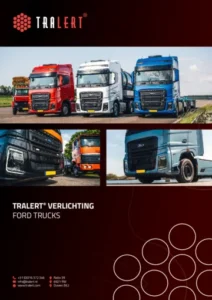
Work lights, rear lights, driving lights, beacor bars and more for Ford Trucks.
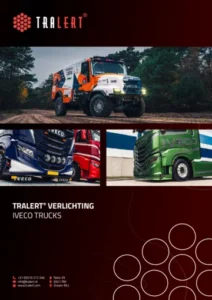
Work lights, rear lights, driving lights, beacon bars and more for Iveco.
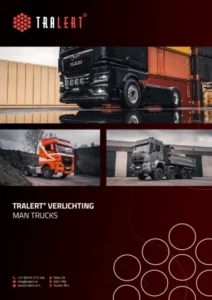
Work lights, rear lights, driving lights, beacon bars and more for MAN.

Work lights, rear lights, driving lights, beacon bars and more for Mercedes-Benz Trucks.
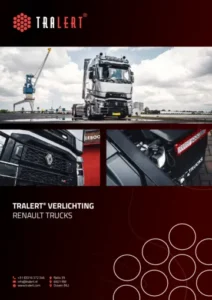
Work lights, rear lights, driving lights, beacor bars and more for Renault Trucks.
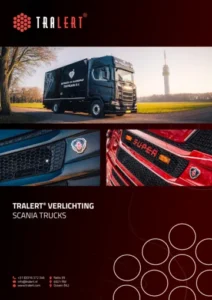
Work lights, rear lights, driving lights, beacor bars and more for Scania.
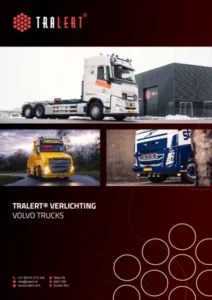
Work lights, rear lights, driving lights, beacon bars and more for Volvo Trucks.
The catalogue opens in a new tab. Can’t see it?
Open the catalogue (PDF)Two questions, in 30 seconds.
TRALERT® works with a dealer network. Dealers can view current stock levels, place orders online on account and receive a product feed for their online shop or system. We assess each enquiry internally and will let you know within 1 to 2 working days whether a partnership is possible.
You can purchase TRALERT® lighting through our partners, either locally or online. Simply provide your details, and we’ll find the partner best suited to help you.
Would you prefer to find a stockist yourself?We will assess your enquiry internally. You will hear from us within 1 to 2 working days to let you know whether a partnership is possible.
We’ll let you know within 1 to 2 working days which partner will be able to assist you further.
TRALERT® operates through a dealer network. Prices, stock levels and online ordering are therefore only available to business customers with an account.
We assess every enquiry internally and will let you know within 1 to 2 working days whether a partnership is possible.
For your own use?Find a stockist
Would you prefer a quote first?Add this product to your quotation request and send it off when you’re ready.