Specialised partner in LED vehicle lighting
Definition
ECE R65 (UN Regulation No. 65) is an international technical standard for optical warning lamps on vehicles and trailers. The regulation sets out requirements for, amongst other things, light output, light distribution, light colour and the truck methods used to assess these features.
The standard applies to various shapes of warning lights, such as beacons, flashing beacons, warning lights and beacon beams. An approved light meets established international visibility requirements.
The standard focuses on the technical performance of the light itself. Separate installation regulations under ECE Regulation 48 apply to mounting.
Would you like to know how this lighting is used in practice on vehicles, such as flashing beacons, warning lights and rotating light bars?
Then read our guide on regulations for flashing beacons and warning lights on vehicles.
When a flashing light is ECE R65 certified, it is officially tested according to international regulations. During type approval, the photometric features are measured at a minimum distance of 25 metres at different angles round the reference axis.
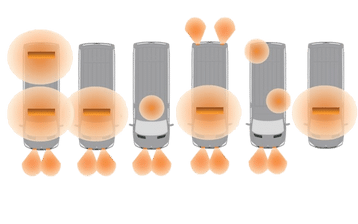
Within ECE R65, there is a clear distinction between two intensity classes. The difference is in light output and application:
| Class | Intensity | Typical application |
|---|---|---|
| Class 1 | Standard light output (one level) | Night and normal conditions (most tractors and recovery vehicles) |
| Class 2 | Higher light output (two levels: day and night mode) | Daytime, bright sunlight, bad weather, wide agricultural machinery and work traffic with a lot of ambient light |
Summary: Class 1 is sufficient for most night-time applications. Class 2 is brighter and often features an automatic or manual day/night switch, ensuring the light remains clearly visible during the day without causing glare at night. Read more about ECE R65 Class 2 here.
On the marking, you often see TA1 or TA2:
The scheme applies to vehicles of categories M, N, O, T and mobile machinery (construction, agriculture, infrastructure).
Since Amendment 5 / Supplement 12, UN/ECE R65 includes an additional truck for magnetically attached special warning lamps. This amendment is included in Annex 9 of the official UNECE documentation.
R65 is about lighting performance. R10 is about electromagnetic compatibility (EMC). Find out more in our article on ECE R10.
ECE R48 stipulates that the light must be mounted so that the required light distribution is not blocked.
Are you looking for the official ECE R65 PDF? Please note that UN/ECE R65 is not always available as one fully merged PDF file. The regulations consist of a basic document of Regulation No 65 Revision 2, supplemented by subsequent amendments and supplements.
View the official UNECE documents for Regulation No. 65
Official type approvals according to international standards for light output and visibility.
For Category T, a 360° horizontal light distribution with minimum values according to Annex 5 applies.
That depends on the vehicle category and national regulations.
View our range of ECE R65-certified warning lights, including flashing lights, warning lights and beacons.
Disclaimer: At TRALERT® we make every effort to keep the information in this article as accurate and up-to-date as possible. Legislation may change. We always recommend checking current legislation with your local authority. TRALERT® is not liable for damages or fines due to outdated information.

A selection of LED lighting for trucks and trailers.
A comprehensive overview of our LED vehicle lighting and accessories.
Plug-&-play lighting kits, cabling and lighting for bodybuilders.
What TRALERT® can do for you as a partner in LED vehicle lighting.
Plug-&-play kits, cabling and lighting for 24V semi-trailers.
A selection of high-quality LED driving lights and LED bars.
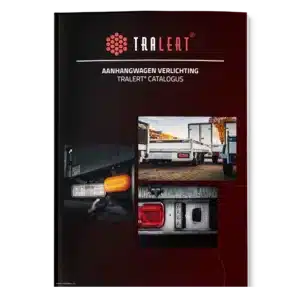
Lighting, wiring harnesses and accessories for trailers.
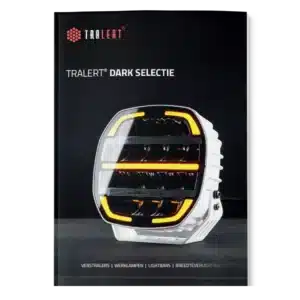
The TRALERT® DARK LED range.
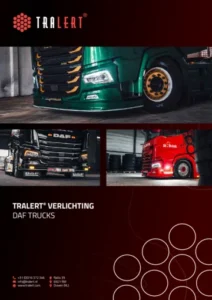
Work lights, rear lights, driving lights, beacor bars and more for DAF Trucks.
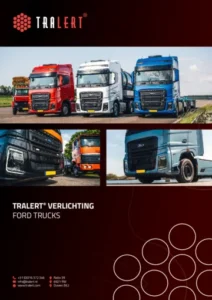
Work lights, rear lights, driving lights, beacor bars and more for Ford Trucks.
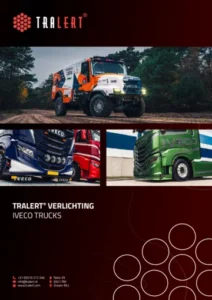
Work lights, rear lights, driving lights, beacon bars and more for Iveco.
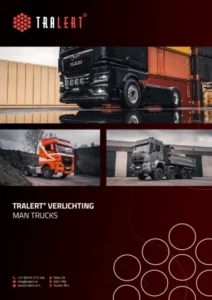
Work lights, rear lights, driving lights, beacon bars and more for MAN.
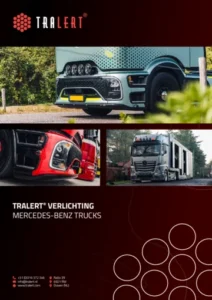
Work lights, rear lights, driving lights, beacon bars and more for Mercedes-Benz Trucks.
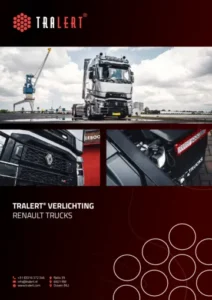
Work lights, rear lights, driving lights, beacor bars and more for Renault Trucks.
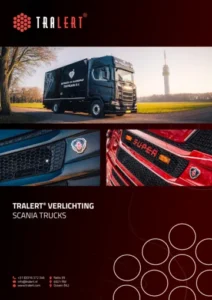
Work lights, rear lights, driving lights, beacor bars and more for Scania.
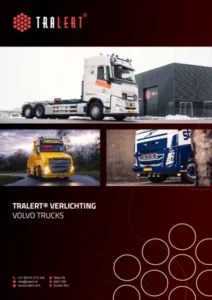
Work lights, rear lights, driving lights, beacon bars and more for Volvo Trucks.
The catalogue opens in a new tab. Can’t see it?
Open the catalogue (PDF)Two questions, in 30 seconds.
TRALERT® works with a dealer network. Dealers can view current stock levels, place orders online on account and receive a product feed for their online shop or system. We assess each enquiry internally and will let you know within 1 to 2 working days whether a partnership is possible.
You can purchase TRALERT® lighting through our partners, either locally or online. Simply provide your details, and we’ll find the partner best suited to help you.
Would you prefer to find a stockist yourself?We will assess your enquiry internally. You will hear from us within 1 to 2 working days to let you know whether a partnership is possible.
We’ll let you know within 1 to 2 working days which partner will be able to assist you further.