Specialised partner in LED vehicle lighting


The short answer
During a semi-trailer inspection, the inspector checks the lighting for functionality, presence, colour, visibility, mounting position, condition and the presence of retroreflectors. This article goes through these points one by one, including the most common reasons for failure.
During a trailer inspection, lighting issues can directly lead to extra work, delays and unnecessary costs. In this article, you can read about the lighting requirements that apply during inspections and how countries may differ in their approach to carrying out these inspections.
In this article, you will read:
During technical inspections of trailers, lighting is almost always among the first components to be checked. Faulty lights, incorrectly fitted lighting or missing approvals can lead directly to the trailer being rejected. For vehicle builders, fitters and fleet managers, this means that correct mounting, reliable cabling and approved components are essential to prevent problems during inspections. Although the organisation and frequency of inspections may vary from country to country, the technical requirements for lighting remain largely the same across Europe. Lighting plays a key role in this, as it directly affects visibility, the recognisability of driving manoeuvres and, consequently, road safety.
TRALERT® has been a specialist in LED lighting for trailers since 2005. From modern rear lights and marker lights to complete, easy-to-fit plug-&-play sets.
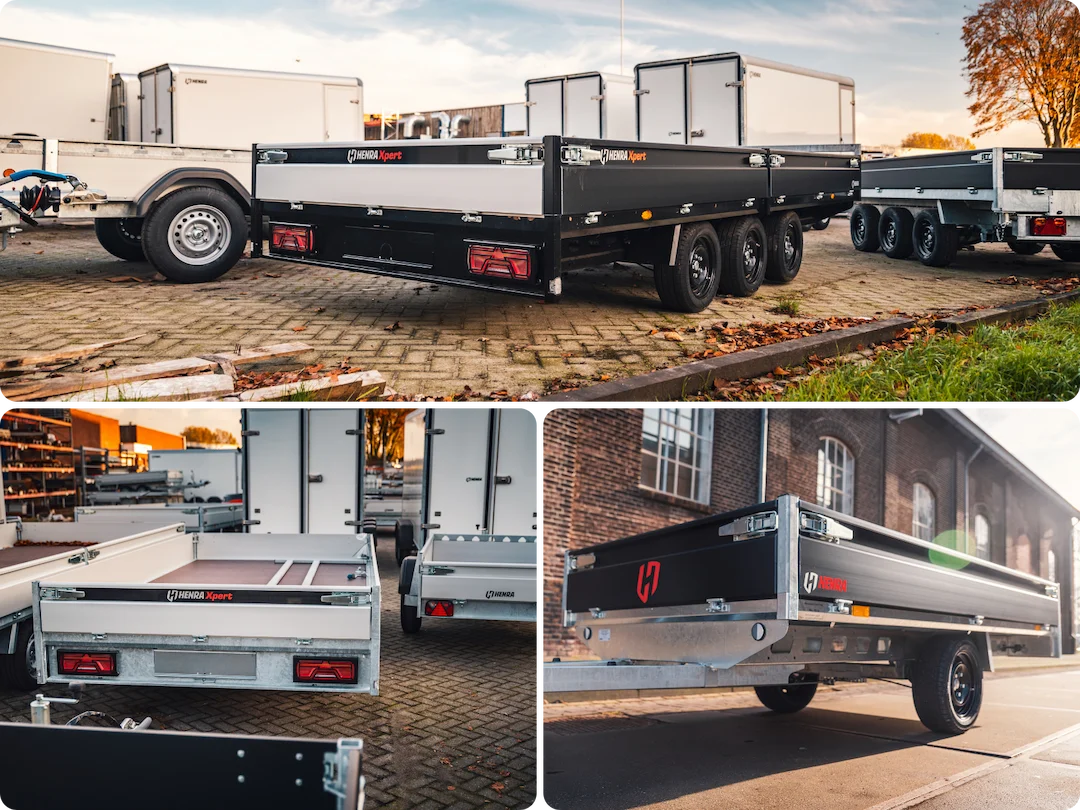
The inspection requirements for trailers vary by EU country, particularly regarding the weight limit above which a periodic inspection is mandatory and the categories to which this applies. In the Netherlands, for example, an APK inspection is compulsory for trailers weighing more than 3,500 kg, whilst other countries apply a different limit or procedure. Regardless of whether a trailer is subject to periodic inspection: as soon as it is driven on public roads, its lighting must, in any case, comply with the legal requirements. This article does not cover the broader inspection of, for example, brakes, tyres or chassis, but focuses exclusively on the lighting system.
In all EU countries, mandatory lighting on a trailer must comply with technical requirements for visibility, recognisability and road safety. In practical terms, this means:
These requirements form the technical foundation applied throughout the EU. Whilst the way in which countries organise inspections may vary, the basic requirements for lighting remain largely the same. In our article on the rules and legislation concerning trailer lighting, you can read more about which light functions are mandatory for each type of trailer.
| Semi-Trailer category | General points of attention lighting | Practical points of attention in the workshop |
|---|---|---|
| Trailercategory O1 | General lighting considerations: Basic lighting such as rear lights, brake lights, indicators and licence plate lights | Practical points to note in the workshop: Checking for correct operation, correct mounting and the presence of approved components |
| Trailercategory O2 | General lighting considerations: Additional functions such as rear fog lights and, depending on size, extra marker or side marker lights | Practical points to note in the workshop: Reliable cabling, correct plug configuration and waterproof connections |
| Trailercategory O3/O4 | General lighting considerations: More extensivelighting, such as side marker lights, side marker lights and correct positioning along the length of the vehicle | Practical considerations in the workshop: Robust LED lighting and durable cabling for intensive and professional use |
For an overview of approved products, you can also view our range of trailer lighting.
For legally required light functions, the lights used must comply with international vehicle regulations. In practice, you can recognise this by the E-marking for vehicle lighting on the light or lens. This marking indicates that the component has been approved in accordance with UNECE regulations for vehicle lighting, for example regarding light output, colour and electromagnetic compatibility.
During a technical inspection, inspectors therefore check not only whether the lighting is working correctly, but also whether the components used are actually approved. If a valid E-mark is missing, this may result in the trailer being rejected during inspections or periodic tests. Find out more in the comprehensive guide for professionals.
Lighting is directly linked to road safety. Therefore, this component is assessed in almost every inspection or check. In practice, defective or incorrectly fitted lights are among the most common reasons for rejection during semi-trailer inspections. Inspectors pay attention to, among other things:
| Checkpoint at inspection | What we pay attention to | Why this is important | Practical tip |
|---|---|---|---|
| Inspection checkpoints: Functioningof light functions | What to look out for: Rear lights, brake lights, indicators, fog lights and licence plate lights must function correctly | Why this is important: Otherroad users must be able to see the vehicle clearly and recognise its movements | Practical tip: Truckall light functions before the inspection |
| Inspection checkpoints:Reflectors | What is checked: The presence, colour and condition of the mandatory retroreflectors at the front, sides and rear | Why this is important: Reflectors ensure the trailer remains visible, even in the event of a faulty light or power failure | Practical tip: Checkfor damage, dirt and missing components |
| Inspection checkpoints: Fittingand positioning | What to look out for: Lighting must be correctly fitted in accordance with the installation instructions | Why this is important: Incorrect position can reduce visibility and lead to the vehicle failing its inspection | Practical tip: Check the mounting height, spacing and symmetry |
| Inspection checkpoints: Colourand function | What to look out for: Thecorrect colour must correspond to the correct light function | Why this is important: Unusualcolours or functions can cause confusion on the road | Practical tip: Only use approved lights for the correct application |
| Inspection checkpoints |Approval | What to look out for: Lightingmust bear a valid E-mark | Why this is important:This demonstrates that the component has been approved in accordance with international vehicle regulations | Practical tip: Check markings during procurement and assembly |
| Inspection checkpoints: Cablingand connectors | What to look out for: Cables, connectors and plugs must be correctly connected and undamaged | Why this is important: Poorconnections can cause interference or lighting failures | Practical tip: Choose robust, water-resistant connections |
| Inspection checkpoints: Visibilityand condition of the light | What to look out for: Lamps must not be broken, loose or heavily soiled | Why this is important: Damageaffects light output and safety | Practical tip: Always include a visual inspection as part of your routine maintenance |
This also applies to specialist applications, such as vehicles operating under ADR regulations. You can read more about this in ‘ADR lighting: an explanation of the regulations and practical tips’.
A large proportion of lighting-related failures can be traced back to a limited number of causes. It is worth going through these points as a matter of course before every inspection:
Many of these points can be identified in advance with a short visual check, even before the trailer arrives at the inspection centre.
Practical benefit: a retroreflector operates entirely without power. It cannot therefore fail due to a faulty light, a blown fuse or a loose connector, and thus keeps the trailer visible precisely when the active lighting fails.
Countries may differ in the organisation and execution of inspections. Examples include:
These differences do not change the basic European requirements for lighting and approved components. Those who comply with these comply with the technical foundation used in all EU countries.
| Country | What can differ | What remains the same for lighting |
|---|---|---|
| Country: Netherlands | What may vary: Notevery trailer is subject to periodic inspection; heavier categories in particular are subject to structural inspection. | What remains the same regarding lighting: Correctoperation, mounting and approved components remain paramount |
| Country: Belgium | Please note: The inspection requirementand procedure may apply earlier for certain categories of trailers | Which lighting remains the same?Here too, requirements apply regarding visibility, mounting and approval of the lighting |
| Country: Germany | Points to note: Thefrequency of inspections and additional procedures may vary depending on the trailer class | What remains the same regarding lighting: ECE-compliantmounting and approved lighting remain the starting point |
LED lighting is reliable, but requires careful attention to installation. Take particular care to ensure that components are connected correctly and are suitable for the type of trailer lighting fitted to the vehicle.
These points are particularly relevant for intensive applications, such as international or heavy haulage. In this context, you may also wish to read more about lighting for heavy haulage.
For the practical implementation of inspections and procedures we refer exclusively to official bodies. Rules may change from country to country. Therefore always consult the primary source:
The procedure for a trailer inspection varies from country to country. However, the technical requirements – and in particular the lighting requirements – are largely the same across Europe. By using correctly approved and properly fitted lighting, you will comply with the technical standards applied in all EU countries.
By using correctly approved lighting and ensuring careful mounting, a trailer will meet the basic technical requirements applicable throughout the EU. This reduces the risk of failure during inspections and helps you build a safe, reliable and professional lighting system for practical use.
An inspector checks all mandatory light functions: rear lights, brake lights, indicators, number plate lights, rear fog lights, reflectors and, for longer trailers, side marker lights. The inspection focuses on functionality, colour, mounting position and the presence of a valid E-mark on each light unit.
Yes. A faulty marker light is classified as mandatory lighting and is therefore taken into account during the assessment. If the light is not working, this will usually result in a failure or a recommendation for repair. You should therefore always replace faulty marker lights before the inspection, even if it is a small or less conspicuous light.
Yes, mandatory light functions must bear a valid E-mark in accordance with the relevant UNECE regulations. If this mark is missing, that in itself may be grounds for failure, even if the light is technically in perfect working order. You should therefore check the marking at the time of purchase and mounting, not just during the inspection.
For certain vehicle categories, this is permitted or even mandatory, provided it is an amber side marker light that flashes in sync with the indicator on the same side. A red rear side marker light must not flash in sync. If in doubt, please consult the specific regulations for your vehicle category.
Are you unsure whether your current lighting will pass the inspection, or would you like to switch to sustainable, ECE-certified LED lighting? Contact our specialists for no-obligation advice.

A selection of LED lighting for trucks and trailers.
A comprehensive overview of our LED vehicle lighting and accessories.
Plug-&-play lighting kits, cabling and lighting for bodybuilders.
What TRALERT® can do for you as a partner in LED vehicle lighting.
Plug-&-play kits, cabling and lighting for 24V semi-trailers.
A selection of high-quality LED driving lights and LED bars.
Lighting, wiring harnesses and accessories for trailers.
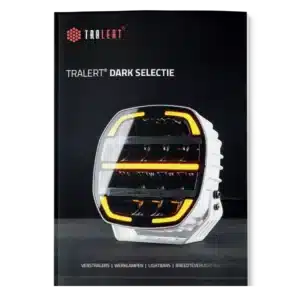
The TRALERT® DARK LED range.
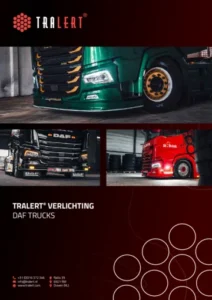
Work lights, rear lights, driving lights, beacor bars and more for DAF Trucks.
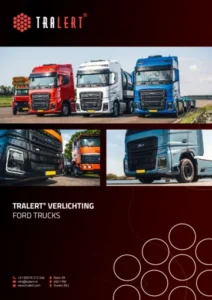
Work lights, rear lights, driving lights, beacor bars and more for Ford Trucks.
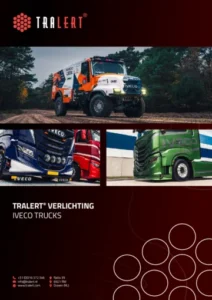
Work lights, rear lights, driving lights, beacon bars and more for Iveco.
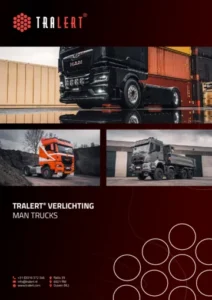
Work lights, rear lights, driving lights, beacon bars and more for MAN.
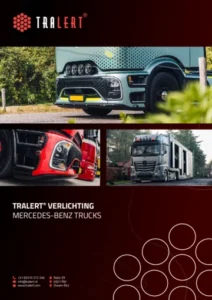
Work lights, rear lights, driving lights, beacon bars and more for Mercedes-Benz Trucks.
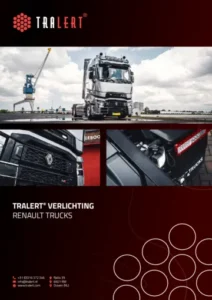
Work lights, rear lights, driving lights, beacor bars and more for Renault Trucks.
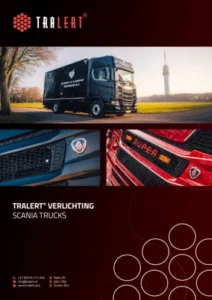
Work lights, rear lights, driving lights, beacor bars and more for Scania.
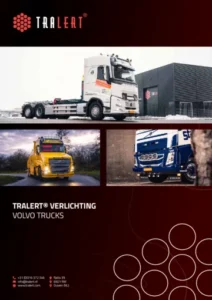
Work lights, rear lights, driving lights, beacon bars and more for Volvo Trucks.
The catalogue opens in a new tab. Can’t see it?
Open the catalogue (PDF)Two questions, in 30 seconds.
TRALERT® works with a dealer network. Dealers can view current stock levels, place orders online on account and receive a product feed for their online shop or system. We assess each enquiry internally and will let you know within 1 to 2 working days whether a partnership is possible.
You can purchase TRALERT® lighting through our partners, either locally or online. Simply provide your details, and we’ll find the partner best suited to help you.
Would you prefer to find a stockist yourself?We will assess your enquiry internally. You will hear from us within 1 to 2 working days to let you know whether a partnership is possible.
We’ll let you know within 1 to 2 working days which partner will be able to assist you further.