Specialised partner in LED vehicle lighting

Definition
IP68 is a protection class that indicates that a product is completely dust-proof and can withstand long-term immersion in water according to IEC 60529.
IP68 lighting is completely dust-tight and resistant to prolonged immersion in water. In this video, we explain what the IP68 protection class means, how it differs from IP67 and IP69K, and when you need IP68 lighting on your truck or trailer.
IP68 means completely dust-proof and protected against prolonged immersion in water deeper than 1 metre. The exact depth and duration can vary depending on the specific product and manufacturer. It is therefore always advisable to check the product's documentation carefully.
For vehicle lighting, this means that LED lights continue to function reliably in harsh conditions such as mud, water puddles and wet weather. When intensive cleaning methods are used, such as high-pressure cleaning or steam cleaning, additional protection against water penetration may be required. Then the product needs IP69 or IP 69K.

IP68 is waterproof and protects against long-term immersion under manufacturer-specified conditions. The IEC 60529 standard defines this classification. IP68 products are completely dust-proof and function under water, usually to a depth of at least 1 metre for 30 minutes or longer.
IP68 LED lighting is commonly found on trucks, tractors and trailers. These lights withstand mud, water and prolonged submersion in accordance with IEC 60529, and operate reliably under harsh conditions. That is why lighting designed to withstand harsh conditions often meets the IP68 standard. These vehicles are exposed to rain, dirt, mud and high-pressure washing on a daily basis. It is precisely in these situations that well-sealed lighting is indispensable. Take a look at our professional trailer rear lights for a durable and reliable lighting solution.
For IP68, where the "6" stands for the highest dust-tightness rating, it can be said that the device is fully protected against dust and other solid particles. This means that IP68 devices are dust-tight and cannot allow harmful amounts of dust to enter, even under harsh and dusty conditions.
IP68 is also used in consumer products such as smartphones. For vehicle applications, however, durability and resistance to mud, brine and cleaning are particularly relevant.
Marine applications: Vehicles used in marine environments, such as boats, jet skis or trailers for boats, require lighting that can withstand the corrosive effects of salt water and the impact of waves. IP68 vehicle lighting offers protection against water ingress and ensures reliable operation, even in harsh maritime conditions.
When intensive cleaning methods are used, such as high-pressure cleaning or steam cleaning, additional protection against water penetration may be required. Even then, a higher IP value is important.
The difference between IP68 and IP67 ratings lies mainly in their water resistance. Their dust resistance is the same. Both IP67 and IP68 offer the same level of protection against dust, meaning that they are both considered ‘dust-tight’.
Both ratings are designed to prevent dust particles from entering electronic devices, making them suitable for use in environments where dust is a common problem.
IP68 offers a higher degree of protection against water intrusion than IP67. These products can withstand long-term immersion in water under specific conditions specified by the manufacturer, while IP67 only offers protection against immersion to a depth of 1 metre for a limited time.
IP68 and IP69K both offer maximum protection against dust (class 6).
The difference is in the way water loads are tested.
Important to know: IP69K does not automatically mean that the product is also suitable for long-term immersion as in IP68K. The testing methods differ.
| IP68 | IP69K explained: meaning, testing and protection | |
|---|---|---|
| Standard | IEC 60529 | ISO 20653 (extension of IEC 60529) |
| Dustproof (6) | Yes | Yes |
| Water protection | Long-term immersion (according to manufacturer's specifications) | High pressure/high temperature water jets |
| Truck method | Static water pressure | Dynamic high-pressure truck |
| Purpose of truck | Water penetration during immersion | Resistant to high pressure (up to approx. 80-100 bar) and high water temperature (up to approx. 80°C) |
Would you like to know which IP value is suitable for your vehicle application? Then take a look at our comprehensive guide to IP values for vehicle lighting.

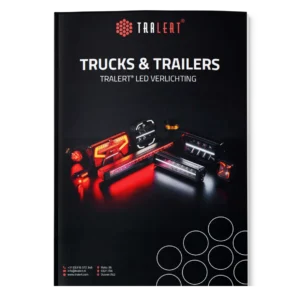
A selection of LED lighting for trucks and trailers.
A comprehensive overview of our LED vehicle lighting and accessories.
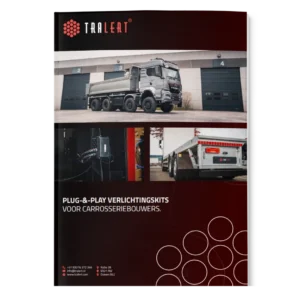
Plug-&-play lighting kits, cabling and lighting for bodybuilders.
What TRALERT® can do for you as a partner in LED vehicle lighting.
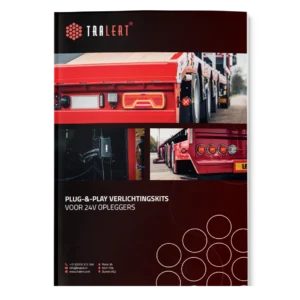
Plug-&-play kits, cabling and lighting for 24V semi-trailers.
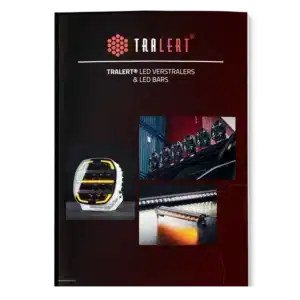
A selection of high-quality LED driving lights and LED bars.
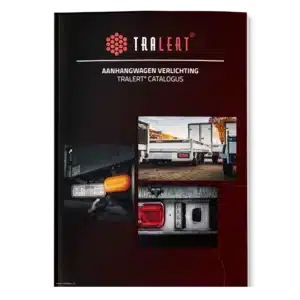
Lighting, wiring harnesses and accessories for trailers.
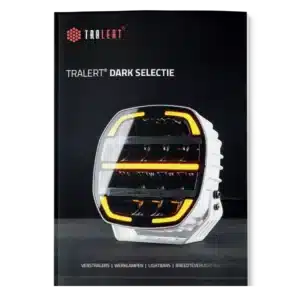
The TRALERT® DARK LED range.
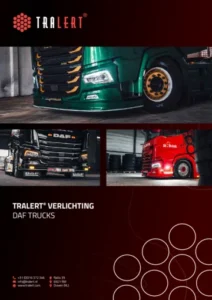
Work lights, rear lights, driving lights, beacor bars and more for DAF Trucks.
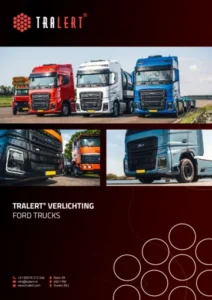
Work lights, rear lights, driving lights, beacor bars and more for Ford Trucks.
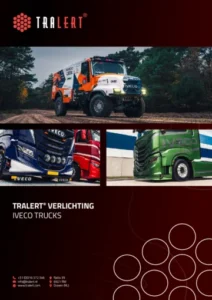
Work lights, rear lights, driving lights, beacon bars and more for Iveco.
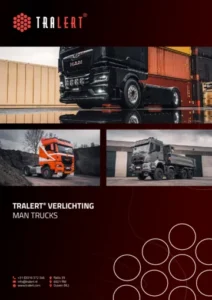
Work lights, rear lights, driving lights, beacon bars and more for MAN.
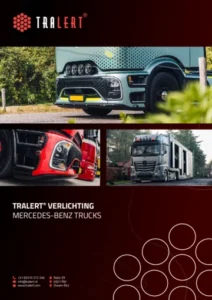
Work lights, rear lights, driving lights, beacon bars and more for Mercedes-Benz Trucks.
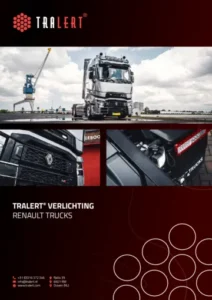
Work lights, rear lights, driving lights, beacor bars and more for Renault Trucks.
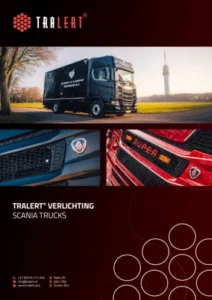
Work lights, rear lights, driving lights, beacor bars and more for Scania.
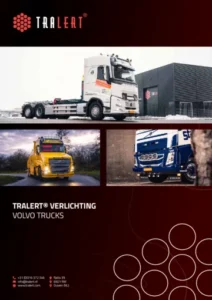
Work lights, rear lights, driving lights, beacon bars and more for Volvo Trucks.
The catalogue opens in a new tab. Can’t see it?
Open the catalogue (PDF)Two questions, in 30 seconds.
TRALERT® works with a dealer network. Dealers can view current stock levels, place orders online on account and receive a product feed for their online shop or system. We assess each enquiry internally and will let you know within 1 to 2 working days whether a partnership is possible.
You can purchase TRALERT® lighting through our partners, either locally or online. Simply provide your details, and we’ll find the partner best suited to help you.
Would you prefer to find a stockist yourself?We will assess your enquiry internally. You will hear from us within 1 to 2 working days to let you know whether a partnership is possible.
We’ll let you know within 1 to 2 working days which partner will be able to assist you further.