




Blog
In this blog you will read:
- About the European regulations for the double number plate position O3 and O4 category vehicles.
- For which vehicles the obligation applies
- Helpful tips and mounting solutions
The new regulations for double registration plates
From 7 July 2026, new European requirements will apply to heavy trailers and semi-trailers. From that date, vehicles in the O3 and O4 categories must be fitted with two separate mounting positions for a rear number plate, including the option to provide lighting for both positions.
This requirement follows from Implementing Regulation (EU) 2024/883 and is necessary to register the vehicle.
Lighting for bodybuilding
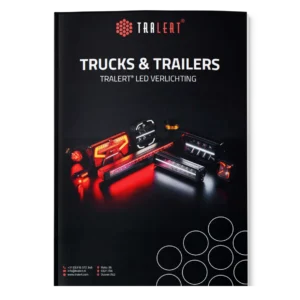
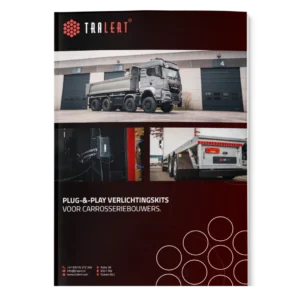
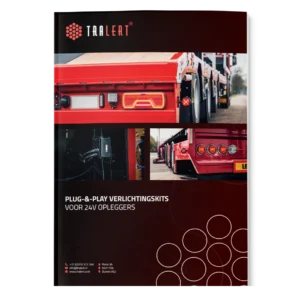
TRALERT® has been a specialist in certified LED vehicle lighting for bodywork and semi-trailer construction since 2005. From cable sets to plug-and-play solutions for professional 24V vehicle bodies.
See our solutions for bodybuilding →
Why is this requirement being introduced
With two number plates, vehicles are more identifiable, even in poor weather conditions or contaminated plates. ANPR systems work more effectively and enforcement becomes easier, for example during border controls and traffic violations. In addition, the uniform rule reduces differences in interpretation between EU countries.
Although European regulations stipulate that trailers in the O3 and O4 categories will soon have to be fitted with two positions for a rear number plate, this does not mean that two plates must actually be carried in all countries. Practice varies by Member State: some countries, such as Italy and Spain, require a second number plate in specific situations, whilst others do not make this compulsory.
Manufacturers must therefore ensure that the trailer is technically equipped for both positions, including the option for lighting, so that registration, export or use in countries with additional requirements can take place without any issues.
Confusion over number plate regulations: will two plates soon be required on semi-trailers?
There is some confusion in the market regarding this new regulation. It is not, in fact, a requirement to actually display two number plates at the rear, but rather a requirement to provide space for a second number plate. Manufacturers must provide this position in order to have a vehicle registered. Whether a Member State subsequently requires two physical number plates to be fitted is a matter for each country to decide. In the Netherlands, a single rear number plate remains the norm. Spain, however, has required two plates for years, and in a number of other EU countries the situation depends on national regulations. For Dutch trailer manufacturers and original equipment manufacturers, this therefore means: providing space and lighting, but not automatically fitting two plates.
Which vehicles are subject to the requirement for a second number plate position?
The requirement applies to all O3 and O4 category vehicles such as:
- Semi-trailers
- Centre-axle trailers
- Flatbed trailers
- Dollys
- Special transport vehicles within the O3 or O4 weight class
Vehicles in the O1 and O2 category (up to 3,500 kg) are excluded from this requirement.
Technical mounting requirements for double number plates
- Dimensions: each registration plate position must accommodate a 520 × 120 mm EU plate.
- Mounting surface: flat or lightly curved, with stable vibration-resistant mounting.
- Installation: both positions must individually fulfil the installation requirements from ECE R48. The positions must be suitable for fixed, stable and durable fixing of the plates. Although the regulation does not specify a minimum or maximum distance between the number plates, it is important that both plates are separate and clearly visible, even from angled viewing angles.
- Visibility: plates must not be obscured by bumper, lighting or other vehicle parts.
- Orientation: The number plate must be fitted horizontally, angled to the vehicle’s reference plane. Vertical mounting is not permitted for O-category trailers.
- Lighting: in accordance with ECE R4 is mandatory for both plates.
Find out more in our article on the fitting regulations for dual number plate positions.
You can find out more about the mounting requirements for number plates and lighting in the UNECE’s ECE R48 regulation.
Whether the second number plate is actually fitted in practice depends on national regulations. These national differences do not affect the European requirement to provide the space for it.
What does this mean for C.O.C. documentation?
The Certificate of Conformity (C.O.C.) must state that the vehicle has two registration plate positions. Existing type approvals must also be updated by July 2026. This also provides a logical time to modernise lighting and opt for integrated solutions. Think plug solutions that make fitting easier and faster.
Opening up the C.O.C. is an excellent time to see where there are further gains.
The choice of TRALERT® - number plates with integrated lighting
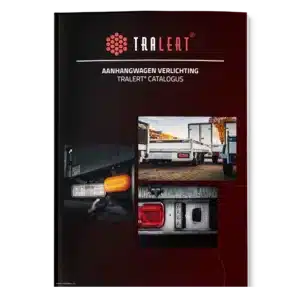
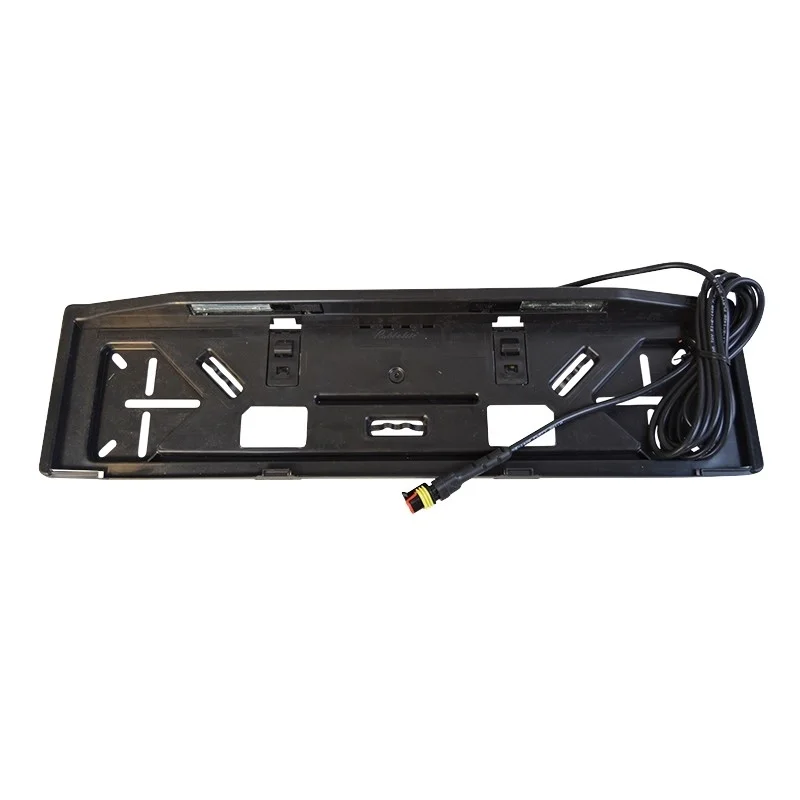
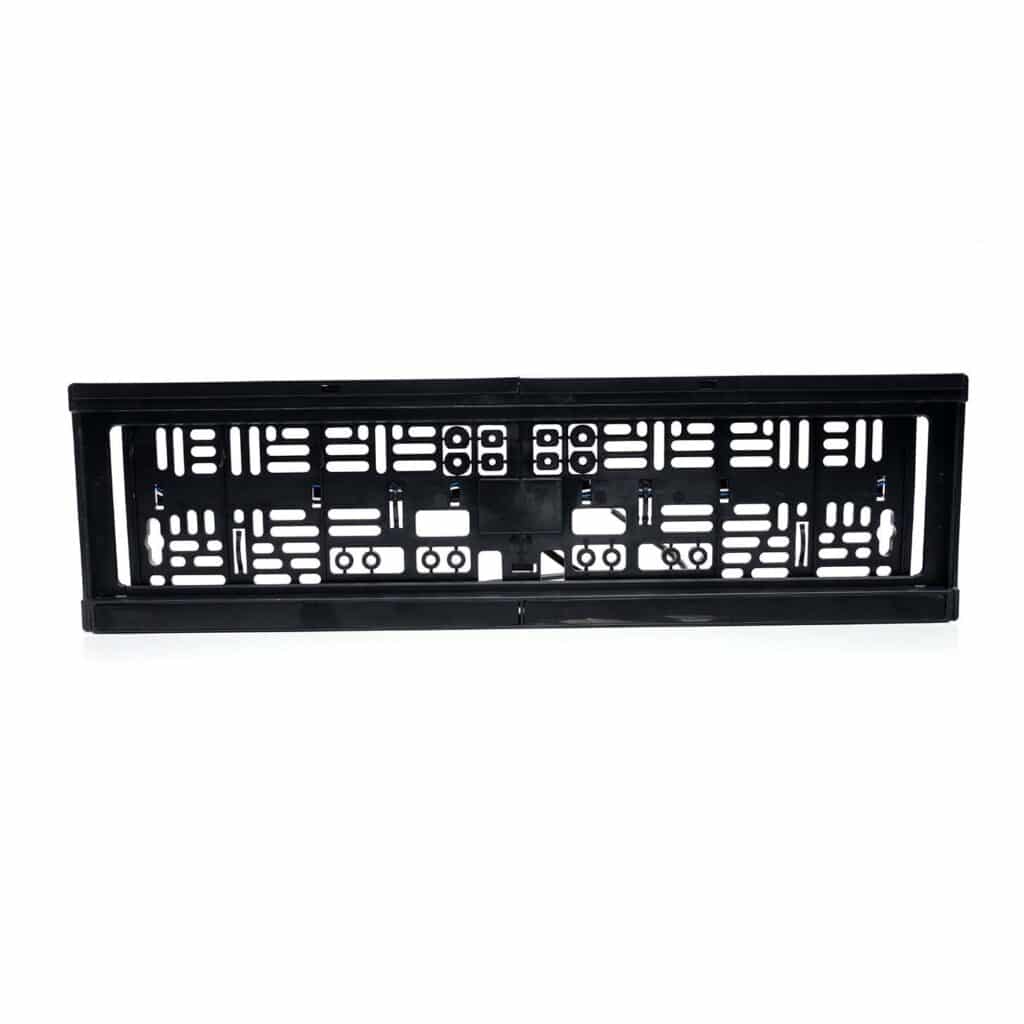
For vehicles in the O3 and O4 category, the available space at the rear is often limited. This makes mounting separate licence plate lights challenging. TRALERT® therefore offers licence plate holders with integrated LED lighting that are easy to mount.

ADR
Do you want to get your vehicles ready for the new regulations on time? TRALERT® will gladly think with you about suitable lighting and smart plug solutions. Save installation time, increase reliability and meet tomorrow's standard immediately. Find out more or go directly to our truck lighting page.
Does the new EU regulation apply in the United Kingdom?
Regulation (EU) 2024/883 does not automatically apply in the United Kingdom following Brexit. As of now, there is no formal requirement within UK legislation for O3 and O4 trailers to have dual number plate positions at the rear.
- Type approval in the UK is managed by the Vehicle Certification Agency (VCA), and enforcement is handled by the Driver and Vehicle Standards Agency (DVSA). For trailers registered and operated solely within the UK, there is currently no obligation to comply with the EU’s dual number plate requirement.
- However, for trailers intended for export to EU member states, full compliance with Regulation (EU) 2024/883 is mandatory from 7 July 2026. This includes the installation of two designated number plate positions at the rear. UK manufacturers and bodybuilders who supply the European market are therefore advised to align their designs with the new EU standards to ensure seamless registration and cross-border acceptance.
.
Frequently asked questions
Which trailers does this apply to exactly?
This applies only to vehicles in categories O3 (3,500–10,000 kg) and O4 (>10,000 kg). Trailers in categories O1 and O2 (including those with a maximum load of less than 3,500 kg) are exempt from the requirement.
Does the obligation also apply to foreign vehicles in the Netherlands?
As long as a vehicle is legally registered in another EU country before July 2026, it may be driven in the Netherlands. If the vehicle is imported into the Netherlands and re-registered after that date, it must comply with the new requirement. This applies in addition to the other requirements in force in the relevant countries, such as maximum width and truck height.
Are there any exceptions?
Yes. O2 vehicles (750-3,500 kg) and specially approved vehicles such as agricultural semi-trailers or vehicles with specific exemptions are excluded. Please note that vehicles within O3 or O4 with different dimensions are not automatically excluded.
What will happen if a vehicle does not have a second number plate position after July 2026?
If so, the vehicle cannot be registered or authorised. This also applies to import vehicles and individual inspections (IVA). Vehicles already registered before 7 July 2026 may continue to be driven on the road according to the requirements in force at that time.
Will this affect the MOT?
No, not for the time being. The requirement is linked to vehicle admission and not (yet) part of the periodic inspection. Whether that will change in the future depends on national regulations.
For manufacturers and vehicle builders, this is precisely the sort of change where it helps to work with an experienced system supplier for vehicle lighting. TRALERT® is happy to work with you to find practical solutions that are compatible and easy to fit.
Disclaimer:
At TRALERT®, we do our best to keep the information in this article as accurate and up-to-date as possible, including the regulations surrounding vehicle lighting. However, legislation can change regularly, and although we make every effort to implement these changes in a timely manner, it is possible that certain updates or adjustments have not yet been incorporated into this article. We therefore always advise our readers to check the current legislation with their local government or regulatory bodies, especially when it comes to exceptions or specific national regulations. TRALERT® is not liable for any damages or fines resulting from outdated or incomplete information in this article.
If in doubt, always contact the competent authority to ensure that your vehicle meets all legal requirements.