Specialised partner in LED vehicle lighting


The short answer
The regulations regarding the compulsory registration of (agricultural) vehicles have changed significantly in recent years. Since 1 January 2025, the compulsory registration requirement has been definitively extended. As a result, many more vehicles are now required to display a physical number plate, even when travelling at low speeds. In this guide, we explain what this means for tractors, agricultural machinery, trailers and interchangeable equipment, focusing on the practical situation in the Netherlands and other EU countries such as Germany, Belgium, France and Italy.

The number plate requirement means that a vehicle must be registered with a national authority (such as the RDW in the Netherlands) and must be fitted with a number plate when travelling on public roads. This also applies to vehicles that were previously permitted to travel without a number plate.
This obligation applies across the EU, with national interpretations. In almost every EU country, registration automatically triggers an obligation for registration plates.
For the construction of your vehicle or machine, the European classification is essential for type approval and final construction and lighting requirements. The registration plate requirement in EU Member States (and thus compliance with all technical requirements) applies to the following European vehicle categories as soon as they enter public roads:
Important for vehicle builders: The vehicle category determines the minimum requirements that the lighting (in accordance with ECE standards), the dimensions and the positioning of the number plate must meet for European type approval.

Exemptions exist in most EU countries. Common exemptions are:
Please note that these exceptions do not automatically apply abroad. Cross-border traffic often requires both registration and number plates.

With the mandatory display of number plates, compliance with European lighting standards is absolutely essential. Vehicle builders and owners must ensure that every vehicle with a number plate complies with the national interpretation of the Vehicle Regulations, which is based on the European ECE regulations.
The main technical requirements are:
TRALERT® supplies exclusively ECE-approved LED lighting for all required functions – from indicators to shock-resistant work lights.
Invest in certified, waterproof LED solutions to avoid rejection during type approvals or inspections.


In our stock
| Type of vehicle | Netherlands | Germany | Belgium | France | Italy |
|---|---|---|---|---|---|
| Type of vehicleTractor / mobile machine | Netherlands: Yellow GAIK plate | Germany: White with black lettering | Belgium: Yellowwith a red border (slow-moving vehicles) | France: White with black lettering | Italy: White with black lettering |
| Type of vehicleRegistered trailer | Netherlands Yellow(own registration) | Germany: White with black lettering | Belgium: Red-and-white number plate (full-size trailer) | France: White with black lettering | Italy: White with black lettering |
| Type of vehicleUnregistered trailer | Netherlands: White tail plate (max. 25 km/h) | Germany: Regulations are very strict; white trailing plates are not accepted in practice | Belgium: Regulations are very strict; white tail plates are not accepted in practice | France: Regulations are very strict; white trailing plates are not accepted in practice | Italy: Regulations are very strict; white tail plates are not accepted in practice |
| Type of vehicleInterchangeable implement (not registered) | Netherlands: White rear number plates permitted | Germany: Own number plate required | Belgium: Not permitted | France: Not permitted | Italy: Not permitted |
In the Netherlands, a registration requirement for agricultural vehicles has been in force since 2021, and from 1 January 2025, a number plate will be compulsory on all registered vehicles, even if they travel at speeds below 25 km/h. Only in specific exceptional cases, such as attachments that do not drive independently, may a white trailing plate still be used. Please note: the white trailing plate is only permitted within the Netherlands and at a maximum speed of 25 km/h.
In Belgium, a distinction is made between agricultural vehicles and slow-moving vehicles. Dedicated number plates are compulsory for tractors and trailers travelling on public roads. Trail plates, as used in the Netherlands, are not permitted. Slow-moving vehicles must be fitted with a red-and-white reflective triangle and, in some cases, a special agricultural number plate.
Germany requires all agricultural vehicles and trailers to have their own number plate. White trailing plates are not recognised. Strict regulations apply to lighting, reflectors and the marking of slow-moving vehicles. Every vehicle on public roads must be registered, bear a white number plate with black lettering, and comply with the StVZO regulations. Find out more about the regulations and fines.
France requires all agricultural tractors and their trailers to have official registration and number plates. White tail plates are not permitted. Number plates must comply with the national vehicle registration system and must be correctly fitted and illuminated. Violations may result in fines, particularly when crossing borders.
In Italy, agricultural vehicles and implements travelling on public roads must be fitted with an individual number plate. The number plate must be white with black lettering and must be positioned so as to be clearly visible. Rear-mounted number plates are not permitted, and additional regulations apply to lighting, particularly when used on provincial or national roads.
Do you work with heavy trailers (O3 and O4)? Under new EU type-approval requirements, these vehicles must provide space for a second number plate position from 2026 onwards.
In this blog, we explain exactly when a second number plate is mandatory, and what this means for agricultural machinery, trailers and attachments.
TRALERT® supplies top quality LED lighting for agricultural, industrial and transport applications. Our licence plate lighting is:
Do not have your vehicles rejected for lighting, choose certainties with TRALERT®.
Disclaimer:
At TRALERT®, we do our best to keep the information in this article as accurate and up-to-date as possible, including the regulations surrounding vehicle lighting. However, legislation can change regularly, and although we make every effort to implement these changes in a timely manner, it is possible that certain updates or adjustments have not yet been incorporated into this article. We therefore always advise our readers to check the current legislation with their local government or regulatory bodies, especially when it comes to exceptions or specific national regulations. TRALERT® is not liable for any damages or fines resulting from outdated or incomplete information in this article.
If in doubt, always contact the competent authority to ensure that your vehicle meets all legal requirements.

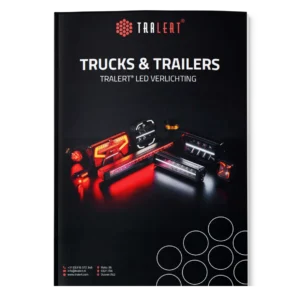
A selection of LED lighting for trucks and trailers.
A comprehensive overview of our LED vehicle lighting and accessories.
Plug-&-play lighting kits, cabling and lighting for bodybuilders.
What TRALERT® can do for you as a partner in LED vehicle lighting.
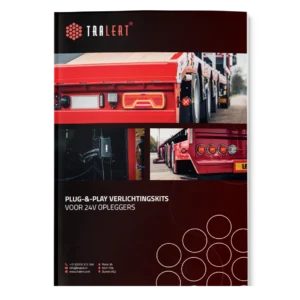
Plug-&-play kits, cabling and lighting for 24V semi-trailers.
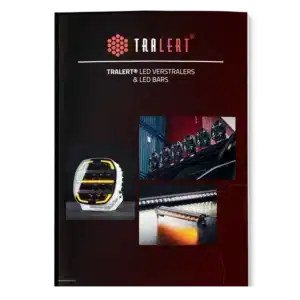
A selection of high-quality LED driving lights and LED bars.
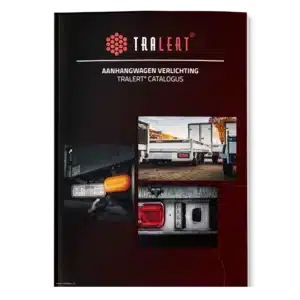
Lighting, wiring harnesses and accessories for trailers.
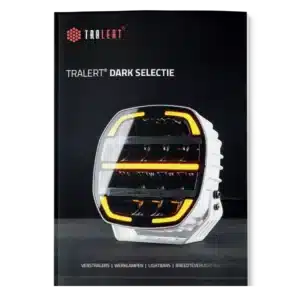
The TRALERT® DARK LED range.
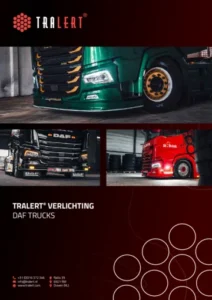
Work lights, rear lights, driving lights, beacor bars and more for DAF Trucks.
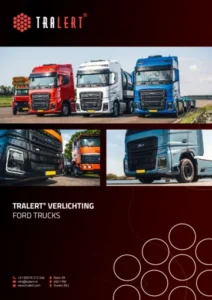
Work lights, rear lights, driving lights, beacor bars and more for Ford Trucks.
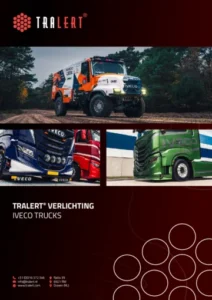
Work lights, rear lights, driving lights, beacon bars and more for Iveco.
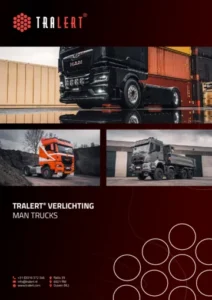
Work lights, rear lights, driving lights, beacon bars and more for MAN.
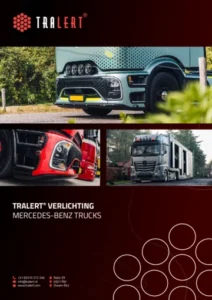
Work lights, rear lights, driving lights, beacon bars and more for Mercedes-Benz Trucks.
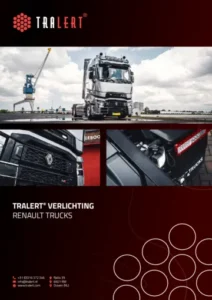
Work lights, rear lights, driving lights, beacor bars and more for Renault Trucks.
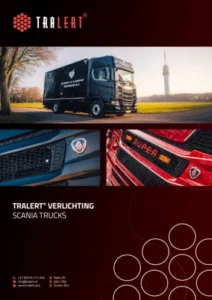
Work lights, rear lights, driving lights, beacor bars and more for Scania.
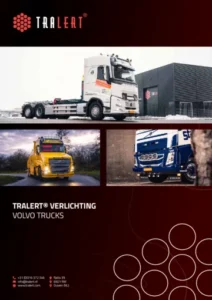
Work lights, rear lights, driving lights, beacon bars and more for Volvo Trucks.
The catalogue opens in a new tab. Can’t see it?
Open the catalogue (PDF)Two questions, in 30 seconds.
TRALERT® works with a dealer network. Dealers can view current stock levels, place orders online on account and receive a product feed for their online shop or system. We assess each enquiry internally and will let you know within 1 to 2 working days whether a partnership is possible.
You can purchase TRALERT® lighting through our partners, either locally or online. Simply provide your details, and we’ll find the partner best suited to help you.
Would you prefer to find a stockist yourself?We will assess your enquiry internally. You will hear from us within 1 to 2 working days to let you know whether a partnership is possible.
We’ll let you know within 1 to 2 working days which partner will be able to assist you further.
TRALERT® operates through a dealer network. Prices, stock levels and online ordering are therefore only available to business customers with an account.
We assess every enquiry internally and will let you know within 1 to 2 working days whether a partnership is possible.
For your own use?Find a stockist
Would you prefer a quote first?Add this product to your quotation request and send it off when you’re ready.