Your specialised partner in LED vehicle lighting

The short answer
You’ll often come across the term ‘CAN bus-proof’ when it comes to LED vehicle lighting. However, there is a great deal of confusion about exactly what this means, particularly in the context of commercial vehicles such as trucks, trailers and semi-trailers. This topic is directly linked to broader regulations concerning vehicle lighting, as also explained in our guide ‘ADR lighting: an explanation of regulations and practical tips’.
CAN-bus (Controller Area Network) is a digital communication system that allows electronic control units in vehicles to exchange data. Manufacturers use CAN-bus in commercial vehicles for engine control, braking systems, diagnostics, safety and body functions, among others. International standards such as ISO 11898 describe its technical basis.
It is important to know that CAN-bus transports data and does not provide electrical power. That distinction is essential to avoid misunderstandings round vehicle lighting.
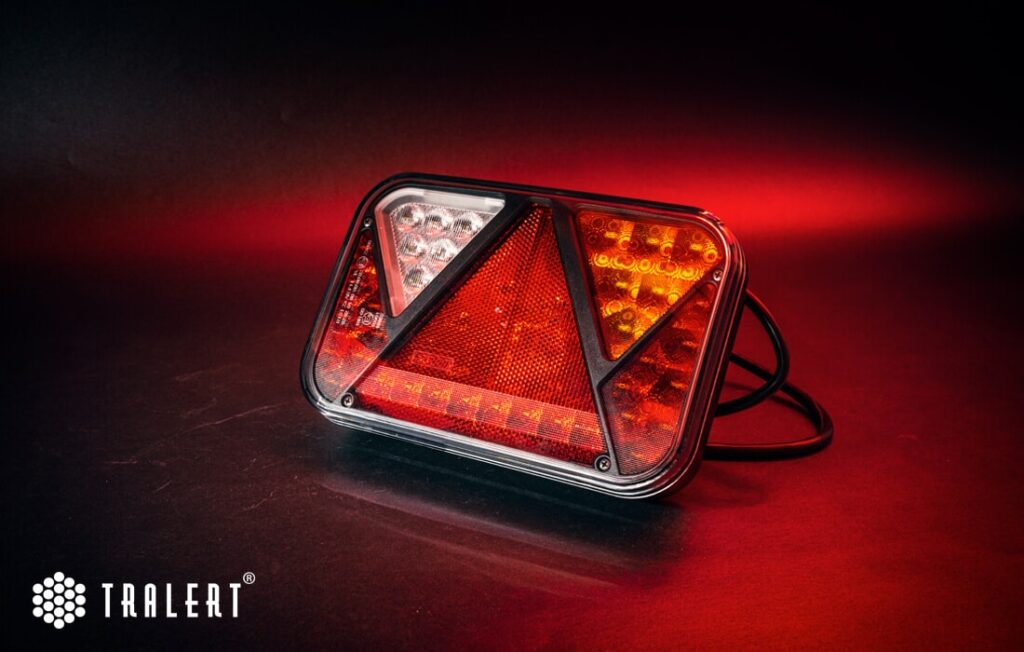
In many trucks, trailers and semi-trailers, a body control module or light control module controls the lighting. The CAN-bus handles the communication, whilst separate electrical circuits supply power to the lights.
Semi-trailers and trailers usually lack a CAN connection entirely. In these cases, the lighting operates via conventional 24V connections, cable sets and connectors.
Canbus-proof is neither a technical standard nor a legally defined term. Manufacturers use this commercial designation to indicate that an LED light is designed in such a way that it does not cause error messages in vehicles with electronic lamp control. Such as our series of canbus
So the term does not refer to CAN bus communication itself, but to compatibility with systems that monitor the electrical load of lighting.
LED lighting consumes significantly less power than traditional halogen or incandescent lamps. Vehicles with lamp control measure the electrical load. If it falls below a set threshold, the system can interpret this as a defective light, resulting in warnings or error codes.
In practice, users often speak of a "CAN-bus interference", when in fact it is lamp monitoring or load detection, not a problem in the CAN network.
To prevent error messages, manufacturers apply various solutions in professional LED vehicle lighting:
| Solution | Function | Focal point |
|---|---|---|
| Solution: Internalelectronics | Function: Simulates minimal load | Pointto note: Heat dissipation |
| Solution: Externalload modules | Function: Correctscurrent measurement | Point to note: Additional mounting |
| Solution: Vehicle Configuration | Function: Software-basedsettings | Pointto note: Depending on the OEM |
With heavy commercial vehicles, it is essential that these solutions are suitable for 24V systems and long-term loading in demanding applications.
No. There is no ECE regulation, ISO standard or national legislation defining canbus-proof. For vehicle lighting instead, official type approvals and ECE regulations are decisive.
ECE R10 often applies to electronic vehicle lighting. This regulation sets out requirements for electromagnetic compatibility (EMC), ensuring that electronic components do not cause interference with other vehicle systems. Anyone wishing to find out more about official approvals and markings can read the explanation on D-homologation and type approval of vehicle lighting.
LED lighting contains electronic components that can cause or experience electromagnetic interference. EMC requirements ensure that this lighting functions reliably without affecting other systems in the vehicle.
This is particularly relevant for modern trucks and specialised vehicles with extensive electronic systems. In the article on ECE R10-approved vehicle lighting, you can read how these EMC requirements are applied in practice within commercial vehicles.
CISPR 25 sets limits on electromagnetic emissions from vehicle components, including LED lighting. In doing so, the standard helps prevent lighting from interfering with on-board radio, communication and other electronic systems. However, this is distinct from CAN bus compatibility: lighting that complies with CISPR 25 is not automatically CAN bus-compatible and does not necessarily prevent warning lights or flashing.
Read more about the standard, the truck methods and the difference between Class 3 and Class 5 in our article on CISPR 25 for vehicle lighting.
Professional vehicles have different concerns than passenger cars. These include:
Vehicles used to transport dangerous goods are subject to additional requirements regarding electrical components and lighting. In our guide to ADR lighting and regulations, you can read how these requirements are applied in practice.
Flashing LED lights, lighting failure or a fault message on the dashboard relating to the lighting? This may have occurred after modifications or additions were made to the lighting system. We refer to this as a CAN-bus problem or interference. Read this article to find out how to resolve it.
Canbus-proof LED lighting is not an official technical or legal term, but a practical designation for lighting that cooperates correctly with electronic lamp control. By understanding the distinction between CAN bus communication, lamp control, EMC, ECE R10 and CISPR 25, you avoid misunderstandings and make more informed choices for commercial vehicles.
If you’d like to find out more about applications with more stringent requirements, such as specialised and heavy haulage, then the article on lighting for heavy haulage is a logical next step.

A selection of LED lighting for trucks and trailers.
A comprehensive overview of our LED vehicle lighting and accessories.
Plug-&-play lighting kits, cabling and lighting for bodybuilders.
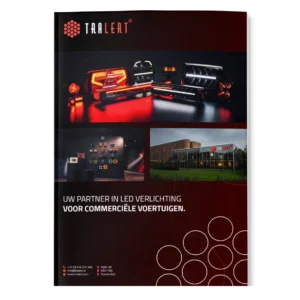
What TRALERT® can do for you as a partner in LED vehicle lighting.
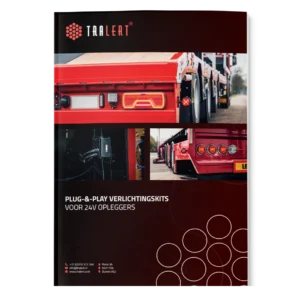
Plug-&-play kits, cabling and lighting for 24V semi-trailers.
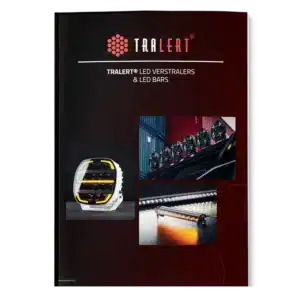
A selection of high-quality LED driving lights and LED bars.
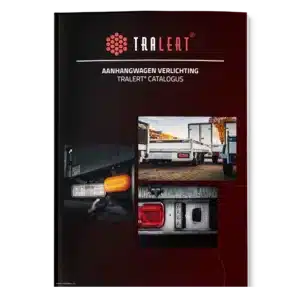
Lighting, wiring harnesses and accessories for trailers.
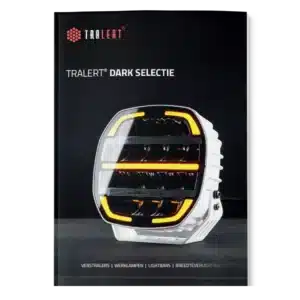
The TRALERT® DARK LED range.
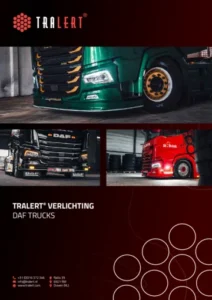
Work lights, rear lights, driving lights, beacor bars and more for DAF Trucks.
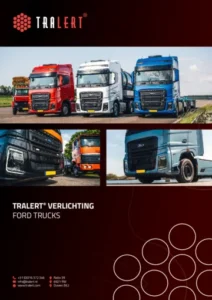
Work lights, rear lights, driving lights, beacor bars and more for Ford Trucks.
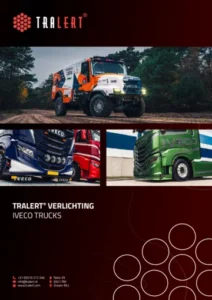
Work lights, rear lights, driving lights, beacon bars and more for Iveco.
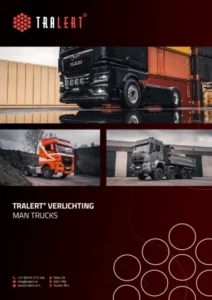
Work lights, rear lights, driving lights, beacon bars and more for MAN.
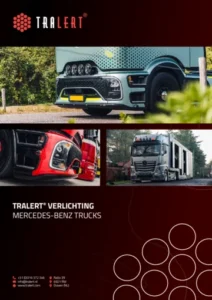
Work lights, rear lights, driving lights, beacon bars and more for Mercedes-Benz Trucks.
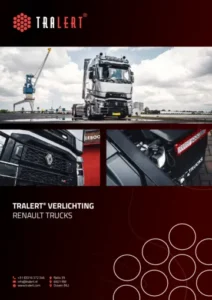
Work lights, rear lights, driving lights, beacor bars and more for Renault Trucks.
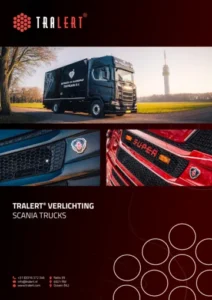
Work lights, rear lights, driving lights, beacor bars and more for Scania.
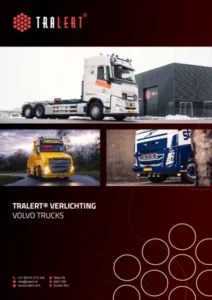
Work lights, rear lights, driving lights, beacon bars and more for Volvo Trucks.
The catalogue opens in a new tab. Can’t see it?
Open the catalogue (PDF)Two questions, in 30 seconds.
TRALERT® works with a dealer network. Dealers can view current stock levels, place orders online on account and receive a product feed for their online shop or system. We assess each enquiry internally and will let you know within 1 to 2 working days whether a partnership is possible.
You can purchase TRALERT® lighting through our partners, either locally or online. Simply provide your details, and we’ll find the partner best suited to help you.
Would you prefer to find a stockist yourself?We will assess your enquiry internally. You will hear from us within 1 to 2 working days to let you know whether a partnership is possible.
We’ll let you know within 1 to 2 working days which partner will be able to assist you further.