Flood beam, narrow-beam or combo beam: which light image will you choose?
Updated:
By:
Kevin van Mierlo
Contents
The short answer
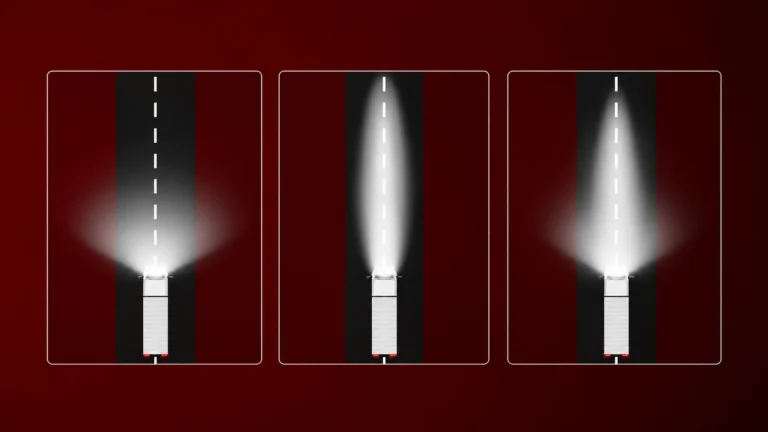
A flood beam illuminates a wide area at close range, a spot beam concentrates the light far ahead, and a combi beam combines both in a single unit. That is the difference between a flood beam, a spot beam and a combi beam in a nutshell. Which light image you choose depends on the working distance, the mounting position and the vehicle.
If you compare lights solely on the basis of lumens, you’re missing the most important point. The same amount of light produces a very different result in a wide beam than in a narrow beam. This applies to LED work lights, as well as to LED driving lights and LED bars. This blog compares the three light images side by side and helps you choose the right option for trucks, trailer, agricultural machinery or construction machinery.
In this blog you will read:
The difference between flood beam, driving light and combo beam at a glance
What is more important: the luminaire or the light image?
Why a spot beam is not automatically a supplementary high beam
Which light image is best suited to trucks, trailers, agricultural vehicles and construction machinery?
How to choose the right light image in five steps, including for LED bars
Differences between flood beam, driving light and combo beam at a glance
The light image describes how a light distributes its light. The table summarises the three variants, allowing you to compare them directly.
Light image
Beam pattern
Characteristic
Typical application
Commonly used in
Lightpattern: Flood beam
Wide beam pattern
Characteristics: Wide, even distribution at close range, limited depth
Typical application: Work zone around truck or trailer, loading and unloading area, sides and rear
Commonly used in LED work lights
LightPattern: spot beam
Narrow beam and focused
Characteristics: Narrow beam, long range, high lux at a distance, limited spread
Typical applications: Long-range visibility, open terrain, inspection and manoeuvring at a greater distance
Widely used in LED driving lights, LED bars and work lights
Light pattern: Combo beam
Combination of wide and narrow beam patterns
Feature: Balance between range and coverage in a single luminaire
Typical application: Variable use, limited installation space
Widely used in LED bars and work lights
The beam pattern indicates how wide or narrow the beam is. These are qualitative differences: there is no fixed standard for these terms, so manufacturers use different values. You should therefore always compare the specifications of the specific product, such as the light range in lux at a given distance.
Which is more important: the luminaire or the light image?
The light image is crucial for achieving results in your workplace. The luminaire is crucial for its service life. You need both, but the order matters: first determine the light image that suits your application, and only then assess whether the luminaire can cope with the conditions.
The light image determines the shape, distribution and intensity of the light in your working area. A high lumen output without a suitable pattern results in hotspots, shadows or glare: plenty of light, but little usable visibility. You can read more about the basics on the terminology page about light images and in the explanation of the meaning of lumen.
The luminaire determines whether the light will continue to provide that light image for years to come. Consider the housing, the sealing, resistance to vibrations and EMC compliance with ECE R10. A good light image in a luminaire that cannot withstand the conditions will not last. Read also about the difference between cheap and professional work lights and which IP value you need.
Flood beam: wide coverage at close range
A flood beam spotlight, also known as a floodlight, disperses light over a wide angle. The aim is not to achieve maximum range, but to provide an evenly lit working area around the vehicle. This results in less harsh contrast and a clearer view at short range.
You often fit a flood beam:
at the rear of trailers
on the side of surface mounting
on service vehicles
in loading and unloading areas
The downside is the limited depth of field. If you also want to see clearly at greater distances, a flood beam headlamp alone is not sufficient.
spot beam: range and a focused beam
A driving light concentrates the light strongly forwards. The beam is narrow and directed over a greater distance. In common parlance, ‘driving light’ is also the name of a product category. This blog focuses on the light image: the narrow, long-range beam.
This light image is suitable for:
crane lorries
work at a greater distance
off-road work in open areas
Situations where range is more important than width
You can see further, but the beam spread is more limited. That is why you often combine a driving light with a flood beam to achieve full coverage.
Combi beam (combo beam): range and spread in a single unit
A combi beam combines a wide and a focused beam in a single unit. This is useful when you have limited installation space, are looking for a single compact solution, or wish to illuminate both the immediate work area and the distance ahead. For many lorry and trailer applications, it offers a practical middle ground.
A combo beam combines wide-angle and spot lighting. The range and beam pattern it provides vary depending on the optical design. Furthermore, not every LED bar has a combo beam, so please check the light image in the product specifications.
A spot beam is not automatically a supplementary high beam
‘Spot beam’ describes the shape of a light beam. ‘driving beam’ (or ‘main beam’), on the other hand, is a lighting function of the vehicle. A narrow spot beam therefore does not automatically mean that a light may be used as an auxiliary driving beam on public roads. This requires a valid type approval for the driving beam function, nowadays usually in accordance with UN R149. For vehicles covered by UN R48, the installation must also comply with the applicable mounting and switching regulations.
Please also note the terminology. ‘Driving beam’ is also used as a commercial term to describe a light distribution pattern, for example in product filters. This term alone says nothing about approval status. You should therefore check the approval mark and the light range in lux at a distance in the product specifications.
A work light or off-road driving light without such approval is intended for use off-road, on construction sites or on private property. Whether use on public roads is permitted depends on the approval and on national regulations. You can find the precise framework and conditions in ECE R149.
Which light image suits your application?
Trucks and 24V semi-trailers
Around loading bays, couplings, the sides and the rear, it’s all about having a clear view at close range. A flood beam light usually works best here. For 24V systems, check that the permitted voltage range and the light’s electrical protection are suitable for the vehicle’s electrical system.
Trailers and transport equipment
Compact mounting is often a key factor here. A compact flood beam light is sufficient for the working area behind the trailer. If you only have space for a single light and also want to see a little further ahead, then a combi beam light is a logical choice.
Agricultural machinery
With agricultural machinery, different working distances are important. For tasks further ahead of the machine, a focused beam may be suitable, whilst flood beams provide a clear view when coupling and around the vehicle. Which combination works best depends on the tasks, the mounting positions and the required light distribution.
Construction machinery and earth-moving equipment
When loading, excavating and manoeuvring on a construction site, all-round visibility around the machine is crucial. Flood beams on the cab and boom keep the work area clear, whilst a combi beam or driving light on the roof provides extra visibility in the direction of travel. You can read more about this in the article on lighting for excavators.
LED bars on the roof, bumper or light bar
The light output of an LED bar depends on several specifications, such as the number and type of LEDs, the optics, the power rating and the bar’s construction. The length primarily determines whether the bar will fit in the available space. The light image determines where the light is directed: a bar with a focused beam mounted on a roof spoiler provides visibility in the direction of travel, whilst a bar with a wide beam illuminates the immediate surroundings. Not every LED bar is available in all three light images, so please check the specifications before ordering. You can read more about length, mounting and variants in the LED barsselection guide.
Supplementary driving lights
driving beam (or main beam) is a function, not a fourth light image. For driving at higher speeds, choose a light that is approved as a supplementary high beam, as described above. A work light with a narrow beam is not a suitable substitute for this.
How do you choose the right light image in five steps?
First determine the working distance, then the mounting position, followed by the tilt angle; assess the risk of glare and, where necessary, combine multiple light images. This will ensure uniform, shadow-free lighting.
Step 1: determine the working distance
The distance at which you want to see clearly is the key factor. As a general guideline, depending on the model:
Nearby operating range: flood beam
medium range: combi beam
greater range: driving lights
You can find out the light range of a specific light in the product specifications, for example as the light intensity in lux at a specific distance.
Step 2: determine the mounting height and position
Mounting position has a significant impact on the light image. For low-mounted rear installation, a flood beam headlamp is often suitable, depending on the desired coverage and adjustment. A high-mounted position on the cab or roof allows for a driving light or combo beam. The higher the light, the more important controlled beam range becomes. If you are using the light as an official lighting function on public roads, separate requirements for approval and installation apply, as described above.
Step 3: choose the correct tilt angle
A work light should not shine horizontally into the air. You should therefore aim the light at the work surface. Furthermore, only compare light measurements from different lights if the measurement conditions are the same, such as distance and angle of inclination. Feel free to ask the manufacturer about the measurement method, as this will help you avoid the range of a light being presented in an overly favourable light.
Step 4: assess the risk of glare
Are there staff working around the vehicle, is the vehicle situated near a public road, or are there cameras and sensors in operation? In such cases, it is not only the light output that matters, but also where the light is directed. With the right light distribution, mounting position and adjustment, you can minimise direct glare and illuminate the work area in a targeted manner.
Step 5: combine for full coverage
Professional surface mounters rarely use a single light image. An effective configuration often consists of a flood beam at the rear, a driving light or combo beam at the front, and possibly additional flood beams on the sides. This helps you avoid dark spots and unnecessary waste of lumen.
Lux and lumens: when does which value matter?
A lumen is the total luminous flux emitted by a light. A lux is the amount of light that actually reaches the work surface per square metre (1 lux is 1 lumen per m²). That is why lux usually provides a better indication of usable light at working distance than lumen. When considering a spot beam or flood beam, therefore, ask about the lux level at a specific distance. You can find further explanation under ‘What does lux mean?’.
lumen indicate the total amount of light, but not how it is distributed. They are only a useful point of comparison if the light image is comparable. Even then, more lumen are no guarantee of more light on the work surface, as the optics, mounting and distance all play a part. You should therefore assess a lamp based on lumen, light image and lux together.
Practical tip: Only compare two lights based on lumen if they have the same light image. The same amount of light, distributed across a narrow or wide beam, produces a very different result at a distance.
What are these guidelines based on?
Not everything in this overview is a standard. The differences between the light images and applications are practical indications: there is no fixed standard for the terms ‘flood beam’, ‘narrow-beam’ and ‘combi beam’. Specific light output values can be found in the product data. Requirements for the approval and installation of lighting functions can be found in the official UN regulations:
National regulations may impose additional requirements. You should therefore check what is permitted for your vehicle in each country.
Frequently asked questions about flood beams, driving lights and combo beams
What is the difference between a flood beam headlamp and a driving light?
A flood beam headlamp spreads the light over a wide angle and illuminates the vehicle’s immediate surroundings evenly. A narrow-beam driving light concentrates the light into a narrow angle and therefore has a longer range. The flood beam headlamp provides a clear view at close range, whilst the narrow-beam driving light offers visibility at a distance. Which one is suitable depends on your working distance.
Which light image is best for a trailer trailer?
For work lights at the rear and alongside a trailer or trailer, a flood beam is generally suitable, as it illuminates a large area at close range. Where light is also required at a greater distance, a combi beam may be the solution. Please check the mounting, wiring and applicable regulations. Work lights are not the same as supplementary high beams for use on public roads.
When should you choose a combi beam?
You should choose a combi beam when you want to illuminate both the immediate working area and medium distances, but have limited mounting space. The range and beam pattern offered by a combi beam vary depending on the optical design. For varied applications, such as on machinery for agriculture and construction, this balance is often practical.
Is a light with spot beam automatically approved as a supplementary high beam?
No. ‘Spot beam’ refers only to the shape of the beam. For supplementary high beam lighting on public roads, a valid type approval for that function is required – nowadays usually in accordance with UN R149 – plus installation in accordance with the applicable regulations. You should therefore always check the product’s approval mark, not just the light image.
Choosing the right light image for your vehicles or customers
Want to see how the light images compare in practice? At our Experience Centre, you can assess the lighting performance for yourself, side by side and in various situations. There, you can compare the light images described in this article, with our specialists on hand to assist.
TRALERT® is the leading manufacturer and partner in high-quality LED lighting solutions for commercial vehicles. By taking care of everything from drawing board to realisation, you and your customers can hit the road safely, carefree and professionally lit.
The TRALERT® Experience Centre is an interactive showroom with training and truck rooms. Experience TRALERT® LED vehicle lighting in practice and experience the lighting performance in different situations. Plan your Experience Centre visit.
Over 3,000 productsLighting and cabling for trucks, trailers, trailers and work vehicles
Fast delivery from our own stockOften delivered the next day; within 2 to 3 days across Europe
Advice from specialistsWe work with you to find the right lighting for your vehicle
Knowledge baseRegulations, connections and interference clearly explained
Two questions, in 30 seconds.
Question 1 of 2
Who is this lighting intended for?
Question 2 of 2
What suits your business best?
Dealer enquiry
Request access to our dealer portal
TRALERT® works with a dealer network. Dealers can view current stock levels, place orders online on account and receive a product feed for their online shop or system. We assess each enquiry internally and will let you know within 1 to 2 working days whether a partnership is possible.
Good to know
We’ll put you in touch with a partner
You can purchase TRALERT® lighting through our partners, either locally or online. Simply provide your details, and we’ll find the partner best suited to help you.