Your specialised partner in LED vehicle lighting

The short answer
EU type approval for vehicle lighting is a familiar procedure for vehicle builders and bodybuilders. Nevertheless, sooner or later you may encounter a challenge with a lighting component. In this article, we will specifically address questions regarding lorry and trailer lighting that regularly arise in our day-to-day practice. These are components that can make the difference between a smooth approval process and weeks of delay.
In this article, you will read:
An EU type approval falls within the framework of Regulation 2018/858 and is not a sum of individual parts. It is an assessment of the vehicle as a system. For vehicle lighting, this means that three separate levels must be correct, otherwise a rejection follows, even if technically everything works.
First and foremost, the product itself must have the correct type approval. A reversing light falls under R23 or R148, driving lights under R149, and beacon bars under R65. Applying the wrong regulation to the correct function will result in rejection, even if the product works perfectly from a technical point of view.
The second level concerns installation. ECE R48 covers the installation requirements for vehicle lighting and specifies in detail where lights must be positioned, how they are switched on and off, and how they interact with other light functions. A correctly certified product fitted in the wrong position will still result in the vehicle failing its roadworthiness truck.
And on the third level is electromagnetic compatibility. R10 stipulates that lighting must not cause interference to other vehicle systems, and must itself be resistant to external interference. In modern CAN-bus vehicles, this is a blocking requirement that is often underestimated in practice.
A short explanation: E-mark, CE and ECE regulations
For those new to this field: a short introduction. In practice, E-mark and type approval are often used interchangeably, but they do not mean exactly the same thing. The E-mark is the visible approval mark on a vehicle component, such as a light. This mark indicates that the product has been approved in accordance with the relevant UNECE regulation.
This is important in vehicle lighting, as a CE mark alone is not sufficient as type approval for use on public roads. CE is a European conformity marking for products covered by certain EU directives or regulations, but it does not indicate that a light meets the specific vehicle requirements for, for example, light image, light output, function or mounting.
The ECE regulations, officially known as UN Regulations, set out the technical requirements that vehicle lighting and other vehicle components must meet. Please note: an approved light must also be correctly applied and fitted in accordance with the applicable vehicle regulations.
Want to know more about the basics?
For detailed explanations of the E mark, CE marking, UNECE and the main ECE regulations, please refer to our separate knowledge pages:
- E-mark explained
- CE marking versus E-test
- UNECE and the origins of regulation
- Overview of ECE regulations for vehicle lighting
In bodybuilding, semi-trailer construction and original equipment manufacturing, vehicle lighting often forms part of the overall vehicle design. Consequently, it is not enough simply to check whether a light is technically functional. The light, the light function, the mounting position, the wiring and the available documentation must all be correct.
An E-marked light is an important prerequisite in this regard, but it is not a free pass for every application. The approval mark on the light indicates the light function for which the product has been tested and approved. Whether the application on the vehicle is correct depends, amongst other things, on the vehicle type, the position on the surface mounting, the number of lights, the visibility angles and the way in which the lighting is switched.
TRALERT® has been a specialist in certified LED vehicle lighting for bodywork and semi-trailer construction since 2005. From cable sets to plug-and-play solutions for professional 24V vehicle bodies.
See our solutions for bodybuilding →
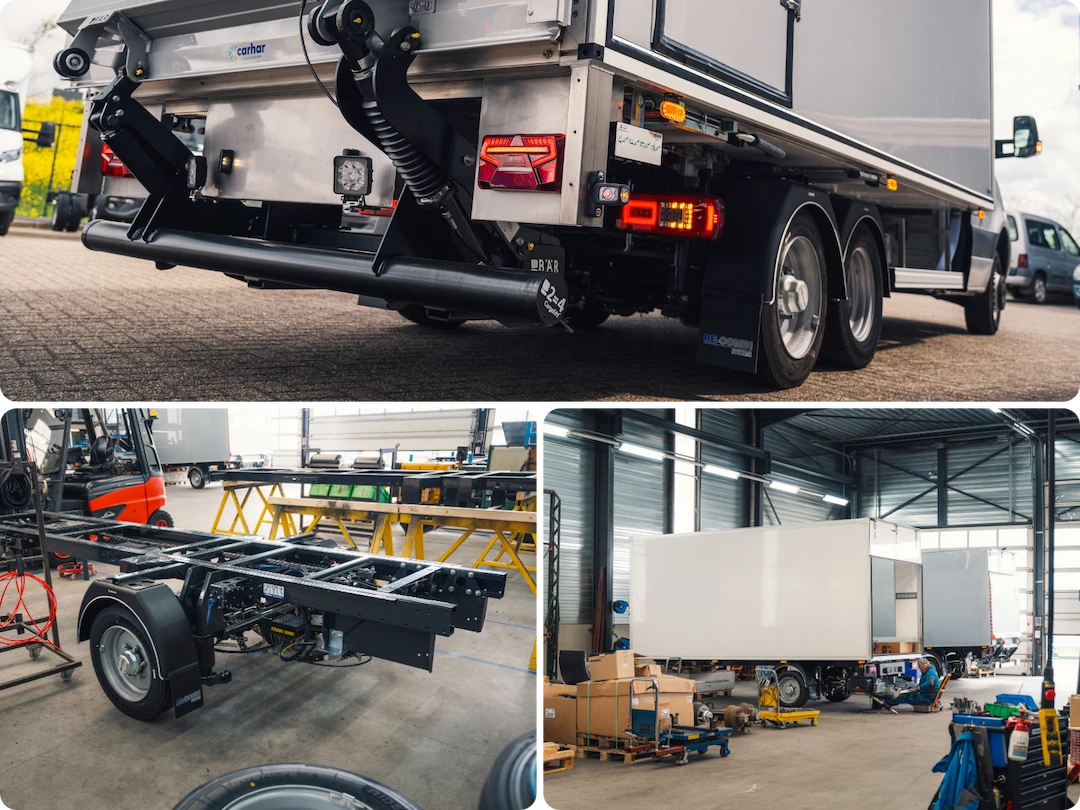
For vehicle builders, ECE R48 is a particularly important point of compliance. This regulation does not concern the light itself, but the installation of vehicle lighting on the vehicle. This includes the positioning of rear lights, indicators, side marker lights, end-of-vehicle lights, contour lights, reversing lights, fog lights and licence plate lights. Even a correctly approved light can still cause problems if it is fitted in the wrong position or controlled incorrectly.
Furthermore, ECE R10 plays a key role in modern LED lighting, modules and cable sets. Particularly in the case of lorry chassis, semi-trailers and vehicles with CAN-bus or other electronic systems, it is important that lighting does not cause electromagnetic interference and is itself resistant to external interference. R10 compliance is therefore not merely a product detail, but a practical consideration within the overall vehicle construction.
When selecting and mounting vehicle lighting, please check at least the following points:
By taking these points into account right from the design and specification phase, you can prevent lighting from becoming a point of contention only at the stage of type-approval, handover or series production. Particularly in the case of repeatable bodywork projects, semi-trailer construction and 24V plug-&-play lighting systems, it is advisable to clearly define product selection, mounting and documentation in advance.
TRALERT® supports vehicle builders and bodybuilders in selecting suitable vehicle lighting, wiring harnesses and product-specific documentation. For final vehicle approval, consultation with the relevant approval authority or type-approval partner is always paramount.
The UNECE WP.29 working group meets three times a year in Geneva and regularly adopts new revisions and amendments. For 2026, there are a number of changes that have a concrete impact on new vehicle construction and thus on your EU type approval vehicle lighting.
The most significant recent change is the amendment to R48, which makes marker lights with indicator function mandatory for newly registered O3 and O4 vehicles from 1 January 2025. Important to note: this requirement applies only to new registrations, not to existing vehicles. In practice, this means that a retrofit project on an existing semi-trailer does not need to comply with this new requirement, but every new O3 or O4 vehicle to be built must.
A nuance that many people are unaware of: in Germany, this requirement had already been mandatory since 2022 under national policy. Vehicle builders producing for the German market therefore had to comply three years earlier with a requirement that the rest of Europe only adopted later. For buyers, this means that a German reference client had often already fitted marker lights with an indicator function, whilst Dutch projects only began implementing this later on.
UNECE is gradually consolidating older regulations into broader assembly standards. R148 gradually replaces R4, R6, R7, R23, R38, R50, R77, R87 and R91 for signal lighting. R149 replaces R112, R113 and R123 for driving lights. This transition is not a big-bang but happens over years via transition periods.
What this means for your purchasing: products with older regulations remain valid as long as they are on the market during the transition period. But for new product development, manufacturers almost always opt for R148 or R149 immediately. If you buy a product with only an R23 approval without R148 now, you know that you will have to plan replacements eventually. For new range decisions, it makes sense to use the newer standard as a selection criterion.
From 1 January 2026, the so-called V16 will be mandatory in Spain. This is a yellow flashing indicator with geolocation that replaces the old warning triangle in the event of a breakdown. For Dutch vehicle builders producing vehicles for the Spanish market or equipping international fleets, this is a new component that must be included in the equipment package. The device communicates directly with the Spanish traffic authority’s DGT 3.0 platform.
ECE R10 is often the hidden stumbling block in EU type approval for vehicle lighting when it comes to modern vehicle designs. A light may have a valid R23 or R148 type approval and still cause problems on a modern truck or trailer equipped with a CAN-bus. The reason lies not in the type approval itself, but in how the light communicates electrically with the vehicle system.
The most common problem: you replace a conventional light bulb with an LED equivalent and the dashboard reports "lamp defective" while the light works fine. The cause is that the vehicle system measures the current draw to check whether the light is present and functional. LEDs have a fundamentally lower current draw than incandescent bulbs. The system interprets this as a defective light.
The solutions vary depending on the vehicle. Some LED products have built-in resistances that simulate the higher current draw. Other solutions use external resistances in the wiring. And for modern fleets, there are now CAN-bus products that are directly compatible with the base vehicle’s protocol. The appropriate solution depends on the vehicle type and the CAN protocol.
An R10-compliant product carries a specific designation on the housing or nameplate. You recognise this by a designation such as "10R" followed by a number, next to the E designation of the country of approval. Example: a product with "E1 10R-06 1234" is R10-approved by the CBA in Germany under revision 06. For modern CAN-bus vehicles, this designation is a minimum requirement that should always be found on the housing.
Practical tip for purchasers
For each new product line, ask not only for the Approval Sheet for the functional regulation (such as R23 or R148), but also explicitly for the R10 documentation. A supplier that cannot quickly demonstrate R10 compliance will not supply a suitable product for modern vehicle construction. When in doubt: ask for the specific matching with the CAN protocol of your base vehicle.
ECE R65 is the standard for optical warning signals, such as flashing beacons, beacon bars and beacon bars. There are two classes within R65, and the distinction between them is often misinterpreted in practice.
Class 1 has a single fixed light intensity level. The light always operates at the same brightness, day and night. Class 2 has two switchable levels: a daytime mode with higher intensity so that the light is clearly visible even in bright daylight, and a night-time mode with lower intensity to prevent dazzling other road users. More about ECE R65 Class 2
Those who manufacture for multiple markets will need to deal with ECE type approval for truck and trailer lighting in various countries. It is therefore important to know which authority in which country issues type approval, and which organisation carries out the tests. This division of roles between Type Approval Authorities and Technical Services is often confused, with the result that the wrong authority is cited in quotations and specifications.
| Country | Type Approval Authority | Known Technical Services |
|---|---|---|
| Country: Netherlands | Type Approval Authority: RDW | Well-known Technical Services: RDW Truck Centre, TASS International |
| Country: Germany | Type Approval Authority: KBA | Well-known technical services: TÜV Süd, TÜV Rheinland, TÜV Nord, DEKRA |
| Country: France | Type Approval Authority: CNRV | Well-known technical services: UTAC, Transpolis |
| Country: Italy | Type Approval Authority: CSST / MCTC | Renowned Technical Services: IDIADA, Centro Prove Autoveicoli |
| Country: Spain | Type Approval Authority: INTA / SGI | Well-known technical services: IDIADA, ASEPA |
| Country: UnitedKingdom | Type Approval AuthorityVCA | Well-known technical services: MIRA, HORIBA MIRA |
| Country: Sweden | Type Approval Authority: Transportstyrelsen | Renowned Technical Services: RISE Research Institutes of Sweden |
Two common mistakes we regularly encounter. In Germany, TÜV is often mentioned as a type-approval authority, but TÜV is a Technical Service that carries out tests on behalf of the KBA. The KBA then grants official type approvals. In France, UTAC is often mentioned as TAA, but the actual Type Approval Authority is CNRV, the Centre National de Réception des Véhicules. UTAC is also a Technical Service there.
For your project planning, this is relevant because lead times, communication and documentation processes differ between TAAs. The CBA works differently from CNRV, and RDW again has its own procedures. Who issues type approvals helps determine your project planning.
For buyers making range decisions, it is important to understand how UNECE works with transition periods. A type approval under an older regulation does not automatically expire once a newer regulation is adopted. Existing products remain valid during the transition period, and existing vehicles with those products on them remain legal.
But for new product development, manufacturers almost always opt directly for the latest standard. Concrete consequences:
A work light purchased now with R23 approval remains usable as a reversing light during the transition period. But new certifications for signal lighting are now being issued under R148. For your product range, this means you will slowly see the transition: fewer new R23-only products on the market, more products with R148 or dual certification.
The same applies to driving lights and headlights. R149 replaces R112 and older standards. A product with only R112 is still usable for years, but new developments appear mainly with R149 approval. For long-term planning, it is wise to factor this into your procurement strategy. Products with the current standard have a longer market horizon than those with only older standards.
Good to check beforehand
Which standards are relevant for your project will depend on the vehicle category (M, N, O), the intended application and the market for which production is intended. An R65 flashing light for a German recovery vehicle may have different installation requirements than the same light on a Dutch tow truck, even if the product is identical.
A common question regarding lighting for bodybuilding is: when does a lighting modification affect the Certificate of Conformity, and when does it not? The short answer: it depends on what you are changing and how significant that change is.
Replacements where a light is replaced with an equivalent E-certified alternative usually do not require a CoC adjustment. Replacing a broken reversing light with a new R23-certified version is normal maintenance, even if the new light comes from another manufacturer. The same applies to an upgrade to LED where function, position and circuitry remain identical.
Structural changes are different. Adding additional work lights on the roof, flush mounting a light bar in the bumper, or integrating a beacon bar where there was none before may well require CoC modification. The same applies to moving existing mandatory lighting to another position. The RDW or CBA determines on a case-by-case basis whether a re-inspection or CoC modification is required.
A practical advice we often give: always document which products you have fitted, in which position, and keep the corresponding Approval Sheets. When in doubt about the impact of a change, you can then check with the Type Approval Authority beforehand. Do not ask this only after production, as this leads to delays that were entirely avoidable.
Our role as a lighting supplier to the lorry and trailer industry goes beyond simply supplying products. For vehicle builders, bodybuilders and OEM departments, we are often involved right from the design stage, not as a product supplier but as a knowledge partner who contributes ideas on installation and certification relating to homologation of truck and trailer lighting.
In practice, this is reflected in a number of ways. Our technical consultants support the selection of products appropriate to the application and to the relevant standard. For supplied product lines, where available, we can provide Approval Sheets and relevant product documentation so that technical assessment and project preparation can be better substantiated.
For projects involving plug-&-play wiring harnesses and pre-programmed modules, such as in 24V semi-trailer construction, we can supply the entire lighting system as an integrated package. This reduces the number of assembly steps on the production floor, prevents wiring errors and shortens the time required for pre-inspection preparation.
An E-mark is mandatory for vehicle lighting that fulfils statutory light functions on public roads, such as brake lights, indicators or fog lights. A CE marking indicates general product conformity and does not constitute type approval for vehicle lighting. For lighting on a truck or trailer , the E-mark is always required, not just the CE marking.
Any lighting that is legally operated on public roads must have valid type approvals according to the appropriate regulations. Work lights used exclusively in enclosed areas, such as construction sites, do not have to comply with UN Regulations. However, other safety and quality standards do apply.
Replacing an existing light with an equivalent E-certified version usually does not require CoC modification. However, adding structurally new lighting may require it. When in doubt: checking with the Type Approval Authority beforehand is always wiser than embarking on inspection after production.
R10 compliance must be mentioned on the type approval documentation. With many products, it is also shown on the housing as the designation "10R" succeeding a number, in addition to the E-designation. A supplier that cannot demonstrate R10 compliance does not supply a suitable product for modern CAN-bus vehicles.
UN Regulations are mutually recognised within all contracting parties of the 1958 Agreement. An approval issued by the KBA in Germany, for example, is also valid in the Netherlands, France and Italy. However, national additions may apply in terms of application rules and specific obligations. For projects covering several markets, it pays to do a short check per country for additional requirements.
The earlier, the better. In the design phase, a supplier can still think along about mounting positions and R48 compliance without incurring costs. Joining only in the production phase often means that conceptual issues are no longer easy to correct. For projects involving type approval: involve the lighting partner in the specification phase at the latest.
Lighting is still often treated as an afterthought in vehicle construction, a component that you let connect when the rest of the design is in place. In reality, lighting is one of the most regulated aspects of the vehicle, and a common stumbling point in EU type approval vehicle lighting.
Disclaimer:
At TRALERT®, we do our best to keep the information in this article as accurate and up-to-date as possible, including the regulations surrounding vehicle lighting. However, legislation can change regularly, and although we make every effort to implement these changes in a timely manner, it is possible that certain updates or adjustments have not yet been incorporated into this article. We therefore always advise our readers to check the current legislation with their local government or regulatory bodies, especially when it comes to exceptions or specific national regulations. TRALERT® is not liable for any damages or fines resulting from outdated or incomplete information in this article.
If in doubt, always contact the competent authority to ensure that your vehicle meets all legal requirements.

A selection of LED lighting for trucks and trailers.
A comprehensive overview of our LED vehicle lighting and accessories.
Plug-&-play lighting kits, cabling and lighting for bodybuilders.
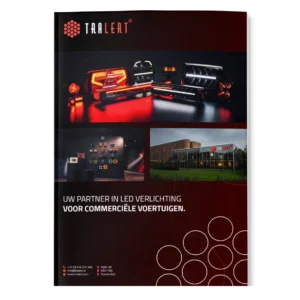
What TRALERT® can do for you as a partner in LED vehicle lighting.
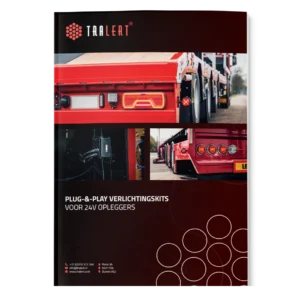
Plug-&-play kits, cabling and lighting for 24V semi-trailers.
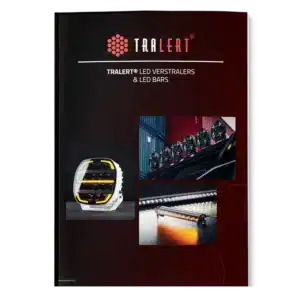
A selection of high-quality LED driving lights and LED bars.
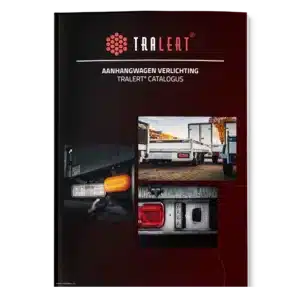
Lighting, wiring harnesses and accessories for trailers.
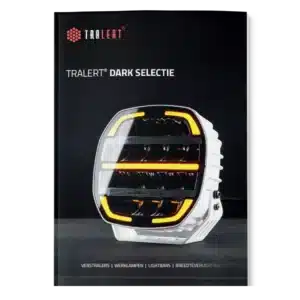
The TRALERT® DARK LED range.
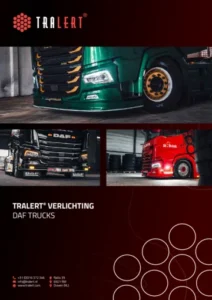
Work lights, rear lights, driving lights, beacor bars and more for DAF Trucks.
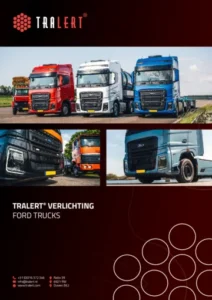
Work lights, rear lights, driving lights, beacor bars and more for Ford Trucks.
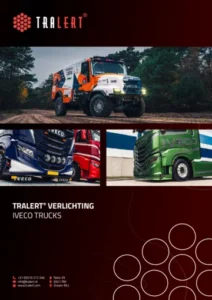
Work lights, rear lights, driving lights, beacon bars and more for Iveco.
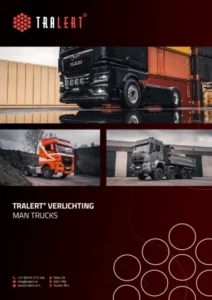
Work lights, rear lights, driving lights, beacon bars and more for MAN.
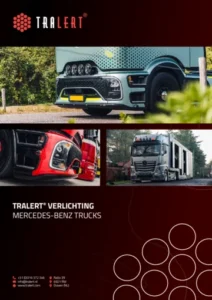
Work lights, rear lights, driving lights, beacon bars and more for Mercedes-Benz Trucks.
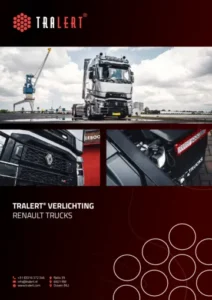
Work lights, rear lights, driving lights, beacor bars and more for Renault Trucks.
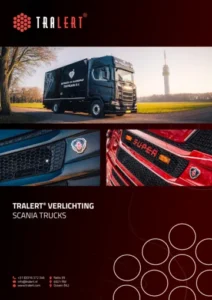
Work lights, rear lights, driving lights, beacor bars and more for Scania.
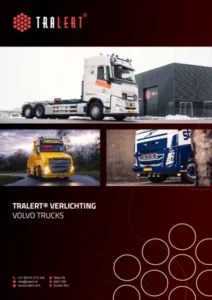
Work lights, rear lights, driving lights, beacon bars and more for Volvo Trucks.
The catalogue opens in a new tab. Can’t see it?
Open the catalogue (PDF)Two questions, in 30 seconds.
TRALERT® works with a dealer network. Dealers can view current stock levels, place orders online on account and receive a product feed for their online shop or system. We assess each enquiry internally and will let you know within 1 to 2 working days whether a partnership is possible.
You can purchase TRALERT® lighting through our partners, either locally or online. Simply provide your details, and we’ll find the partner best suited to help you.
Would you prefer to find a stockist yourself?We will assess your enquiry internally. You will hear from us within 1 to 2 working days to let you know whether a partnership is possible.
We’ll let you know within 1 to 2 working days which partner will be able to assist you further.