Your specialised partner in LED vehicle lighting

The short answer
A reverse light is mandatory on an O2 trailer (up to 3,500 kg) and optional on an O1 trailer (up to 750 kg). The light must be approved as a reverse light (R23 or R148, function code AR), emit white light, be fitted at a height of between 250 and 1,200 mm, and only illuminate when reverse gear is engaged. Below you will find, for each point, the regulation, the source and what you need to check in practice. An overview of all mandatory lighting can be found in our regulations for trailer lighting.
TRALERT® has been a specialist in LED lighting for trailers since 2005. From modern rear lights and marker lights to complete, easy-to-fit plug-&-play sets.
This depends on the category. According to UN/ECE R48 (para. 6.4.1), reversing lights are mandatory on trailers in categories O2, O3 and O4, and optional on O1. The number of lights depends on the length (para. 6.4.2).
| Category | Maximum mass | Up to and including 6,000 mm in length | Longer than 6,000 mm |
|---|---|---|---|
| CategoryO1 | Maximummass up to 750 kg | Up to 6,000 mm in length(optional) | Longer than 6,000 mmOptional (rarely relevant) |
| CategoryO2 | Maximummass: 750 to 3,500 kg | Mandatory for lengths up to 6,000 mm¹, 1 additional light permitted | Mandatory for lengths over 6,000 mm², 2 additional lights permitted |
Source: R48 para. 6.4.1 (presence), para. 6.4.2.1 (up to 6,000 mm) and para. 6.4.2.2 (longer than 6,000 mm).
Please note: ‘optional’ does not mean that anything goes. A reverse light that you choose to fit to an O1 vehicle must still be type-approved, correctly fitted and only illuminated when reversing. The above requirements are the R48 requirements. If the vehicle in question is an older trailer or is registered in another country, please also check the relevant national regulations.
A reverse light illuminates the area behind the vehicle and warns other road users that the vehicle is reversing. It is therefore not just any old white light. As a wholesaler of trailer lighting, TRALERT® helps its partners choose the right light. Always check two aspects:
| Low | What do you check? | Where can you find that? |
|---|---|---|
| Level 1. The light | What should you check?Approved as a reverse light: E-mark with function code AR and approval number | Where can you find this?ECE R23 or R148, marking on the light |
| Section2. Mounting | What do you check?Position, height, visibility and switching | Where can you find this?ECE R48, paragraph 6.4, plus national regulations of the country of use |
A white light without an AR marking does not count as a reverse light, even if it emits a clear light. Furthermore, for type approvals in accordance with the 09 series of R48 (Amendment 6), the light must also be approved in accordance with R23 or R148 in the 00 series or later (para. 6.4.2.3). An approved light is therefore not automatically permitted in every position: the mounting must also be correct.
| Section | Requirement | Source (R48) |
|---|---|---|
| ComponentColour | EisWit | Source (R48), para. 5.15 |
| ComponentHeight | Requirement: Minimum 250 mm and maximum 1,200 mm above the ground | Source (R48), para. 6.4.4.2 |
| Component Positionalong the length | Requirement: At the rear | Source (R48), para. 6.4.4.3 |
| Component: Visibility (single light) | Specification: 15°up, 5° down, 45° to the left and right | Source (R48)para. 6.4.5.1 |
| Component: Visibility (two lights) | Specification: 15°upwards, 5° downwards, 45° outwards and 30° inwards | Source (R48)para. 6.4.5.1 |
| PartDirection | Requirement: Look behind | Source (R48), para. 6.4.6.1 |
| ComponentCircuit | Requirement: Only when reverse gear is engaged | Source (R48)para. 6.4.7.1 |
Practical tip: on small trailers, the rear light is often already positioned low down. A combined rear light unit must also be fitted within a height of 250 to 1,200 mm to qualify as a reverse light.
R48, paragraph 6.4.7.1, stipulates that the reverse light may only be illuminated when reverse gear is engaged and the vehicle is ready to start. If either of these conditions is not met, the light must not come on or remain illuminated.
A trailer does not have its own gearbox. The signal comes from the towing vehicle via the connector, and this is precisely where the differences between vehicles arise.
Small trailers generally operate on 12 Volts. The connector determines whether the reversing signal is available:
| Connector | Reversing lights | Connection |
|---|---|---|
| 13-pin plug(ISO 11446) | ReversinglightYes | Connection: Pin 8 (grey) |
| 7-pin plug(ISO 1724, 12N) | ReversinglightNo | Connection: No PIN for reversing lights |
If your O2 trailer has a 7-PIN connector and you wish to connect a reverse light, you will need a 13-PIN connector. A 13-PIN to 7-PIN adapter only transmits the 7-PIN functions, so the reversing signal will still be missing. You can find the full pin diagram in our article on connecting trailer lighting.
Why doesn’t the same trailer work with every towing vehicle? Not every vehicle transmits the reversing signal in the same way. In modern vehicles, the signal is transmitted directly, via a trailer module or via vehicle software. Trailer modules also monitor light status and load, which can sometimes cause LED lighting to display an error message or fail to activate. You can read more about this in our article on CAN bus interference with LED lighting.
The fault rarely lies with the light itself. Check in the following order:
You can find further steps in our article ‘Trailer lighting not working’.
This depends on the category. According to R48 (para. 6.4.1), it is mandatory on O2, O3 and O4 trailers and optional on O1 trailers. You should also always check the national regulations of the country in which the trailer is being used.
For lengths up to and including 6,000 mm, one light is mandatory and a second is permitted (R48 para. 6.4.2.1). For vehicles over 6,000 mm in length, two lights are mandatory and two additional lights are permitted (para. 6.4.2.2).
Only if the light is approved as a reverse light (R23 or R148, function code AR) and complies with the mounting and switching requirements of R48, paragraph 6.4. A white light without this approval is not a reverse light.
No. The 7-PIN connector (ISO 1724, 12N) does not have a PIN for reversing lights. A 13-PIN connector is required for this, with the signal running via PIN 8.
No. The operation varies depending on the towing vehicle, plug configuration, wiring harness, mass and vehicle diagnostics. You should therefore treat a reverse light as a system integration rather than a simple bulb replacement.
Reversing lights are also mandatory here (R48 para. 6.4.1). The length requirements and the additional side lights are set out in our article on work lights and reversing lights for O3 and O4 trailers.
This article is a practical guide to UN/ECE R48 and does not constitute legally binding advice. For a definitive assessment, the vehicle category, dimensions, the light’s approval mark, the mounting position and the national regulations of the country of use are decisive.
Disclaimer:
At TRALERT®, we do our best to keep the information in this article as accurate and up-to-date as possible, including the regulations surrounding vehicle lighting. However, legislation can change regularly, and although we make every effort to implement these changes in a timely manner, it is possible that certain updates or adjustments have not yet been incorporated into this article. We therefore always advise our readers to check the current legislation with their local government or regulatory bodies, especially when it comes to exceptions or specific national regulations. TRALERT® is not liable for any damages or fines resulting from outdated or incomplete information in this article.
If in doubt, always contact the competent authority to ensure that your vehicle meets all legal requirements.

A selection of LED lighting for trucks and trailers.
A comprehensive overview of our LED vehicle lighting and accessories.
Plug-&-play lighting kits, cabling and lighting for bodybuilders.
What TRALERT® can do for you as a partner in LED vehicle lighting.
Plug-&-play kits, cabling and lighting for 24V semi-trailers.
A selection of high-quality LED driving lights and LED bars.
Lighting, wiring harnesses and accessories for trailers.
The TRALERT® DARK LED range.
Work lights, rear lights, driving lights, beacor bars and more for DAF Trucks.
Work lights, rear lights, driving lights, beacor bars and more for Ford Trucks.
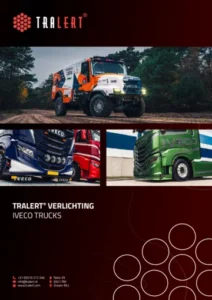
Work lights, rear lights, driving lights, beacon bars and more for Iveco.
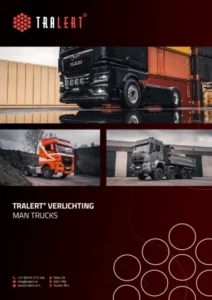
Work lights, rear lights, driving lights, beacon bars and more for MAN.
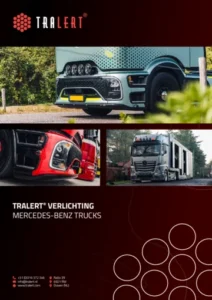
Work lights, rear lights, driving lights, beacon bars and more for Mercedes-Benz Trucks.
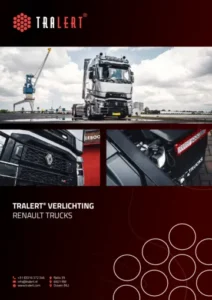
Work lights, rear lights, driving lights, beacor bars and more for Renault Trucks.
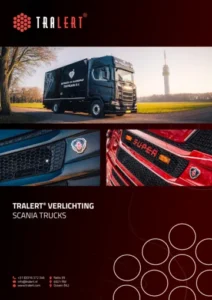
Work lights, rear lights, driving lights, beacor bars and more for Scania.
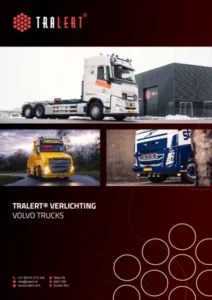
Work lights, rear lights, driving lights, beacon bars and more for Volvo Trucks.
The catalogue opens in a new tab. Can’t see it?
Open the catalogue (PDF)Two questions, in 30 seconds.
TRALERT® works with a dealer network. Dealers can view current stock levels, place orders online on account and receive a product feed for their online shop or system. We assess each enquiry internally and will let you know within 1 to 2 working days whether a partnership is possible.
You can purchase TRALERT® lighting through our partners, either locally or online. Simply provide your details, and we’ll find the partner best suited to help you.
Would you prefer to find a stockist yourself?We will assess your enquiry internally. You will hear from us within 1 to 2 working days to let you know whether a partnership is possible.
We’ll let you know within 1 to 2 working days which partner will be able to assist you further.