Specialised partner in LED vehicle lighting

The short answer
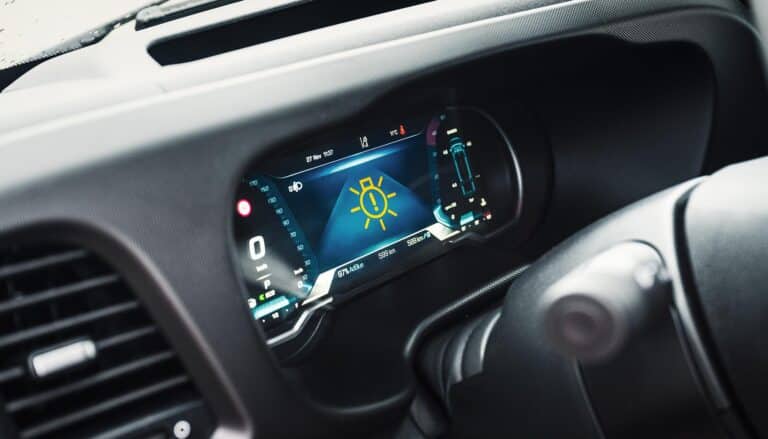
Are your LED lights flashing, does a light fail after a short time, does an indicator flash too quickly, or does the ‘light fault’ message appear on the dashboard? This happens regularly after conventional lighting has been replaced with LED lighting. In practice, this is often referred to as CAN-bus interference.
Sooner or later, many mechanics and vehicle manufacturers will encounter CAN-bus interference with LED lighting. However, in most cases, the CAN network itself is not faulty. The cause usually lies with the vehicle’s electronic lamp monitoring system, which may interpret the lower current draw of LED lighting as a fault.
In this article, we explain:
This article focuses on interference in towed vehicles, such as trailers and semi-trailers. In these cases, the lighting receives its signals via the plug connection to the towing vehicle.
Modern trucks, vans and cars use a CAN-bus: a data network via which the vehicle’s control units communicate with one another. For lighting, lamp monitoring is particularly important. The control unit that manages the lighting measures the current flowing through each light function and compares this with the power consumption of an incandescent bulb.
A ‘CAN-bus interference’ with LED lighting is therefore almost always a message from the lamp monitoring system and not interference in the network itself. An LED consumes a fraction of the current of an incandescent bulb, so the control unit concludes that the light is faulty. This message is sent via the CAN-bus to the dashboard, but the cause lies in the current measurement on the lighting circuit. That is why a resistance, a control box or an adjusted vehicle configuration will resolve the problem: the lamp monitoring system either detects the expected load again or ceases to monitor it.
You can recognise a genuine network fault by other symptoms, such as multiple systems failing simultaneously or error messages unrelated to the lighting. Even vehicles without a CAN-bus can react to LED lighting: a flasher relay that operates under load will then start flashing too quickly. Would you like to know how the CAN-bus works and what ‘canbus proof’ lighting entails? Then read ‘What is canbus proof LED lighting?’.

Important to note: what is commonly referred to in practice as a “CAN-bus interference” is usually not a problem within the CAN network itself. It almost always relates to light monitoring (load detection): the vehicle measures the current draw from a light to check whether it is still working. An LED consumes so little power that the system incorrectly interprets this as a fault. Those who understand this distinction will look for the solution in the right place. You can read more about this in our article ‘What is CAN-bus-proof LED lighting?’.
Would you rather go straight to the solutions? Then take a look at the available CAN-bus solutions.
Since 2005, TRALERT® has specialised in ECE-approved, shock- and water-resistant LED lighting for semi-trailers, trailers and heavy goods vehicles.
See our lighting for heavy transport →
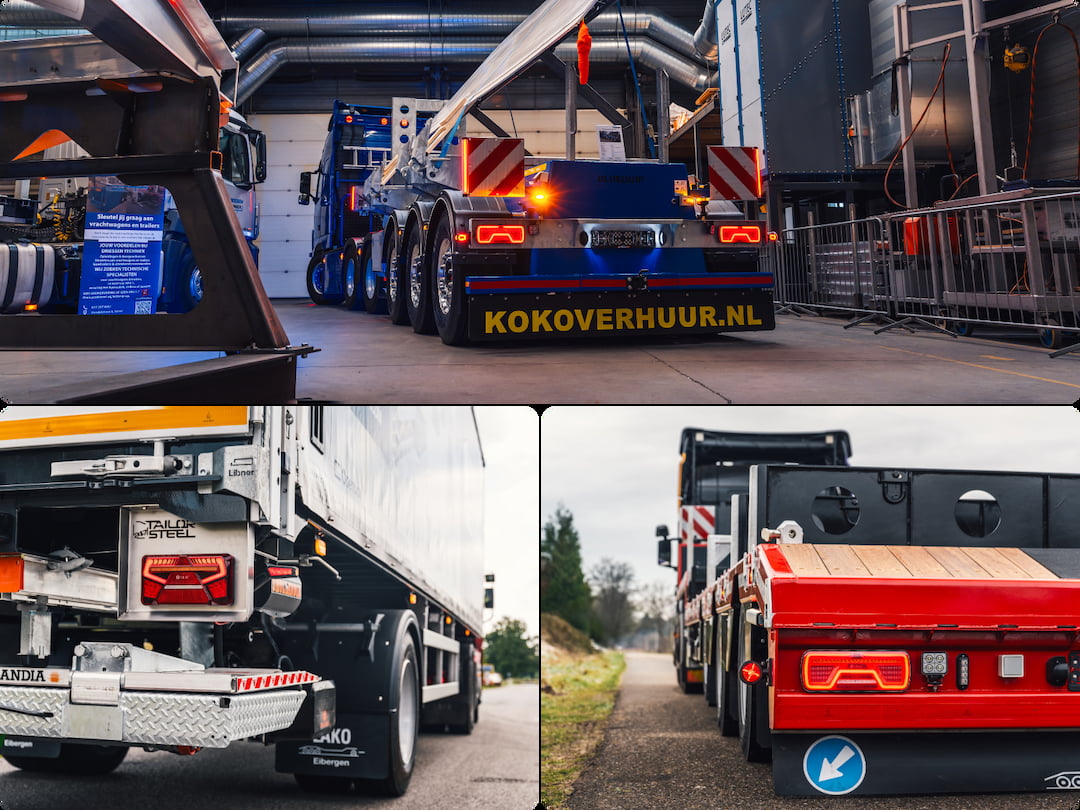
LED lighting uses significantly less power than a conventional filament bulb. When the lamp monitoring system anticipates a higher load, the vehicle may incorrectly identify the LED light as faulty. Depending on the vehicle and the light function, this can lead to an error message, hyperflashing, pulsating lighting or the output being switched off.
A second possible cause is short diagnostic pulses from the light control module. With an incandescent bulb, these are usually not visible, but an energy-efficient LED may flash briefly or remain dimly lit as a result. Not every symptom is therefore caused by exactly the same problem.
| Symptom | Check first | Possible solution |
|---|---|---|
| Symptom:The light is working, but the dashboard is displaying an error message | Check first: Plug, connection and correct light function | Possible solution: Suitable load resistor or control box |
| Symptom: The indicator is flashing too quickly | First, check whetherall indicators are working and correctly connected | Possible solution: A resistor or control box suitable for the load |
| Symptom: The LED pulses or flashes whilst switched off | First, check whetherthe light control module is emitting diagnostic pulses | Possible solution: A suitable control box or module |
| Symptom: The lighting works for a short period and then fails | First, checkthe vehicle’s voltage, mass, wiring and fault code | Possible solutions: control box, vehicle configuration or circuit repair |
| Symptom: Severallight functions are operating erratically | Check first: Connector, mass, pin configuration and wiring harness | Possible solution: First rectify the installation, then retest it |
Always start by checking the plug connection, mass and cabling. A poor connection, corrosion or a broken cable is not a CAN-bus problem and will not be resolved simply by fitting a resistance or control box. You can read more about this in our guide to interference in lorry and semi-trailer lighting.
LED lighting uses much less power than traditional bulbs. As a result, the CAN-bus system sometimes thinks a light is faulty. This leads to error messages, flashing lighting or even failure.
The appropriate solution depends on the system voltage, the specific light function and the way in which the vehicle monitors the lighting. You should therefore first check whether the interference is actually caused by the lower load of LED lighting.
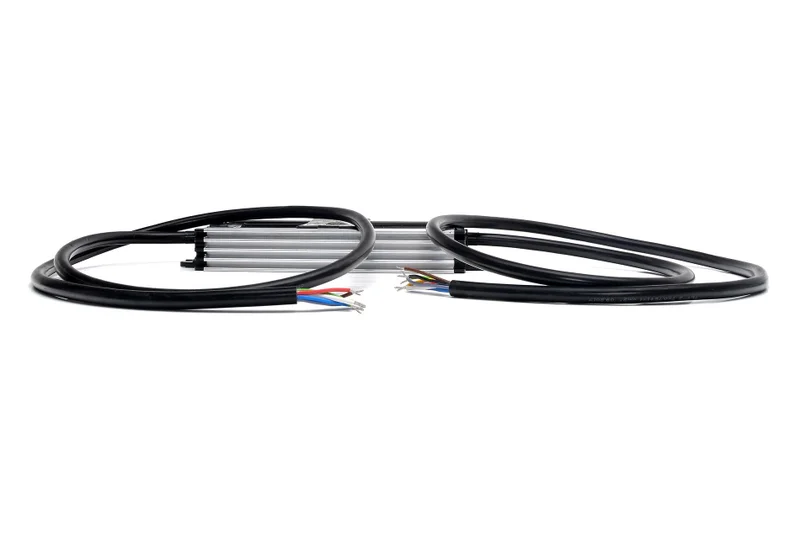
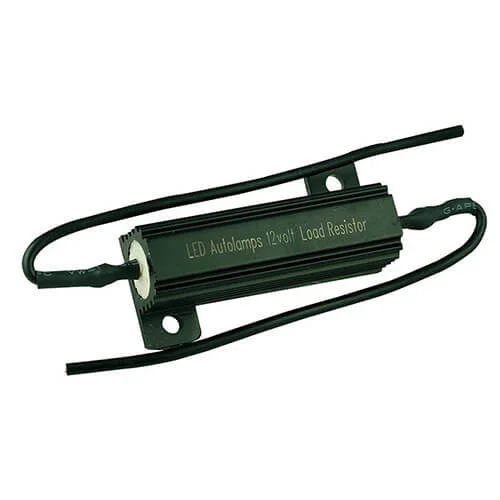
A separate load resistor is particularly useful when a single specific 12V light function causes an error message or an excessively fast flashing frequency. For multiple light functions, a complete 13-PIN connection or a 24V lorry and semi-trailer system, a suitable control box is usually a more straightforward solution.
The LR12 , for example, is a 12V load resistor for a separate circuit. It simulates an additional load and, due to the heat generated, must be mounted on a suitable metal surface. For complete connections, there are 12V control boxes with a 13-PIN connection and a 24V control box that is integrated directly into the truck or semi-trailer wiring.
View the available CAN-bus solutions or, if in doubt, first identify which light function and load are causing the interference.
Flashing lighting often indicates a mismatch between LEDs and CAN-bus detection requirements.
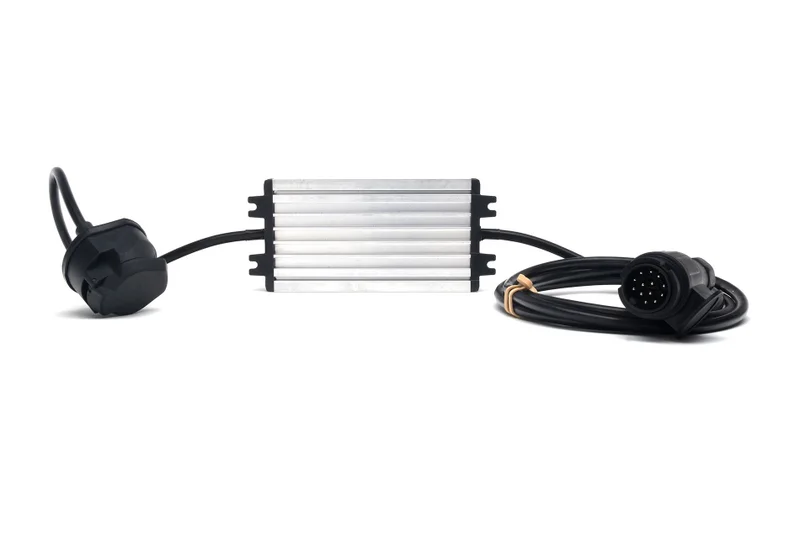
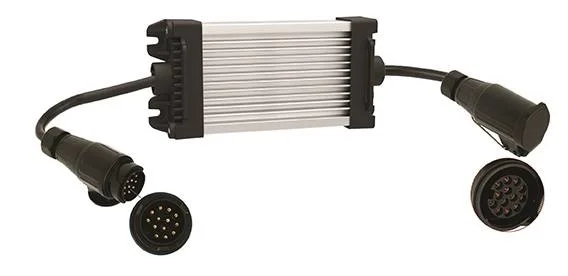
When replacing or performing the first mounting of LED lighting, you can prevent much interference by taking the electrical connection and vehicle monitoring into account when selecting your products.
ECE R11 concerns electromagnetic compatibility (EMC). The lighting must not cause interference with other electronic equipment, such as the radio or vehicle systems, nor must it itself be affected by such interference. The standard does not specify how your vehicle’s lamp monitoring system reacts to the light.
An R10-approved LED light can therefore still trigger a ‘light faulty’ warning. Conversely, a resistance or control box will not resolve radio interference caused by LED lighting. When purchasing, therefore, check both: R10 approval for EMC, and CAN-bus compatibility or the correct load for the lamp monitoring system.
By coordinating lighting, cabling and electronic monitoring right from the design phase, you can prevent repair work and interference after handover.
A common scenario is that the trailer’s indicator works normally once or twice and then starts flashing more rapidly, fails, or triggers a ‘light faulty’ warning on the dashboard. The LED light itself is usually not faulty. The light monitoring system on the towing vehicle detects insufficient current on that circuit and therefore identifies the light as faulty.
First, rule out a cabling fault. If the lighting does not work at all or only intermittently, the cause usually lies with the connector, the mass or the cabling, rather than the bulb monitoring system. Check the 13-PIN or 7-PIN connector for corrosion and the earth connection for voltage drop. You can find the full step-by-step guide in ‘Trailer lighting not working: causes and solutions’.
Is the cabling in good condition? Here’s how to determine whether lamp monitoring is the cause:
Is a low load the cause? If only one function is triggering an error message, a resistance on that circuit is often sufficient. If several functions are triggering an error message, or if you wish to avoid heat build-up caused by resistors, an LED control box for the 13-PIN connection is the cleaner solution.
By cooperating with specialists as early as the design phase, you save time, money and interference afterwards.
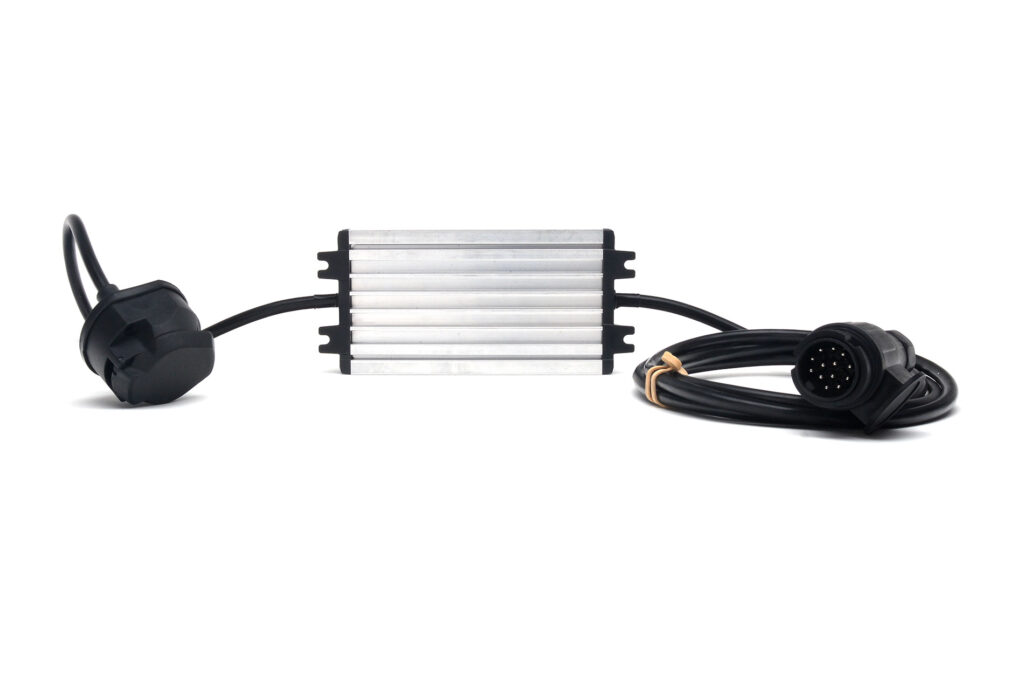
This is usually caused by the headlight monitoring system of the towing vehicle, which measures the current flowing through each light function. An LED consumes much less power than an incandescent light, causing the vehicle to think the light is faulty. The result is rapid flashing, flickering or an error message. A resistance, a control box or CAN-bus-compatible lighting resolves this issue.
The light monitoring system detects too little load on that circuit. The light is therefore working, but the vehicle does not recognise it as a functioning light. This is not an interference with the CAN-bus itself, but an incorrect current reading. With a suitable resistance or control box, the vehicle will once again detect the expected load.
Temporarily fit an incandescent bulb back into the function that is triggering the warning. If the warning disappears, the lamp monitoring system does not recognise the LED and the light itself is in good working order. If the warning persists, or if the lighting does not work at all, this does not automatically indicate CAN-bus interference. In that case, first check that you have connected the trailer lighting correctly and that the connector, mass and wiring are in good working order.
Rapid flashing, also known as hyperflashing, is the way in which the vehicle indicates a faulty indicator. The lamp monitoring system detects insufficient current and doubles the flashing frequency as a warning. A load resistor on the indicator circuit or a control box will resolve this.
Many vehicles send short truck pulses or a small residual current through the lighting circuits to check whether a light is present. An incandescent bulb does not visibly respond to this, but an LED does. As a result, it flashes or glows faintly. A control box or LED lighting system suitable for bulb monitoring prevents this.
No. A resistance is only required if the vehicle has lamp monitoring and the LED provides insufficient load. Many vehicles do not recognise LED lighting, and CAN-bus-compatible LED lights often have the required load built in. In the event of interference affecting multiple functions, a control box is usually the better choice. You can read more about this on the page about resistance.
Yes. A load resistor converts the excess current into heat and can become very hot. You should therefore mount it on a metal surface, away from cables, plastic and flammable materials. If you wish to avoid heat build-up, a control box is an alternative.
Yes. 24V lorries and tractor units often have lamp monitoring systems and may report LED lighting as faulty. In this case, use a resistance or control box suitable for 24V. A 12V resistance is not suitable for a 24V system.
This is the case for some vehicles. Using diagnostic equipment, the lamp monitoring can be adjusted per function or set to LED mode, usually via the dealer or a specialist workshop. This is not possible with every brand or model. Please bear in mind that the fault indicator for indicators is a legal requirement, so do not simply switch it off.
No. ECE R10 relates to electromagnetic compatibility: the lighting must not interfere with other electronic equipment, such as the radio. CAN-bus compatibility relates to how the vehicle’s light monitoring system responds to the light. A light may comply with ECE R10 and still trigger a ‘light faulty’ warning.
In the case of an isolated fault message, a standard solution, such as a load resistor or control box, is often sufficient. Take a look at our CAN-bus solutions for vehicle lighting.
When it comes to complete vehicle bodies, trailers or bespoke cabling, there are more factors to consider. These include system voltage, light functions, wiring harness configuration, connectors and the vehicle’s electronic monitoring systems. TRALERT® can coordinate these components right from the drawing board and supply them as a complete lighting and cabling solution.
View our 24V semi-trailer lighting and plug-&-play cabling, or get in touch for support with a complete vehicle or cabling project.

A selection of LED lighting for trucks and trailers.
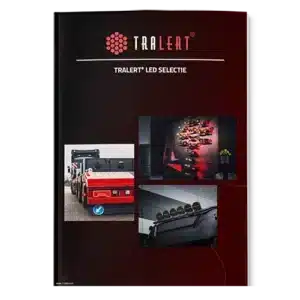
A comprehensive overview of our LED vehicle lighting and accessories.
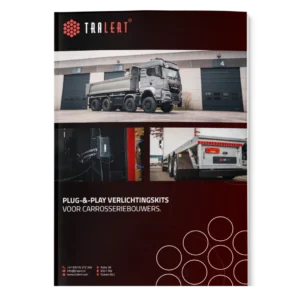
Plug-&-play lighting kits, cabling and lighting for bodybuilders.
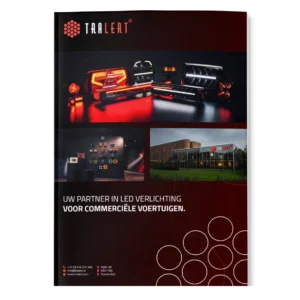
What TRALERT® can do for you as a partner in LED vehicle lighting.
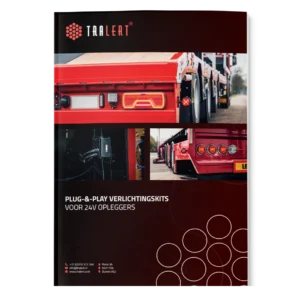
Plug-&-play kits, cabling and lighting for 24V semi-trailers.
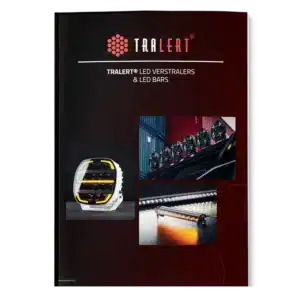
A selection of high-quality LED driving lights and LED bars.
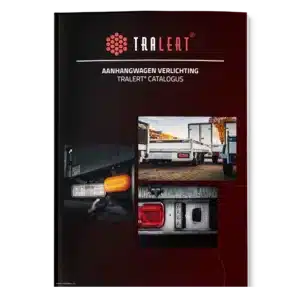
Lighting, wiring harnesses and accessories for trailers.
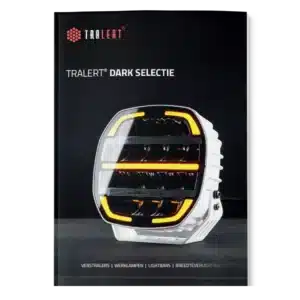
The TRALERT® DARK LED range.
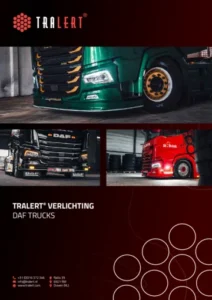
Work lights, rear lights, driving lights, beacor bars and more for DAF Trucks.
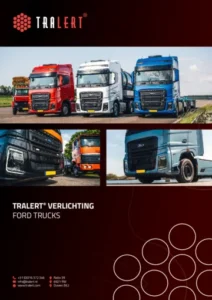
Work lights, rear lights, driving lights, beacor bars and more for Ford Trucks.
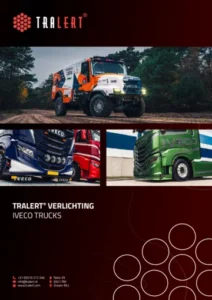
Work lights, rear lights, driving lights, beacon bars and more for Iveco.
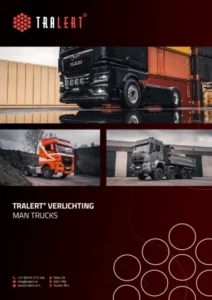
Work lights, rear lights, driving lights, beacon bars and more for MAN.
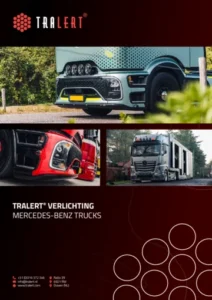
Work lights, rear lights, driving lights, beacon bars and more for Mercedes-Benz Trucks.
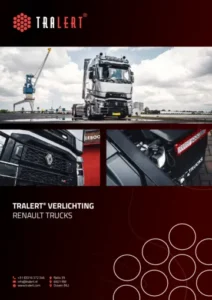
Work lights, rear lights, driving lights, beacor bars and more for Renault Trucks.
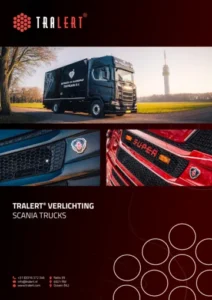
Work lights, rear lights, driving lights, beacor bars and more for Scania.
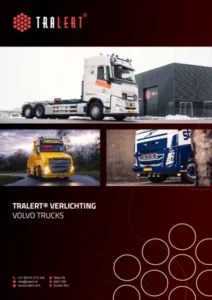
Work lights, rear lights, driving lights, beacon bars and more for Volvo Trucks.
The catalogue opens in a new tab. Can’t see it?
Open the catalogue (PDF)Two questions, in 30 seconds.
TRALERT® works with a dealer network. Dealers can view current stock levels, place orders online on account and receive a product feed for their online shop or system. We assess each enquiry internally and will let you know within 1 to 2 working days whether a partnership is possible.
You can purchase TRALERT® lighting through our partners, either locally or online. Simply provide your details, and we’ll find the partner best suited to help you.
Would you prefer to find a stockist yourself?We will assess your enquiry internally. You will hear from us within 1 to 2 working days to let you know whether a partnership is possible.
We’ll let you know within 1 to 2 working days which partner will be able to assist you further.
TRALERT® operates through a dealer network. Prices, stock levels and online ordering are therefore only available to business customers with an account.
We assess every enquiry internally and will let you know within 1 to 2 working days whether a partnership is possible.
For your own use?Find a stockist
Would you prefer a quote first?Add this product to your quotation request and send it off when you’re ready.