Your specialised partner in LED vehicle lighting

The short answer
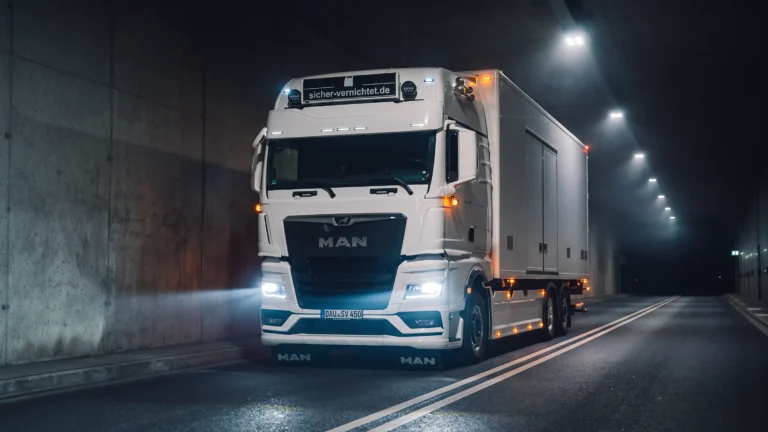
What are the rules regarding lighting in tunnels? And what about, for example, safety signage for vehicles carrying out work inside tunnels? We will address these questions in detail in this article. This is because there are a number of specific rules governing lighting in tunnels. For instance, low beam lights are compulsory in tunnels; this applies even during the day and when the tunnel itself is lit.
In this blog you will read:
Low beam headlights are compulsory in tunnels, and this applies to all vehicles, including trucks and work vehicles. This has been stipulated by the UNECE (international laws, safety standards and technical regulations for road traffic). This applies even when the tunnel is lit. In normal traffic situations, this usually means low beams, as the use of high beams is subject to separate restrictions. Furthermore, there are no special additional requirements for lighting.
The UNECE’s road safety recommendations include a separate chapter entitled ‘Driving in tunnels’. In this chapter, the UNECE refers directly to Article 25 and defines the tunnel rule as an obligation to switch on dipped lights. The UNECE also recommends that these rules be followed in tunnels that are not marked with the special tunnel sign.
The difference between low beams and position lights
Position lights are intended for use during the day and ensure your vehicle stands out more clearly. Low beam headlights are also designed to improve the driver’s visibility. These are the standard lights you use in the evening.
Modern vehicles often switch their lighting on automatically. However, when driving through a tunnel, it is important to check for yourself that the low beam headlights are actually on. Want to know more about regulations for truck lighting? Then take a look at the rules for truck and semi-trailer lighting.
Since 2005, TRALERT® has specialised in ECE-approved LED lighting for trucks — designed to withstand vibrations, moisture and intensive daily use.
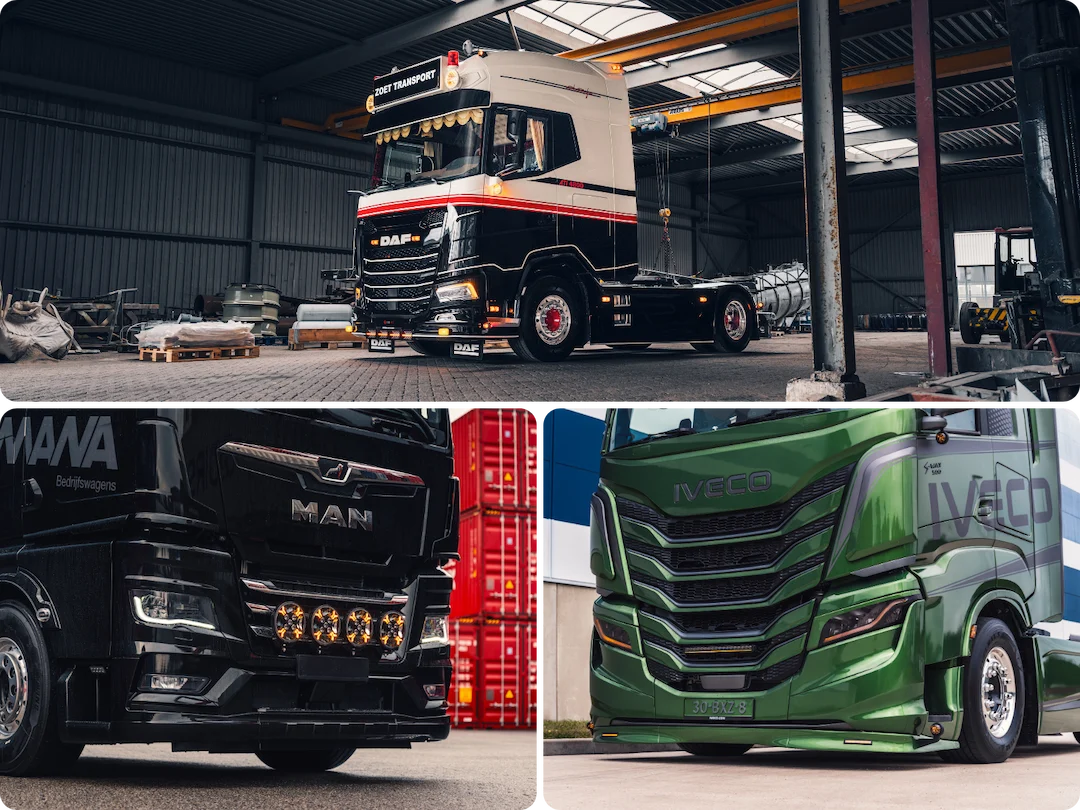
You may switch on spotlights or an LED bar when the use of high beam headlights is permitted at that time and the light is approved for that function. In addition, the lighting must be correctly fitted in accordance with the ECE R48 mounting regulations for vehicle lighting. The lighting must be switched on in conjunction with the high beams and must not dazzle oncoming or preceding vehicles.
In fact, exactly the same conditions apply as on public roads. A tunnel does not change those rules. There is no specific legislation governing tunnels in this regard.
If your work frequently involves driving through unlit or poorly lit tunnels, a driving beam is more suitable than a strong flood beam. This provides sufficient range to see the course of the road in good time. Furthermore, this ensures a controlled light distribution and minimises stray light towards the walls and ceiling. A very wide work light or flood LED bar is not a suitable choice in this case. Find out more about different light images in our article on choosing the right light image for work lights.
If a vehicle is carrying out work in a tunnel, additional signalling may be necessary or mandatory. This depends on national traffic regulations, the traffic and safety plan, the tunnel operator, the layout of the work area, and the vehicle’s position and speed.
Work lights may be used to illuminate the work area, but must not dazzle other road users. A work light is not a substitute for low beam headlights or an approved driving light. You can read more about signalling during roadworks in our article on working safely alongside the road.
For safety signalling equipment such as LED warning lights and flashing beacons, there is no general European regulation stipulating whether they must be switched on, off or dimmed whilst in a tunnel. In principle, the national rules of use remain the same as those applicable outside the tunnel.
If you are actually carrying out roadworks and your vehicle therefore creates a special or hazardous situation, amber warning lights may be permitted or even mandatory.
ECE R65 Class 1 has a single intensity level. Technically, this corresponds to the so-called ‘by night’ level. ECE R65 Class 2 has two approved intensity levels, intended for different environmental conditions. A tunnel does not automatically mean that the ‘by night’ setting is mandatory.
Due to reflections off tunnel walls, road signs and fixtures, bright flashing lights can cause a nuisance more quickly. A lower intensity setting on a Class 2 light may therefore be preferable where the traffic or safety plan so requires. Furthermore, additional measures imposed by the tunnel operator often apply during tunnel works.
Please bear in mind that smooth tunnel walls and road signs can strongly reflect flashing light. A dimming or night mode reduces this glare. ECE R65 Class 2 has two intensity levels – a day mode and a night mode – but does not specify when you must dim the lights in a tunnel. You can find out which class and which use are suitable for your vehicle in the regulations governing safety signalling on vehicles.
Inside a tunnel, smooth walls, the ceiling and road signs reflect a large proportion of the emitted light back onto the carriageway. As a result, a warning light or beacon appears brighter than in the open air, where the same light is absorbed by the surroundings. With a Class 2 signal lamp featuring a lower night mode or a preset dimming function, you can make the most of this very effect: you remain visible without dazzling yourself or others.
When it comes to heavy and special transport, it all starts with the route. This must be suitable and authorised in advance, taking into account the clear height and width of the tunnel, as well as the length, mass and axle load of the vehicle.
Any protruding or overhanging parts must be correctly marked. Depending on the situation, prescribed flashing beacons or warning lights, escort or warning vehicles, or an escorted passage may be required. Sometimes transit takes place during a tunnel closure. The national exemption and the associated route conditions are decisive in this regard.
Not every heavy goods vehicle journey is automatically classified as special or exceptional transport. The decisive factor is whether the applicable dimensions, weights or other national requirements are exceeded. You can find out more about this under lighting for heavy goods vehicles and in our guide to the maximum height and width of a truck.
Tunnels may be classified into ADR tunnel categories, from A to E, depending on the hazardous substances they carry. Category A has no restrictions; category E is the most stringent. The tunnel restriction code for the substance being transported, as set out in column 15 of Table A of the ADR, determines, together with the tunnel category, whether passage is permitted. Not every ADR consignment is prohibited in every tunnel.
You should therefore check the road signs, the transport document and your route planning in advance. The tunnel restriction code should be stated in the transport document. Please bear in mind that a tunnel may fall into a different category depending on the time of day or the day of the week. In addition, local time windows or additional conditions may still apply. TRALERT® offers a wide range of lighting for ADR vehicles.
If you break down or come to a standstill, follow the instructions of the tunnel operator. Switch on your hazard warning lights and, if possible, pull over to an emergency lay-by. Do not switch on any dazzling work lights or driving lights.
Additional amber coloured signalling is only required where permitted for your vehicle and the situation. If the situation requires it, leave the vehicle and follow the indicated escape route.
If you are choosing additional lighting or signalling systems for tunnels and international transport, always opt for certified solutions that are suited to the light function and the actual operating conditions. TRALERT® supplies all ECE-approved lighting, such as R65 signal lighting for truck, trailer and work vehicles. Our specialists will work with you to help you make the right choice regarding the light image and mounting.
The regulations governing vehicle lighting and special transport can vary from country to country and from tunnel to tunnel. You should therefore always check local regulations and any instructions issued by the tunnel operator. For this, please consult the official information from the RDW, the German Straßenverkehrs-Ordnung, the French Sécurité Routière, the Italian Codice della Strada and the British Highway Code.
Disclaimer:
At TRALERT®, we do our best to keep the information in this article as accurate and up-to-date as possible, including the regulations surrounding vehicle lighting. However, legislation can change regularly, and although we make every effort to implement these changes in a timely manner, it is possible that certain updates or adjustments have not yet been incorporated into this article. We therefore always advise our readers to check the current legislation with their local government or regulatory bodies, especially when it comes to exceptions or specific national regulations. TRALERT® is not liable for any damages or fines resulting from outdated or incomplete information in this article.
If in doubt, always contact the competent authority to ensure that your vehicle meets all legal requirements.

A selection of LED lighting for trucks and trailers.
A comprehensive overview of our LED vehicle lighting and accessories.
Plug-&-play lighting kits, cabling and lighting for bodybuilders.
What TRALERT® can do for you as a partner in LED vehicle lighting.
Plug-&-play kits, cabling and lighting for 24V semi-trailers.
A selection of high-quality LED driving lights and LED bars.
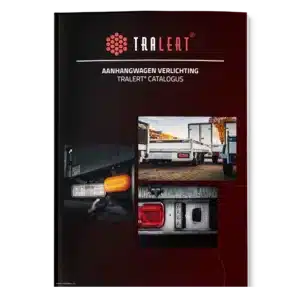
Lighting, wiring harnesses and accessories for trailers.
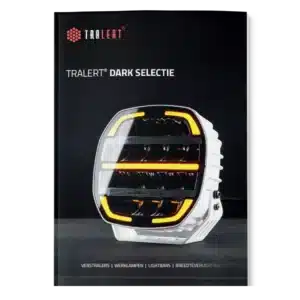
The TRALERT® DARK LED range.
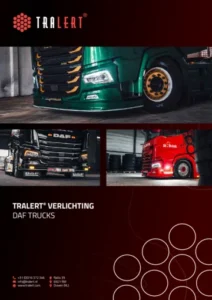
Work lights, rear lights, driving lights, beacor bars and more for DAF Trucks.
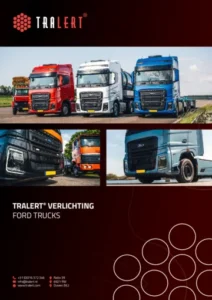
Work lights, rear lights, driving lights, beacor bars and more for Ford Trucks.
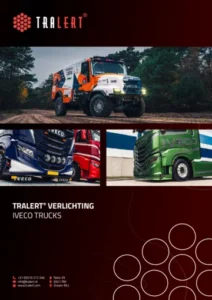
Work lights, rear lights, driving lights, beacon bars and more for Iveco.
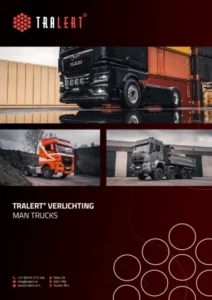
Work lights, rear lights, driving lights, beacon bars and more for MAN.
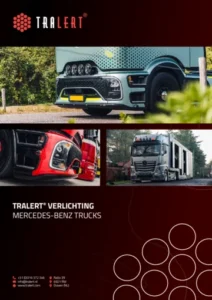
Work lights, rear lights, driving lights, beacon bars and more for Mercedes-Benz Trucks.
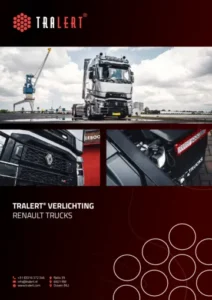
Work lights, rear lights, driving lights, beacor bars and more for Renault Trucks.
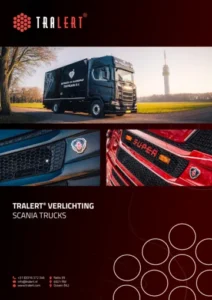
Work lights, rear lights, driving lights, beacor bars and more for Scania.
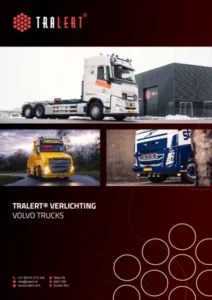
Work lights, rear lights, driving lights, beacon bars and more for Volvo Trucks.
The catalogue opens in a new tab. Can’t see it?
Open the catalogue (PDF)Two questions, in 30 seconds.
TRALERT® works with a dealer network. Dealers can view current stock levels, place orders online on account and receive a product feed for their online shop or system. We assess each enquiry internally and will let you know within 1 to 2 working days whether a partnership is possible.
You can purchase TRALERT® lighting through our partners, either locally or online. Simply provide your details, and we’ll find the partner best suited to help you.
Would you prefer to find a stockist yourself?We will assess your enquiry internally. You will hear from us within 1 to 2 working days to let you know whether a partnership is possible.
We’ll let you know within 1 to 2 working days which partner will be able to assist you further.