TRUCK PROCEDURES
TRALERT® VEHICLE LIGHTING
To guarantee the quality of TRALERT® LED lighting, every product undergoes an extensive testing and inspection process. During various stages, checks are carried out to ensure the product meets TRALERT®’s requirements for quality, performance and reliability. A key focus is ensuring that the lighting is suitable for professional use, even under harsh and demanding conditions.
THE DEVELOPMENT OF LIGHTING
INSPECTIONS & TRUCK PROCEDURES
The development of a new LED light is an extensive process that can take several months. From 2D drawings through 3D design and rendering to physical prototypes – every unit is extensively tested. Depending on the product and application, these tests include:
Thermal tests: testing under extreme temperatures.
Mechanical tests: resistance to vibrations, shocks and stress.
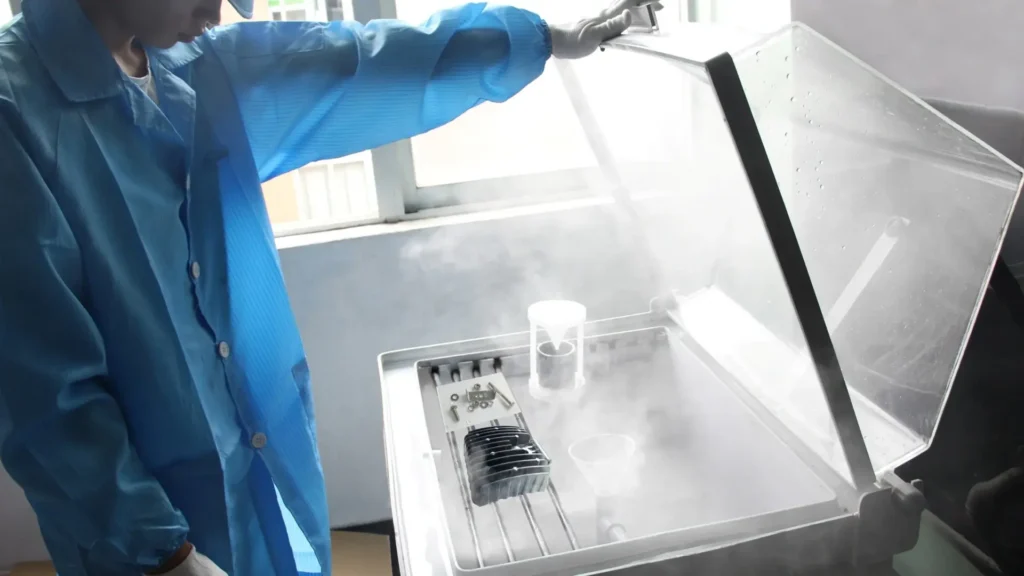
Chemical tests: corrosion resistance and salt resistance.
Water and high-pressure tests: protection in accordance with IP68 or IP69K.
Field tests: in extreme conditions, such as the Dakar Rally and Noordkaap Challenge.
QUALITY CONTROLS
DURING DEVELOPMENT
Quality Control begins as soon as the first components are produced. Raw materials, housings, lens, LEDs and electronic components are all checked individually before being used further down the production line.
QUALITY CONTROL
INDIVIDUAL COMPONENTS
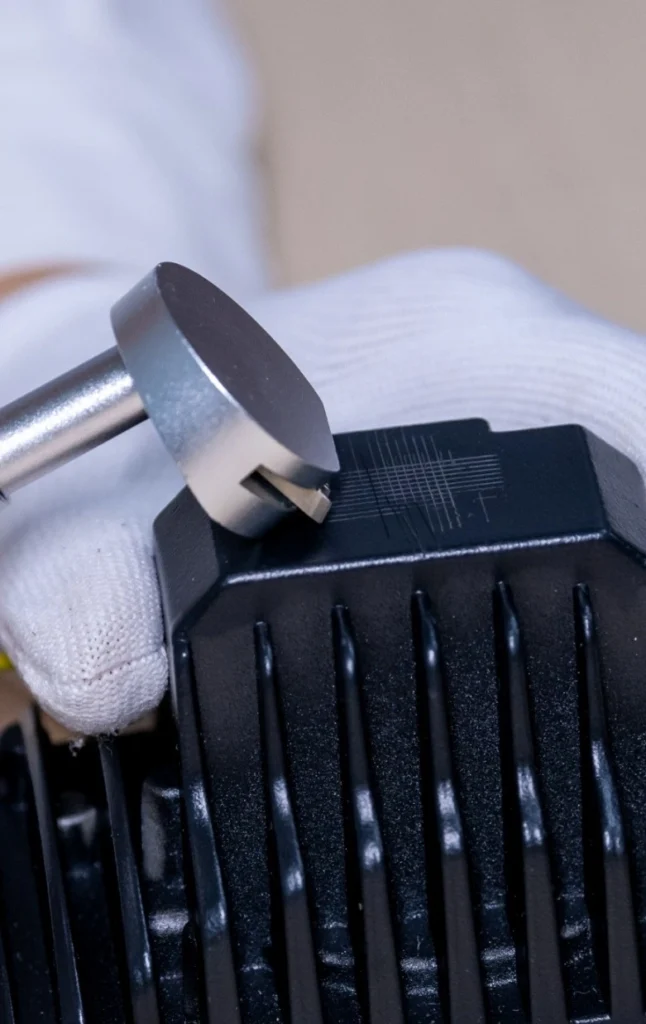
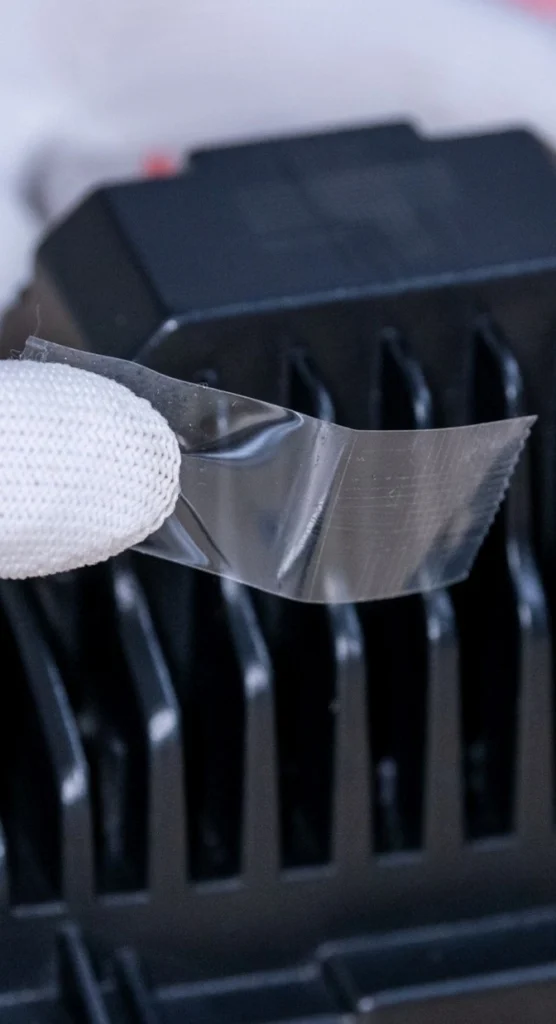
Not every truck can be carried out directly on the complete light. Various components must first be developed and approved individually. For example, the mechanical features of the lens and housing, amongst other things, are checked using tests such as the drop-ball truck, cross-cut truck and pull-force truck.
We also assess whether surface treatments and the hardening process provide sufficient protection against scratches, damage and corrosion.
QUALITY CONTROL
ASSEMBLY
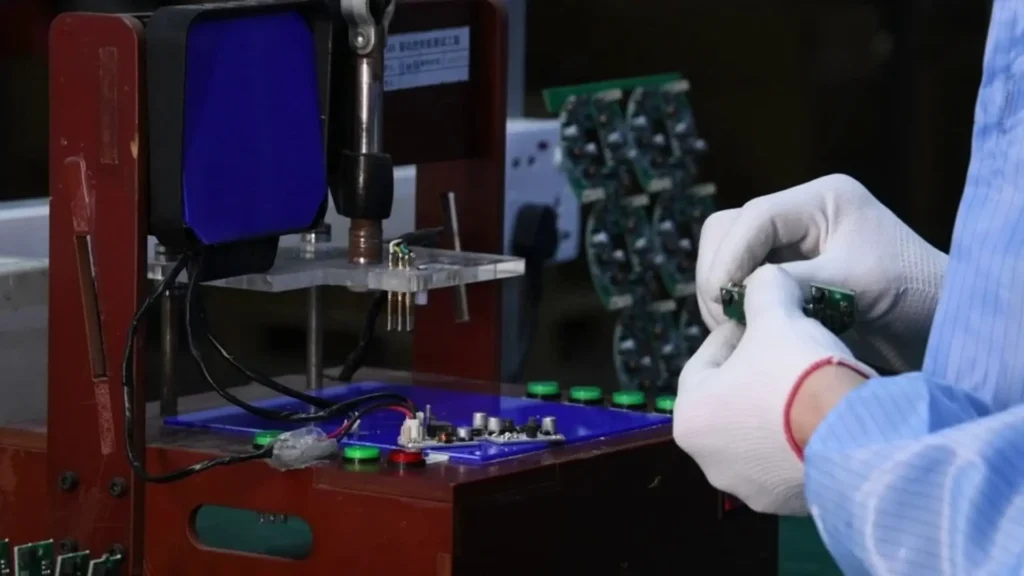
Once the individual components have been approved, surface mounting can proceed. This involves, for example, checking that parts are correctly bonded and sealed to achieve the required watertightness.
Production equipment and conditions are also monitored. Everything must function correctly, and factors such as dust, temperature and humidity must remain within the correct limits.
QUALITY CONTROL
DURABILITY TESTS
Once a fully functional product is available, more rigorous tests can be carried out. The aim here is not merely to demonstrate that a light works, but rather to identify where the design reaches its limits. The HALT method, for example, can be applied in this context. The light is subjected to extreme temperatures, vibrations and other stresses. Features such as the Ingress Protection rating, corrosion resistance and insulation resistance are also checked.
Any weaknesses identified at this stage can then be fed back into the design. A modified prototype then undergoes the relevant checks once again.
OFFICIAL APPROVAL
INTERNATIONAL REGULATIONS
In addition to quality control, vehicle lighting must comply with the relevant international regulations. Independent and standardised measurements are therefore carried out during this final phase.
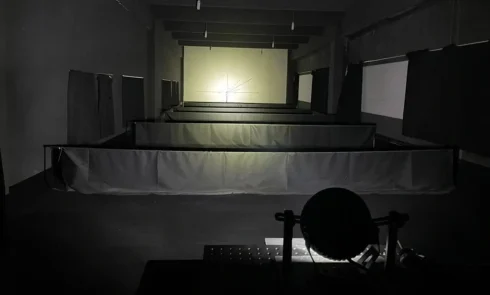
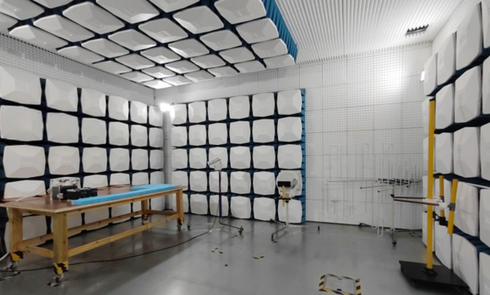
A goniophotometer is used to check whether the light distribution and light output meet the specified requirements. In addition, EMC tests are carried out to assess whether the electronic components comply with the requirements for electromagnetic compatibility.
Once the required tests have been successfully completed, the relevant type approval can be issued and the product is ready for heavy-duty use in the toughest conditions, such as the Dakar Rally and Noordkaap Challenge.
When does a product
the ‘heavy-duty’ label?
By ‘heavy-duty vehicle lighting’, we mean lighting that is resistant to dirt, moisture, temperature fluctuations and electrical loads, and which is also manufactured from impact-resistant materials. This makes heavy-duty lighting highly shock- and vibration-resistant and capable of withstanding demanding working conditions, such as those encountered during intensive professional use in sectors including agricultural, construction and construction machinery.
scoring systemTRALERT® assigns points to a product based on a scoring system: the degree of water and dust resistance (minimum IP68), the robustness of the housing material in terms of heat dissipation, the strength of the lens material (impact resistance) and the warranty period (minimum three years). In addition, ECE-R10 approval is mandatory.
Only products that score highly on all four criteria are awarded our ‘heavy-duty’ label. If a product scores inadequately on any one point, it will not be awarded the label – not even if it excels in the other three.
TRALERT® is your partner for high-quality LED vehicle lighting. Primarily focused on the 24V truck and trailer sector with, in addition, a wide range of solutions for 12V work vehicles. As a committed partner, TRALERT® helps its partners beyond delivery alone - with cooperation that adds value and delivers results.
TRALERT® certainties are central to our operations and work to the advantage of our partners. TRALERT® is involved from the drawing board to realisation and provides support in all areas, from technical advice to marketing. The solutions ensure optimum visibility and reliability so that commercial vehicles can be safely and professionally lit on the road.
TRALERT® - your specialised partner in LED vehicle lighting.
HIGH QUALITY
Fully certified and tested. Professional lighting that performs day and night.
CUSTOMISED SOLUTIONS
For example, complete lighting solutions including wiring harnesses that save time and money.
ONE ADDRESS
With over 3,000 articles, you are guaranteed to find a suitable solution for your lighting needs.
COMMITTED PARTNER
Moving forward together: we are your lighting partner from drawing board to realisation.
TECHNICAL EXPERTISE
Customised lighting advice based on years of experience and expertise
CERTAINTY OF DELIVERY
Avoid costs: always stock on site for lightning-fast delivery and less downtime.