Specialised partner in LED vehicle lighting
Definition
In this article you will read about the difference between ECE R149 and ECE R112 and what this means in practice for truck lighting. This is because you will come across both regulation numbers on driving lights, driving lights and lightbars . This regularly causes confusion, while the essence is actually simple: ECE R112 is the older standard, and ECE R149 is the current, consolidated approval framework for, among others, road illumination devices previously covered by R112.
For your selection, it is especially important which light functions are approved and whether the light is suitable for your application. The historical regulation number is less important here than many people think. That is why, in this article, we will help you quickly understand what to look out for when selecting lighting for your truck.
The full definition of ECE R149 can be found in our explanation of ECE R149. In this article you can read about the practical difference from ECE R112 for driving lights, lightbars and driving lights for trucks.
ECE R149 is the consolidated UN regulation for road illumination devices: low beam, high beam, headlights and related high beam lighting. The regulation combines a series of older regulations, including R19, R98, R112, R113, R119 and R123, into one approval framework.
Since 14 November 2021, ECE R149 has been the framework for new type approvals. The official regulation text can be found on the UNECE website.
ECE R112 covered headlights with asymmetrical low beam, high beam or both. The regulation applied to versions with incandescent lamps and, in later versions, with LED modules. Many existing headlights and supplementary high-beam units can therefore still carry an R112 marking.
Products previously approved under R112 do not automatically lose their type approvals with the advent of R149. Whether application on a specific vehicle is permitted also depends on mounting, function, vehicle category and national application requirements.
The core difference is in scope and in the moment of approval.
| Section | ECE R112 | ECE R149 |
|---|---|---|
| Role | Specific, older regulations | Consolidated RID regulation |
| Focus | Headlights, dimming lights and high beams | Road illumination devices: headlights, high beam, front fog lights and related functions |
| Status | Visible in older documentation | Framework for new approvals |
| Focal point | Check existing E-marking | Check function and application |
For trucks, it is rarely about the standard headlight alone. Many vehicles get additional high beams in the shape of a lightbar or driving lights on the bumper, grille or sun visor. Those units fall under the same approval logic.
A lightbar approved as a high beam for use on public roads must have a valid type approval for that function. For new approvals, this will usually be under R149; older products may still have a valid R112 marking. In the absence of a valid approval, the unit is not allowed on public roads, no matter how powerful it is.
A valid approval is not the only thing that counts. An approved high beam function usually carries a reference number that expresses the maximum light output. The sum of all reference numbers of the high-beam functions on one vehicle must not exceed 100. That limit, defined in the installation requirements under UN R48, corresponds to about 430,000 candela.
Practical advantage: an individually approved lightbar can still put a vehicle out of compliance. As soon as the accumulated reference numbers of the headlamp main beam and the additional driving lights exceed 100, the combination is not permitted. Therefore, add up the reference numbers before mounting, not only during an inspection.
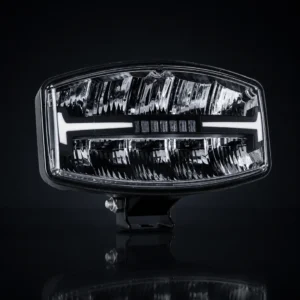
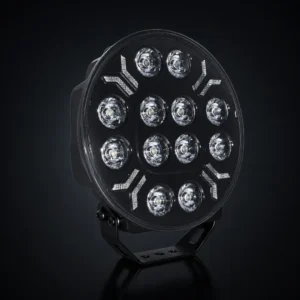
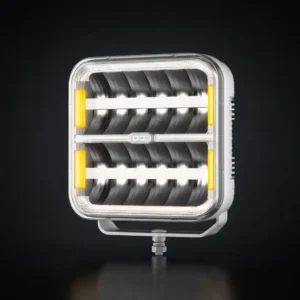
The driving lights below carry ECE R149 approval, the framework that succeeded ECE R112 for new type approvals. Each model has its own reference number. Add that in the mounting to keep the total of all high beam functions on the truck under 100.
In our stock
A common confusion concerns the distinction between R149 and ECE R10. R149 is about the light function and type approval of the lighting itself. R10 is about electromagnetic compatibility (EMC): the degree to which an electrical component does not cause or experience interference.
For LED lighting with integrated electronics, R10 is an important additional consideration in many vehicle applications in addition to lighting technology approval.
Please check the following points when purchasing or mounting:
Those putting together additional driving lights weigh up approval, reference number and mounting position. Our selection guide for LED lightbars helps with this consideration. When doing so, always check the current product documentation and national application requirements, as these may differ from country to country.
Yes. Since 14 November 2021, ECE R149 has been the framework for new type approvals of headlights and high beams. ECE R112 has been merged into it. Products previously approved under R112 do not automatically lose their type approvals. Whether application on a vehicle is permitted also depends on mounting and national requirements.
Yes. ECE R149 applies to all motor vehicle categories, including commercial vehicles such as trucks. For additional driving lights on trucks, such as lightbars and driving lights, a valid R149 approval is the starting point. Work lights are not covered by this and may not be used as driving lights on public roads.
Yes. A product with a valid R112 marking does not lose that approval with the advent of R149. So you do not need to replace existing, approved lighting. Whether the light is permitted on a specific vehicle does depend on mounting and national requirements. In new purchases, you will increasingly come across R149.
ECE R149 regulates the light function and type approval of lighting such as high beam and low beam. ECE R10 regulates the electromagnetic compatibility of electrical components. So an LED lamp may need both R149 and R10 approval: the former for the light, the latter for the electronics.
Are you looking for driving lights, lightbars or driving lights with the right approval for 12V or 24V applications? Check out the range of lighting for trucks or put your situation to our technical advisors for tailored advice.

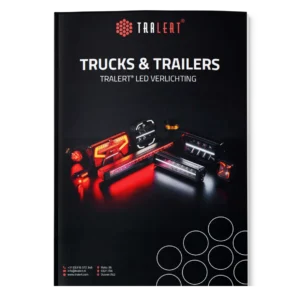
A selection of LED lighting for trucks and trailers.
A comprehensive overview of our LED vehicle lighting and accessories.
Plug-&-play lighting kits, cabling and lighting for bodybuilders.
What TRALERT® can do for you as a partner in LED vehicle lighting.
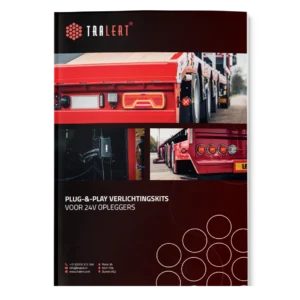
Plug-&-play kits, cabling and lighting for 24V semi-trailers.
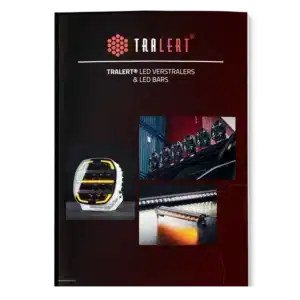
A selection of high-quality LED driving lights and LED bars.
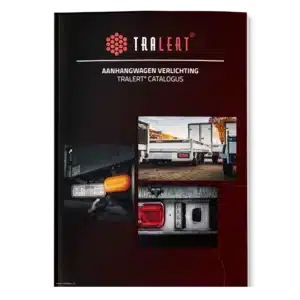
Lighting, wiring harnesses and accessories for trailers.
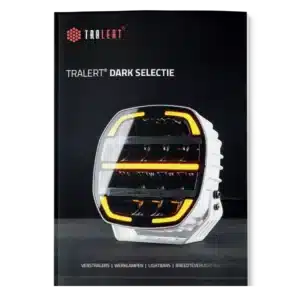
The TRALERT® DARK LED range.
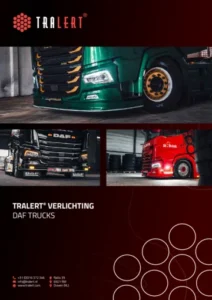
Work lights, rear lights, driving lights, beacor bars and more for DAF Trucks.
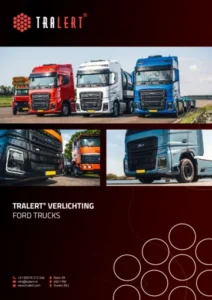
Work lights, rear lights, driving lights, beacor bars and more for Ford Trucks.
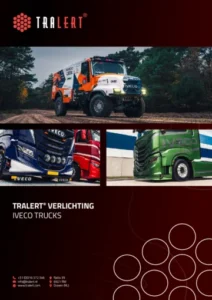
Work lights, rear lights, driving lights, beacon bars and more for Iveco.
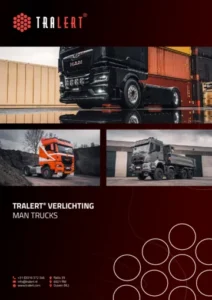
Work lights, rear lights, driving lights, beacon bars and more for MAN.
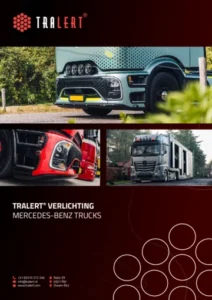
Work lights, rear lights, driving lights, beacon bars and more for Mercedes-Benz Trucks.
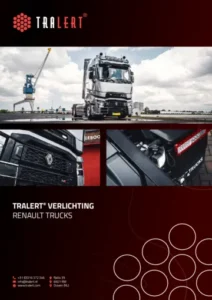
Work lights, rear lights, driving lights, beacor bars and more for Renault Trucks.
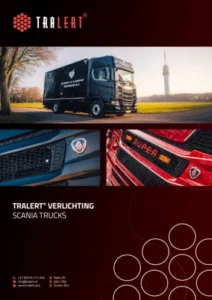
Work lights, rear lights, driving lights, beacor bars and more for Scania.
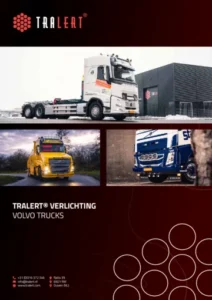
Work lights, rear lights, driving lights, beacon bars and more for Volvo Trucks.
The catalogue opens in a new tab. Can’t see it?
Open the catalogue (PDF)Two questions, in 30 seconds.
TRALERT® works with a dealer network. Dealers can view current stock levels, place orders online on account and receive a product feed for their online shop or system. We assess each enquiry internally and will let you know within 1 to 2 working days whether a partnership is possible.
You can purchase TRALERT® lighting through our partners, either locally or online. Simply provide your details, and we’ll find the partner best suited to help you.
Would you prefer to find a stockist yourself?We will assess your enquiry internally. You will hear from us within 1 to 2 working days to let you know whether a partnership is possible.
We’ll let you know within 1 to 2 working days which partner will be able to assist you further.
TRALERT® operates through a dealer network. Prices, stock levels and online ordering are therefore only available to business customers with an account.
We assess every enquiry internally and will let you know within 1 to 2 working days whether a partnership is possible.
For your own use?Find a stockist
Would you prefer a quote first?Add this product to your quotation request and send it off when you’re ready.