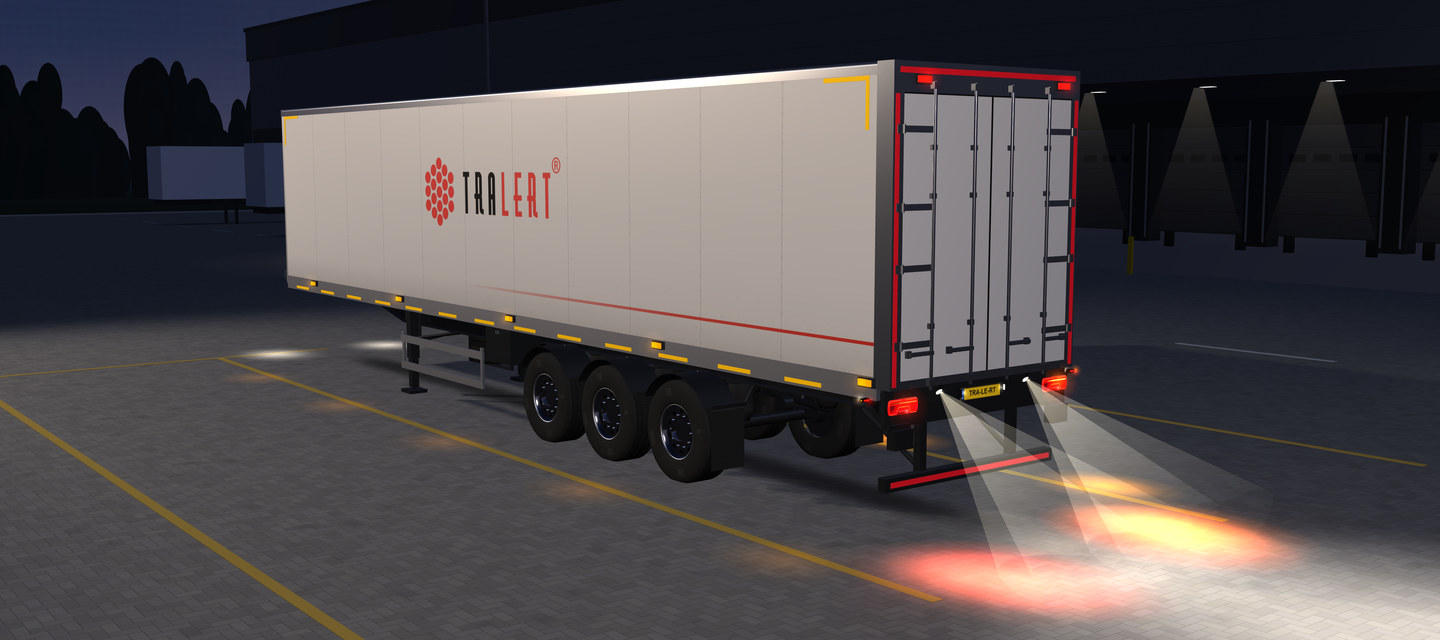
Specialised partner in LED vehicle lighting


A semi-trailer or trailer wider than 2.10 metres is required to carry width marking, so that other road users can immediately see how wide your combination is. The regulations officially refer to end-marker lights, but in practice, side marker lights or width posts are almost always chosen: compact two-in-one solutions that meet the requirements for both the front and rear at a single mounting point.
In this article, you will read:
The main rule is clear: width marking is mandatory for semi-trailers or trailer wider than 2.10 metres. Between 1.80 and 2.10 metres, mounting is permitted but not compulsory. Below 1.80 metres, these separate width markings are not normally required. This European standard is set out in UN Regulation No. 48 and applies to motor vehicles as well as trailers and semi-trailers.
For most semi-trailers, this is straightforward in practice: a standard semi-trailer is already well over 2.10 metres high, meaning that almost every professional trailer falls directly into the mandatory category. This makes choosing the right light all the more important, as an incorrect function or mounting height can easily lead to disputes during an inspection.
Since 2005, TRALERT® has specialised in ECE-approved, shock- and water-resistant side marker lights for trailers, semi-trailers and heavy goods vehicles.
See our lighting for heavy transport →
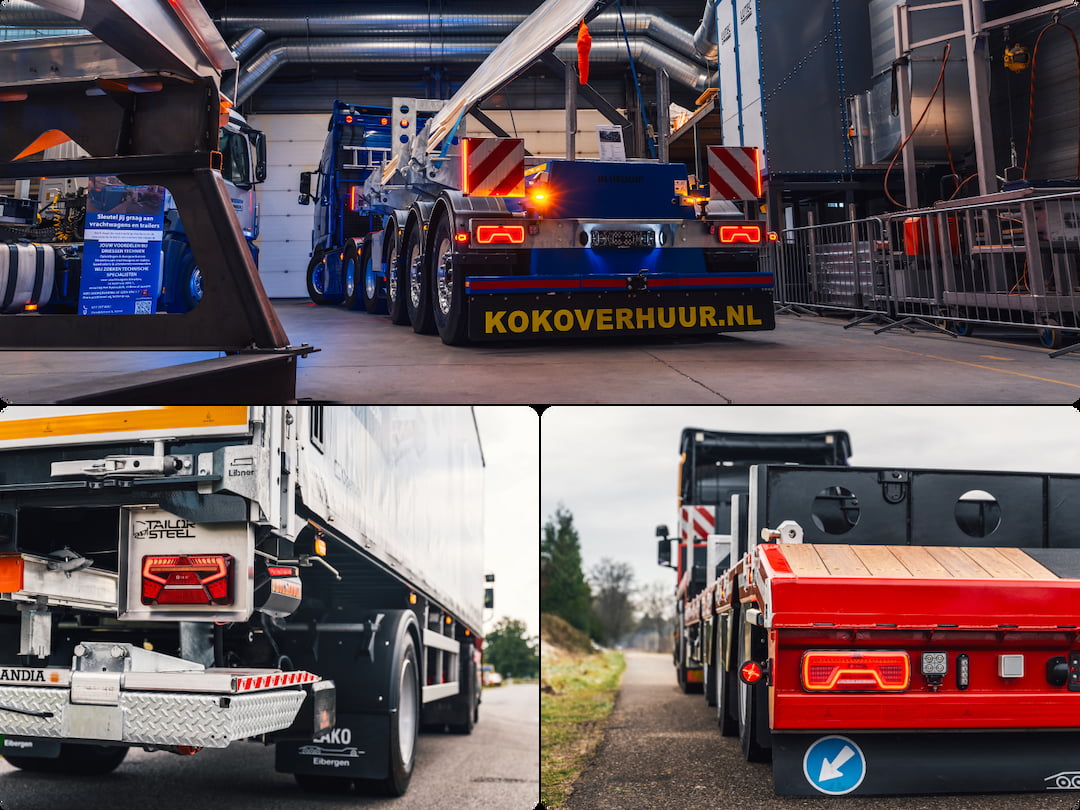
It is important to bear in mind that in this article we are referring to the width-marking light function, i.e. the light that marks the outer edge of the semi-trailer. This is not the same as a standard position light, a side marker light along the side of the trailer, or reflective contour lights. For a broader application covering both tractor units and semi-trailers, you can also consult our page on regulations for truck and semi-trailer lighting.
The standard configuration is two lights at the front and two at the rear of the semi-trailer: one on the left and one on the right, positioned symmetrically. This clearly marks the outer contour of the trailer for other road users.
In addition, extra lights are permitted. You may fit two extra lights at the front and two extra lights at the rear. This is commonly seen on high-sided refrigerated bodies or trailers with a wide superstructure, where additional contour lighting improves visibility. This is not compulsory, but in practice it can be a neat and safe solution.
If the semi-trailer is longer than 6.00 metres – which is almost always the case with a standard semi-trailer – you will also need side marker lights. These are amber coloured lights along the side of the trailer. In the market, this function is sometimes lumped together with side marker lights, but technically and legally, it is a different matter. This distinction is important, precisely because the mounting requirements differ.
Do choose: if the light needs to protrude a long way to see past a wide surface mounting, such as on a refrigerated semi-trailer, tanker semi-trailer or extra-wide loading platform. Ideal for combinations that frequently manoeuvre in confined spaces, as the flexible arm bends with even the slightest touch.
Do not choose this option: if the available mounting space on the chassis is narrow, or if the lights need to be integrated tightly and aerodynamically into the surface mounting.
Do choose: for mounting on the corners of the semi-trailer chassis or the rear of the trailer. Perfect when the light needs to sit flush with the corner, ensuring it is clearly visible from the front, rear and sides.
Do not choose this option: if the mounting point is situated deeper beneath the semi-trailer. The light is not long enough to extend significantly beyond the bodywork.
Do choose: if the trailer appearance matters, for example on a show trailer or a semi-trailer that needs to look presentable. These lights give a distinctive, rugged retro look and, thanks to their convex lens , provide a wide and striking light output.
Do not choose: for functional bulk or container trailers where a minimalist, unobtrusive look is desired, or where budget is the primary consideration.
Do choose: if you want to minimise the risk of damage to the side marker lights. As they lie flat against the trailer , they cannot catch on anything. Ideal for urban distribution trailers, box trailers or narrow trailers.
Do not choose this option: if the surface mounting is wider than the chassis. In that case, a flat light will shine against the surface mounting rather than alongside it.
Do choose: for mounting beneath the edge of the trailer or tailgate, a position commonly found on semi-trailers. They hang discreetly beneath the vehicle and mark the corners perfectly without placing any strain on the top of the surface mounting.
Do not choose: for semi-trailers that frequently travel on unpaved terrain, such as in the construction or agriculture sectors. Hanging lights are more likely to hit the ground when encountering kerbs or deep ruts.
If you’re unsure which model is suitable for your semi-trailer, first check the orientation of the mounting surface. This prevents the light from being optically misaligned or losing some of its visibility. If the light is frequently exposed to rain, dirt or high-pressure washing, please also ensure it has the correct IP rating. Read more about this in the article on waterproof LED side marker lights.
Practical benefit: as the front and rear lights on one side may be combined in a single housing, a combined side marker light can often be fitted more easily on a difficult mounting surface on a semi-trailer than two separate lights, without compromising the prescribed visibility.
This last point deserves special attention. In practice, side marker lights and marker lights are still often sold as a single product group. As a result, the same mounting height is sometimes incorrectly applied. This is precisely where a common mistake lies with semi-trailers that have a high or non-standard surface mounting.
Two regulations are relevant here, and they each cover different aspects. UNECE R48 governs the installation on the vehicle: number, position, symmetry, visibility and connection. UNECE R148 governs the type approval of the light itself, including colour, light distribution and function assignment.
A light with the correct approval is therefore not automatically fitted correctly. The reverse is also true: a neat mounting will not save you if the light itself is not approved for the correct function on the semi-trailer. Both aspects must be correct. Therefore, do not rely solely on the product name. Check the approval marking and product documentation to ensure that the light is approved for the required light function and that the mounting complies with the installation regulations.
The regulations in this article are based on the European standard, UNECE R48. In practice, this shapes the common basis for national regulations across the EU and the United Kingdom. However, the country in which your semi-trailer is authorised or registered may impose additional or differing requirements, for example in the case of transitional rules for older vehicles, a non-standard surface mounting, or a requirement for re-inspection following a modification to the lighting. You should therefore always check the current regulations with the competent authority in the country of registration:
Are you unsure about the application for your specific vehicle or export destination? If in doubt, please contact the relevant authority in the country concerned before finalising the surface mounting.
Yes, if the semi-trailer is wider than 2.10 metres. This is almost always the case with a standard semi-trailer. Between 1.80 and 2.10 metres, width markings are permitted but not compulsory. Below 1.80 metres, these separate width markings are generally not required.
A semi-trailer that falls into the mandatory category must have at least two side marker lights at the front and two at the rear. These must be fitted on the left and right, symmetrically on the vehicle. Additional lights are permitted but not mandatory. Side marker lights along the sides constitute a separate light function.
Choose a straight or angled stem for a flat mounting surface, such as a chassis corner. Choose an angled stem when the surface mounting of the bodywork is already at an angle. This ensures the light remains correctly aligned and maintains the required visibility. This choice is therefore technically important, not just aesthetically.
No. That is precisely a common misconception. As a general rule, side marker lights should be fitted as high as possible, in keeping with the shape and symmetry of the semi-trailer. A fixed height band, as seen with side marker lights, is not part of this function.
Would you like to be sure which side marker light is suitable for your semi-trailer, surface mounting or mounting surface? Then take a look at the MB-1000 serie of side marker lights or contact TRALERT®. A technical check beforehand is often more helpful than having to make corrections afterwards. We’re happy to work with you to find the right specification, ensure correct mounting and deliver a solution that simply works in practice.
Disclaimer:
At TRALERT®, we do our best to keep the information in this article as accurate and up-to-date as possible, including the regulations surrounding vehicle lighting. However, legislation can change regularly, and although we make every effort to implement these changes in a timely manner, it is possible that certain updates or adjustments have not yet been incorporated into this article. We therefore always advise our readers to check the current legislation with their local government or regulatory bodies, especially when it comes to exceptions or specific national regulations. TRALERT® is not liable for any damages or fines resulting from outdated or incomplete information in this article.
If in doubt, always contact the competent authority to ensure that your vehicle meets all legal requirements.

A selection of LED lighting for trucks and trailers.

A comprehensive overview of our LED vehicle lighting and accessories.
Plug-&-play lighting kits, cabling and lighting for bodybuilders.
What TRALERT® can do for you as a partner in LED vehicle lighting.
Plug-&-play kits, cabling and lighting for 24V semi-trailers.
A selection of high-quality LED driving lights and LED bars.
Lighting, wiring harnesses and accessories for trailers.
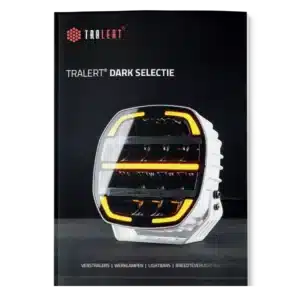
The TRALERT® DARK LED range.
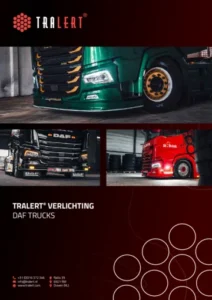
Work lights, rear lights, driving lights, beacor bars and more for DAF Trucks.
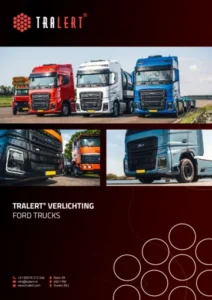
Work lights, rear lights, driving lights, beacor bars and more for Ford Trucks.
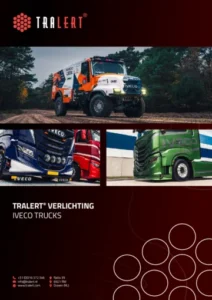
Work lights, rear lights, driving lights, beacon bars and more for Iveco.
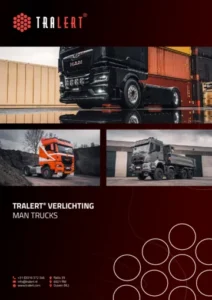
Work lights, rear lights, driving lights, beacon bars and more for MAN.
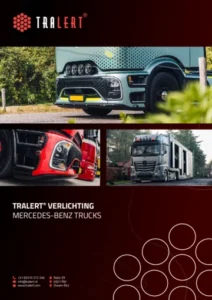
Work lights, rear lights, driving lights, beacon bars and more for Mercedes-Benz Trucks.
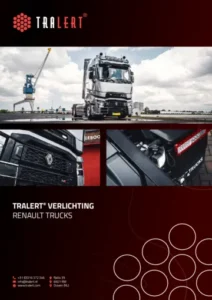
Work lights, rear lights, driving lights, beacor bars and more for Renault Trucks.
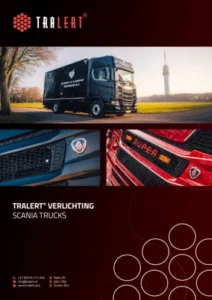
Work lights, rear lights, driving lights, beacor bars and more for Scania.
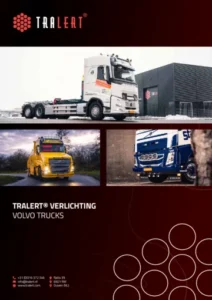
Work lights, rear lights, driving lights, beacon bars and more for Volvo Trucks.
The catalogue opens in a new tab. Can’t see it?
Open the catalogue (PDF)Two questions, in 30 seconds.
TRALERT® works with a dealer network. Dealers can view current stock levels, place orders online on account and receive a product feed for their online shop or system. We assess each enquiry internally and will let you know within 1 to 2 working days whether a partnership is possible.
You can purchase TRALERT® lighting through our partners, either locally or online. Simply provide your details, and we’ll find the partner best suited to help you.
Would you prefer to find a stockist yourself?We will assess your enquiry internally. You will hear from us within 1 to 2 working days to let you know whether a partnership is possible.
We’ll let you know within 1 to 2 working days which partner will be able to assist you further.
Trailerkit Configurator
How visible are your markings at night?
Select your marker lights and side marker lights in our Trailerkit Configurator. You’ll immediately see what your trailer looks like by day and by night. Everything comes as a single complete set, including a wiring harness and fitting diagram.