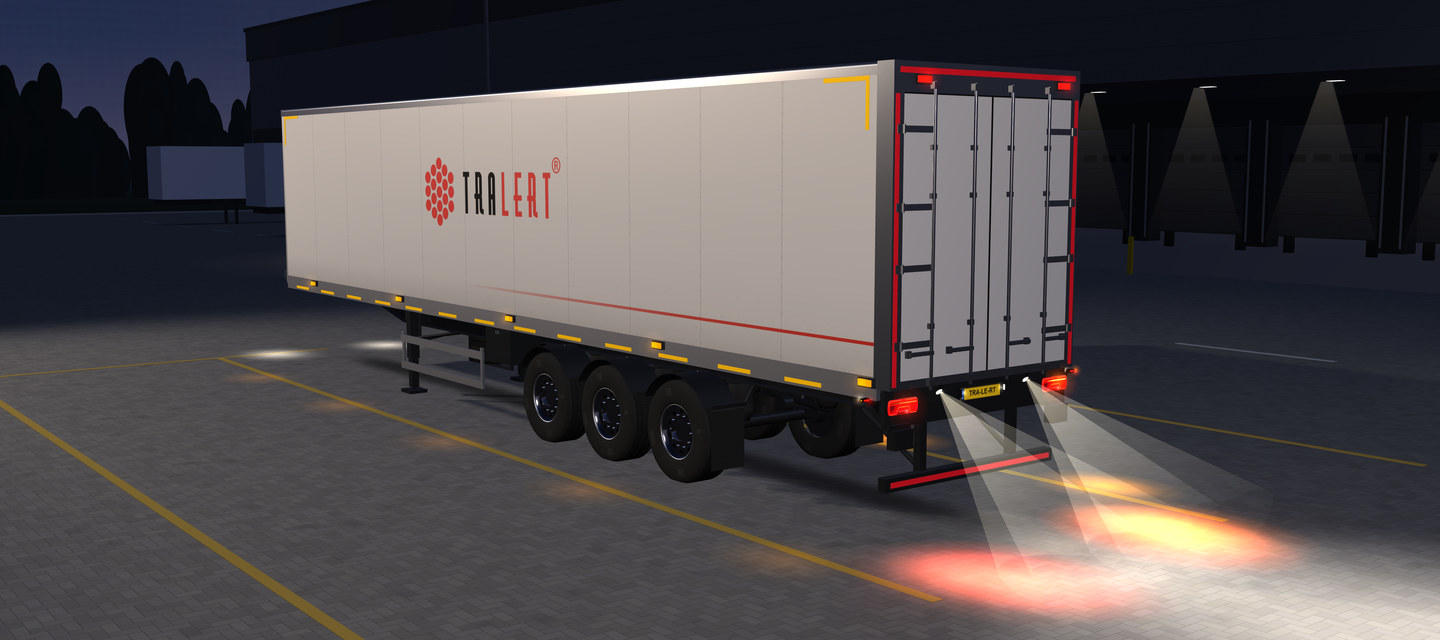
Specialised partner in LED vehicle lighting

The short answer
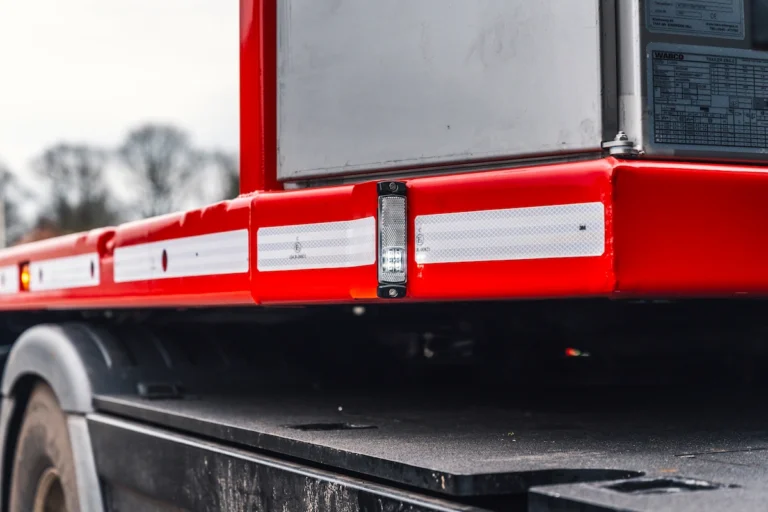
Side marker lights are compulsory on most semi-trailers. The main rule is clear: as soon as the vehicle is longer than 6 metres, UNECE R48 requires side marker lights. For semi-trailers in categories O3 and O4, this is almost always the case in practice. The regulations not only specify whether side marker lights are compulsory, but also where the lights must be positioned, at what height they must be fitted and which colours are permitted. Taking this into account early in the design process prevents the need for rectification work during surface mounting and inspection.
In this article, you will read:
The requirement is linked to the vehicle’s length. ECE R48 stipulates that side marker lights must be fitted to all vehicles longer than 6 metres, with the length of semi-trailers calculated inclusive of the coupling. A standard semi-trailer is well over this limit. Consequently, virtually every O3 or O4 semi-trailer automatically falls within the mandatory requirements.
Since 2005, TRALERT® has specialised in ECE-approved, shock- and water-resistant LED lighting for semi-trailers, trailers and heavy goods vehicles.
See our lighting for heavy transport →
The main rule is amber, i.e. yellow-orange. This colour makes the side of the semi-trailer visible without causing confusion with white lights at the front or red lights at the rear. Only the rear side marker light may be red, and only if it is correctly grouped or combined with a rear light function.
Always use a side marker light for the function for which it is approved. A light that resembles a marker light is not automatically suitable for use as a side marker light. You should therefore check for the correct approval and function designation on the unit.
Would you like to check that your entire lighting system complies with regulations? Then read our feature article on the rules for truck and semi-trailer lighting.
An approved luminaire bears an E-mark: a circle containing the letter E and a country code, followed by the approval number. We refer to this as the E-mark. This indicates that the light has type approval. In addition, the unit bears a function designation indicating the specific light function for which it has been approved. For a semi-trailer, ECE R48 therefore stipulates an SM1-approved side marker light.
The fitting and installation requirements are covered by ECE R48, whilst the approval of the light itself falls under ECE R148. A light without the correct function marking therefore does not comply with R48, even if it appears to be suitable. This avoids disputes during inspection and interference in practice.
ECE R48 sets out clear rules for the longitudinal spacing of the lights. The front side marker light must be situated within 3 metres of the front of the vehicle. The distance between two lights positioned side by side must not exceed 3 metres. Only if the vehicle’s design makes this genuinely impossible may this distance be increased to 4 metres. Furthermore, the rear side marker light must be within 1 metre of the rear of the vehicle.
For vehicles longer than 6 metres, at least one side marker light must also be positioned in the middle third of the vehicle’s length. This ensures that the centre of the semi-trailer remains clearly visible. This arrangement may seem simple, but it is precisely here that things often go wrong in practice when it comes to surface mounting, hinge points or tail lifts.
That is why it pays to plot out the light distribution on the drawing at the design stage.
The mounting height is normally between 250 and 1,500 millimetres above the road surface. If the shape of the surface mounting does not allow this, you may, subject to certain conditions, go up to a maximum of 2,100 millimetres. This flexibility is helpful for special bodywork designs, but the standard height always remains the starting point.
Please also pay attention to the visibility angles. A light may look fine on paper but, in practice, may still be partially obscured by a mudguard, box or support. In that case, the installation will still not meet the requirements. So check not only the dimensions but also the clear field of view once the semi-trailer has been fully assembled.
On O3 and O4 vehicles, mandatory amber coloured side markings may flash in sync with the indicator on the same side. This solution is becoming increasingly common on new semi-trailers, as it improves lateral visibility when turning off and changing lanes. If an additional Category 5 side indicator is already fitted in the correct position, no side marker lights may flash in synchronisation with it.
For new O3 and O4 semi-trailers, you must take into account the regulations regarding synchronously flashing side markings or a correct side indicator solution. Which version is appropriate depends on the vehicle configuration, the applicable type approval and the intended market. This ensures your design remains technically sound and helps avoid disputes during approval or inspection.
In practice, even a small flashing side indicator can make more of a difference than many people realise. With long vehicle combinations, a cyclist or motorist travelling alongside the vehicle often sees the side sooner than the rear. This suddenly makes timing more important than sheer light output.
Want to know more about the technology behind it? Then take a look at our article on marker lights with indicator function.
For bodybuilders and semi-trailer manufacturers, the benefits lie in early planning. Incorporate the light distribution, cable routing and mounting height into the chassis design from the outset. This prevents a light from ending up too close to a support, mudguard or storage box at a later stage. It also gives you greater flexibility regarding plug positions and wiring harnesses.
An added benefit is that you can standardise more quickly. This makes series production more reliable and reduces installation time. This is particularly valuable for 24V systems, as a neat installation not only helps to comply with standards but also prevents interference.
TRALERT® specialises in comprehensive lighting solutions for bodybuilding, including the design of a complete wiring harness. Our specialists can also work with you on-site to find the best solutions.
For semi-trailers in markets that follow UNECE R48, the rules regarding colour, positioning and height essentially shape a harmonised framework. However, interpretation, market approval and additional national requirements may vary from country to country.
Not on every semi-trailer, but on most. The main rule set out in ECE R48 applies to vehicles longer than 6 metres. As professional semi-trailers almost always exceed this length, side markings are usually mandatory in practice. Only shorter or non-standard vehicles may be subject to less stringent regulations.
Normally, side marker lights are fitted between 250 and 1,500 millimetres above the road surface. If the bodywork configuration makes this impossible, you may, subject to certain conditions, fit them up to 2,100 millimetres. Always check the light’s field of view to ensure that a mudguard or profile does not obstruct the light.
ECE R48 does not specify a fixed number per side, but it does specify fixed distances. The front light must be within 3 metres of the front, the rear light within 1 metre of the rear, and intermediate lights must not normally be more than 3 metres apart. The exact number therefore depends on the length of the vehicle.
Yes, but only in a specific situation. The rear side marker light may be red if it is correctly grouped or combined with an authorised rear light function. For all other positions, amber remains the standard. You should therefore only use a red rear side marker light deliberately and in accordance with the approval regulations.
You must take this explicitly into account for new O3 and O4 projects. In practice, you will be working with synchronously flashing amber coloured side marker lights or a compliant side direction indicator solution. Which version is appropriate depends on the vehicle configuration, the applicable type-approval framework and the intended market.
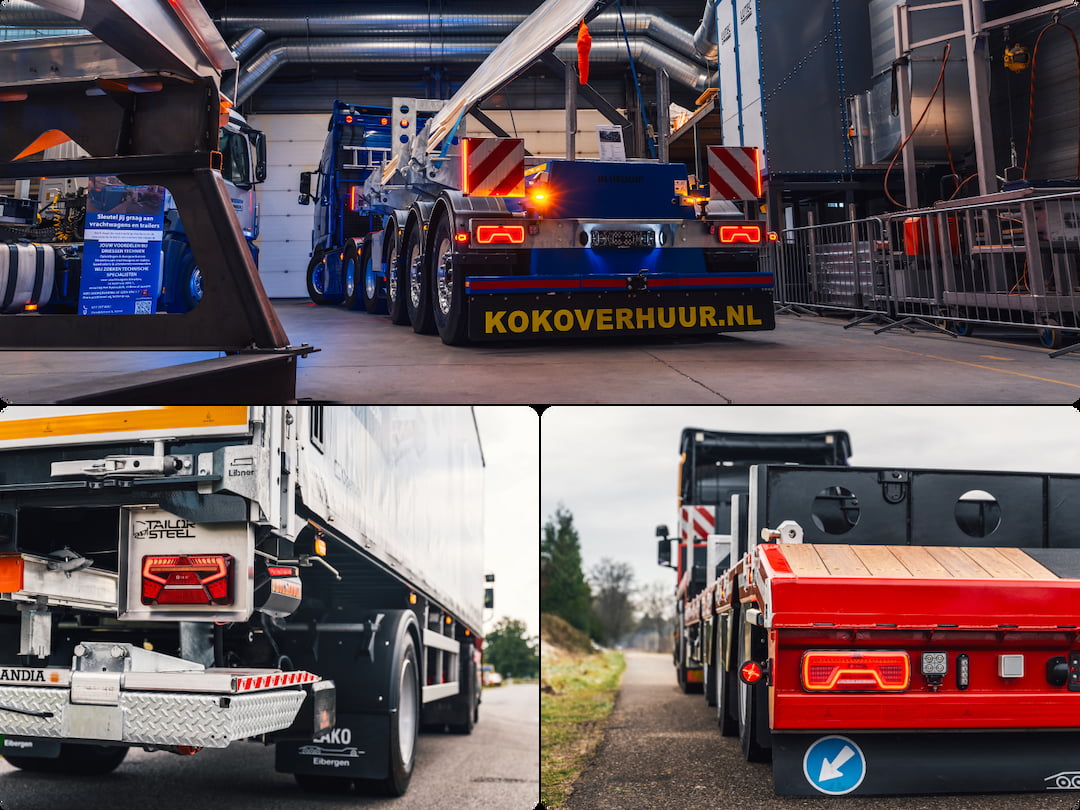
TRALERT® helps you choose ECE-certified side marker solutions for semi-trailers, ranging from standard amber coloured markers to versions with a flashing function. In doing so, we consider not only the light itself, but also its mounting position, cable routing and connection to the rest of the vehicle. This ensures that your lighting plan works not only on paper, but also in practice.
Do you want to get your semi-trailer project off to the right start? Then take a look at our solutions for marker lights with indicator function or get in touch with a TRALERT® technical adviser.

A selection of LED lighting for trucks and trailers.
A comprehensive overview of our LED vehicle lighting and accessories.
Plug-&-play lighting kits, cabling and lighting for bodybuilders.
What TRALERT® can do for you as a partner in LED vehicle lighting.
Plug-&-play kits, cabling and lighting for 24V semi-trailers.
A selection of high-quality LED driving lights and LED bars.
Lighting, wiring harnesses and accessories for trailers.
The TRALERT® DARK LED range.
Work lights, rear lights, driving lights, beacor bars and more for DAF Trucks.
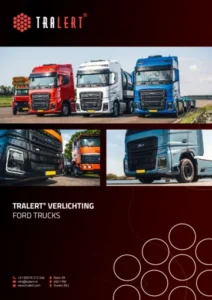
Work lights, rear lights, driving lights, beacor bars and more for Ford Trucks.
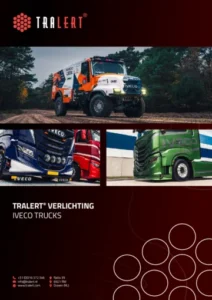
Work lights, rear lights, driving lights, beacon bars and more for Iveco.
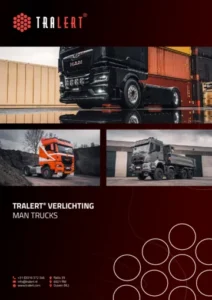
Work lights, rear lights, driving lights, beacon bars and more for MAN.
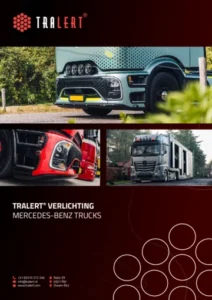
Work lights, rear lights, driving lights, beacon bars and more for Mercedes-Benz Trucks.
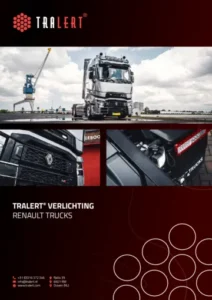
Work lights, rear lights, driving lights, beacor bars and more for Renault Trucks.
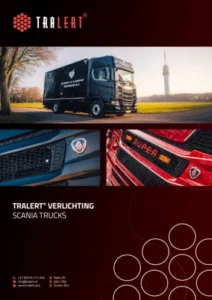
Work lights, rear lights, driving lights, beacor bars and more for Scania.
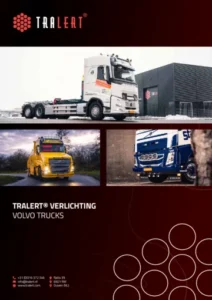
Work lights, rear lights, driving lights, beacon bars and more for Volvo Trucks.
The catalogue opens in a new tab. Can’t see it?
Open the catalogue (PDF)Two questions, in 30 seconds.
TRALERT® works with a dealer network. Dealers can view current stock levels, place orders online on account and receive a product feed for their online shop or system. We assess each enquiry internally and will let you know within 1 to 2 working days whether a partnership is possible.
You can purchase TRALERT® lighting through our partners, either locally or online. Simply provide your details, and we’ll find the partner best suited to help you.
Would you prefer to find a stockist yourself?We will assess your enquiry internally. You will hear from us within 1 to 2 working days to let you know whether a partnership is possible.
We’ll let you know within 1 to 2 working days which partner will be able to assist you further.
Trailerkit Configurator
How visible are your markings at night?
Select your marker lights and side marker lights in our Trailerkit Configurator. You’ll immediately see what your trailer looks like by day and by night. Everything comes as a single complete set, including a wiring harness and fitting diagram.