Blog
Home / Knowledge Base / Regulations & Testing / Updating the COC due to a double number plate: how to get the most out of it
Adjusting the COC due to the double number plate: how to get the most out of it
- Updated:
- By: Kevin van Mierlo
The short answer
From July 2026, the COC of vehicles in the O3 and O4 categories will have to be adjusted due to the second registration plate requirement. But this also presents a unique opportunity to optimise your entire lighting system, saving assembly time.
In this blog, you will read about:
- practical improvement points that save time in the assembly process
- How to take maximum advantage of when the COC needs to be broken open anyway
In many workshops, lighting is still connected manually: stripping, crimping, soldering, looping through and splicing. Fitters report that fitting the light box alone can easily take a full day. The rest of the trailer often takes several days, particularly for vehicles with numerous functions or customer-specific options.
Now that the COC needs to be adapted anyway, now is the time to design your lighting smarter. Consider:
- cabling routing
- branching into the light box
- positions of marker lights
- selection of connectors
- mounting methods per light
- documentation for workshop and engineering
Many companies see this as an opportunity to make improvements that would otherwise be repeatedly postponed.
Considerations for side lighting
The sides of trailers are becoming increasingly important for visibility and safety. Many vehicle builders are therefore choosing to, during the COC revision, immediately:
- Revise positions of marker lights to modern standards
- Be prepared for co-flashing side lighting
- minimise branching
- Improve routing of cabling where possible
Lighting at the back: smart optimisation steps
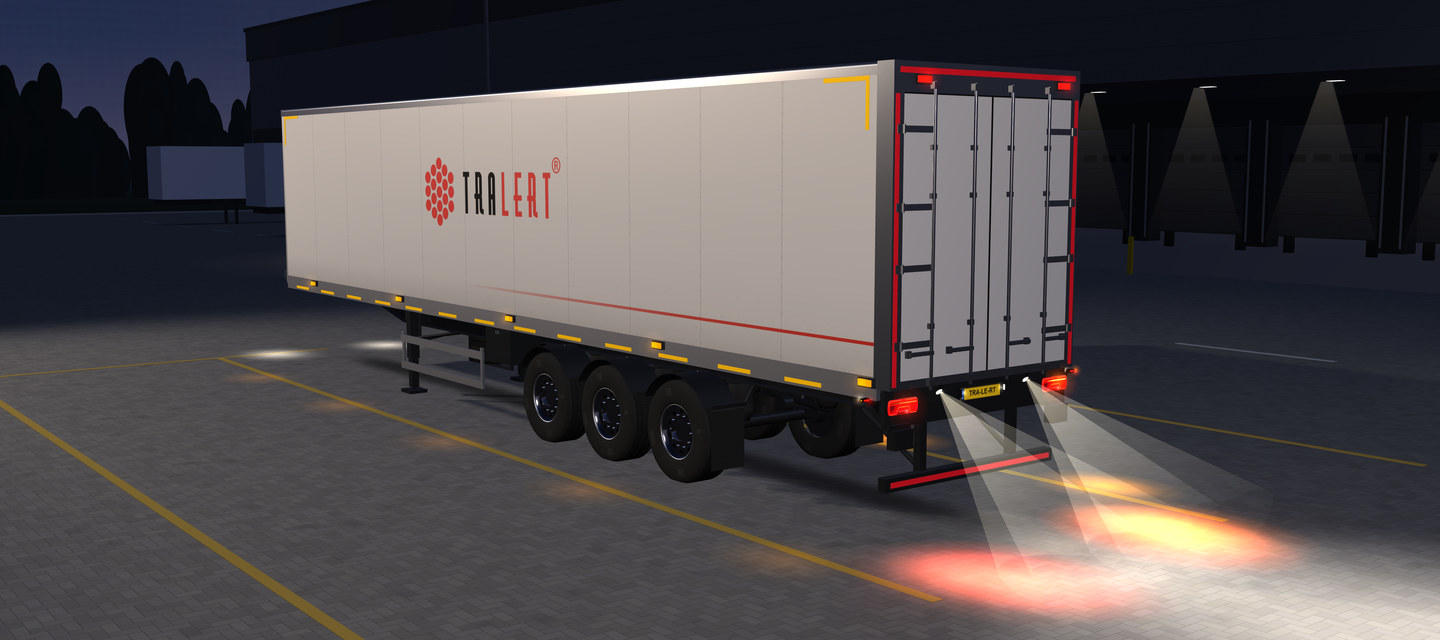
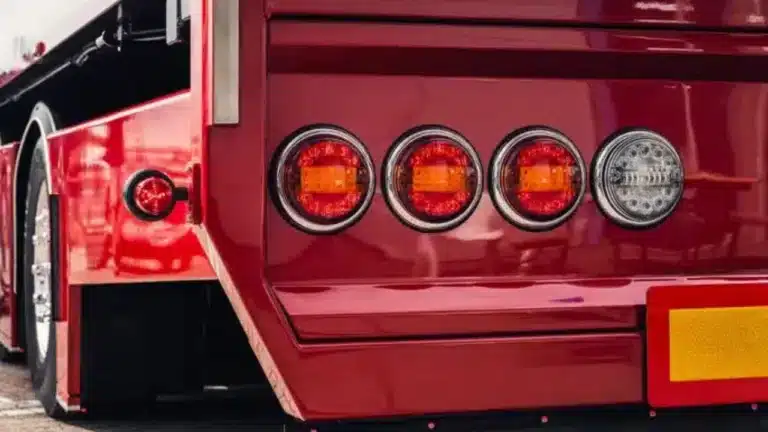
The rear of the vehicle, in particular, benefits from a thorough review. This is where all the functions come together: brake lights, indicators, contour lights, fog lights, licence plate lights and (now) dual licence plate lights.
By taking this on board now, you can:
- modular surface mounting of the rear lighting box
- making room for future options such as dynamic indicators
- Implement standardisation that speeds up fault finding and damage repair
Breaking open the COC is an ideal opportunity to make lighting more structurally reliable and maintenance-friendly.
Practical improvement points that will save you time immediately
We see more and more companies successfully switching to modular lighting systems. There are opportunities there without losing flexibility, such as:
1. Reduce manual stripping and soldering
Manual work takes time and increases the chance of error. By standardising this or replacing it with lighting connections with connectors, assembly time drops immediately.
2. Make the lighting box modular
A traditional light box quickly takes a full working day. With plug-&-play units including connectors and ready-made routing, this can be assembled and tested within a few hours.
3. Standardise routing and cable sets
Fixed lengths, fixed connection points and protective hoses reduce variation and make settling in easier for new fitters.
4. Structural gains with series and repetitive surface mounting
Standardisation pays off most when it comes to series or recurring surface mounting. Every trailer is built in the same way, which means:
- fewer operations are required
- mechanics need to search or improvise less
- the error probability decreases
- repairs virtually disappear
This delivers substantial time savings, particularly when multiple vehicles are built in succession. Not just per trailer, but especially in terms of the overall lead time of a project.
This is the right time to modernise lighting and simplify mounting.
Plug-&-play systems for semi-trailer lighting
More and more companies are therefore incorporating plug-&-play connectors, modular light boxes and pre-assembled wiring harnesses into their COC revisions, as this saves a considerable amount of time and reduces failure costs on the work floor.
Would you like to explore where improvements can be made within your own processes? Our specialists would be happy to work with you to develop practical, future-proof solutions for 24V semi-trailer lighting.
Share this article:
ABOUT
TRALERT®
TRALERT® is the leading manufacturer and partner in high-quality LED lighting solutions for commercial vehicles. By taking care of everything from drawing board to realisation, you and your customers can hit the road safely, carefree and professionally lit.
VISIT
EXPERIENCE CENTRE
The TRALERT® Experience Centre is an interactive showroom with training and truck rooms. Experience TRALERT® LED vehicle lighting in practice and experience the lighting performance in different situations. Plan your Experience Centre visit.
PARTNER
TO BE
TRALERT® works with a dealer network. We assess each enquiry internally to determine whether collaboration is possible.
Author
Kevin van Mierlo
Featured lighting: